
Last updated September 23, 2026
Free visual inspection and a written scope of work before any mitigation begins - photos, moisture readings, and drying logs go in your claim file
The scope we write is the scope we bill. Anything new gets shown to you, in writing, before we touch it.
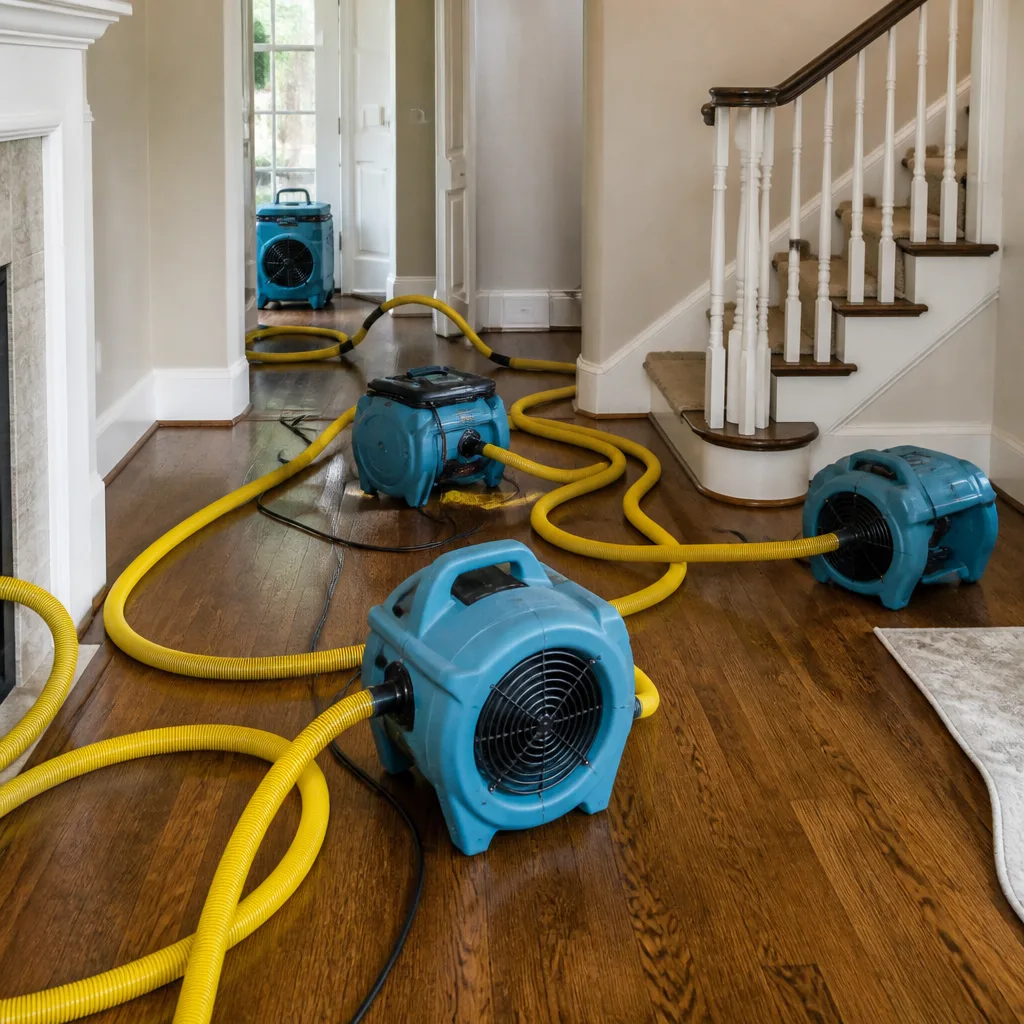


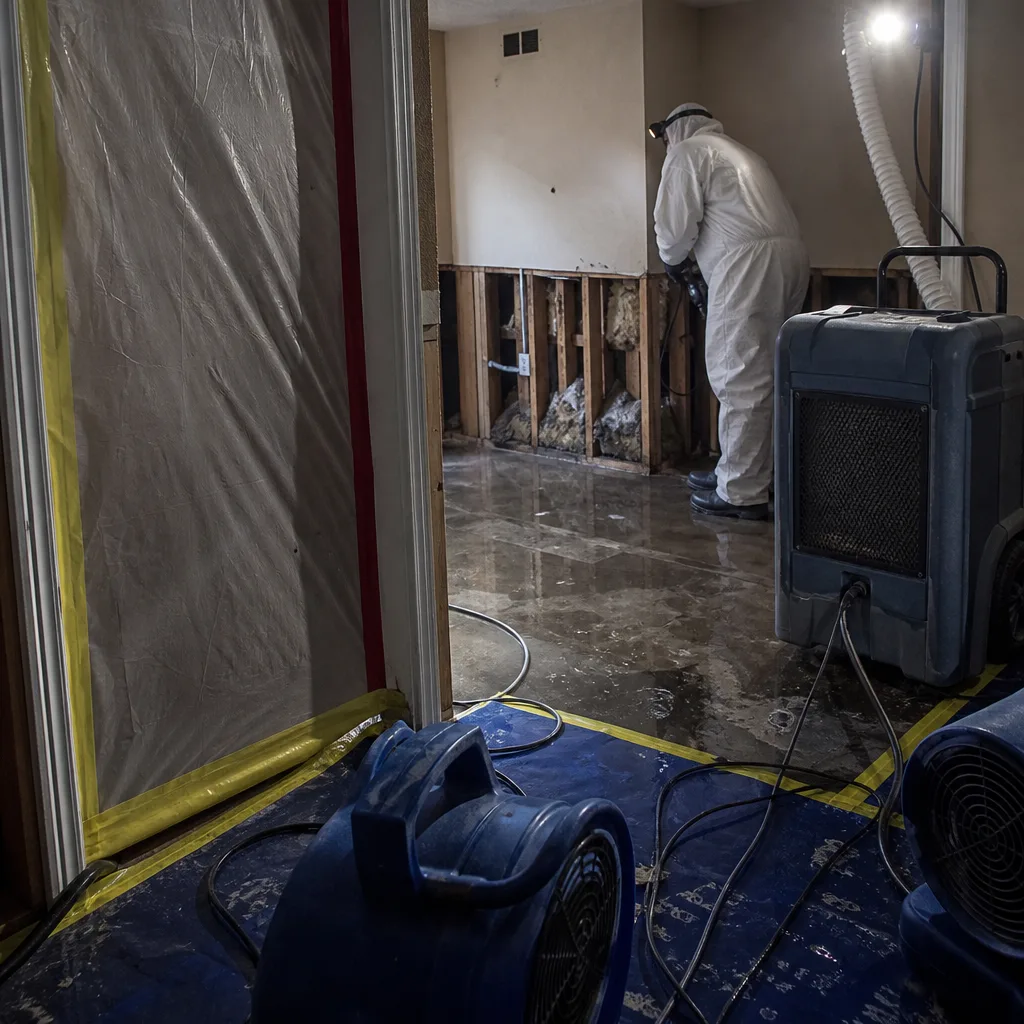 Before
 After
After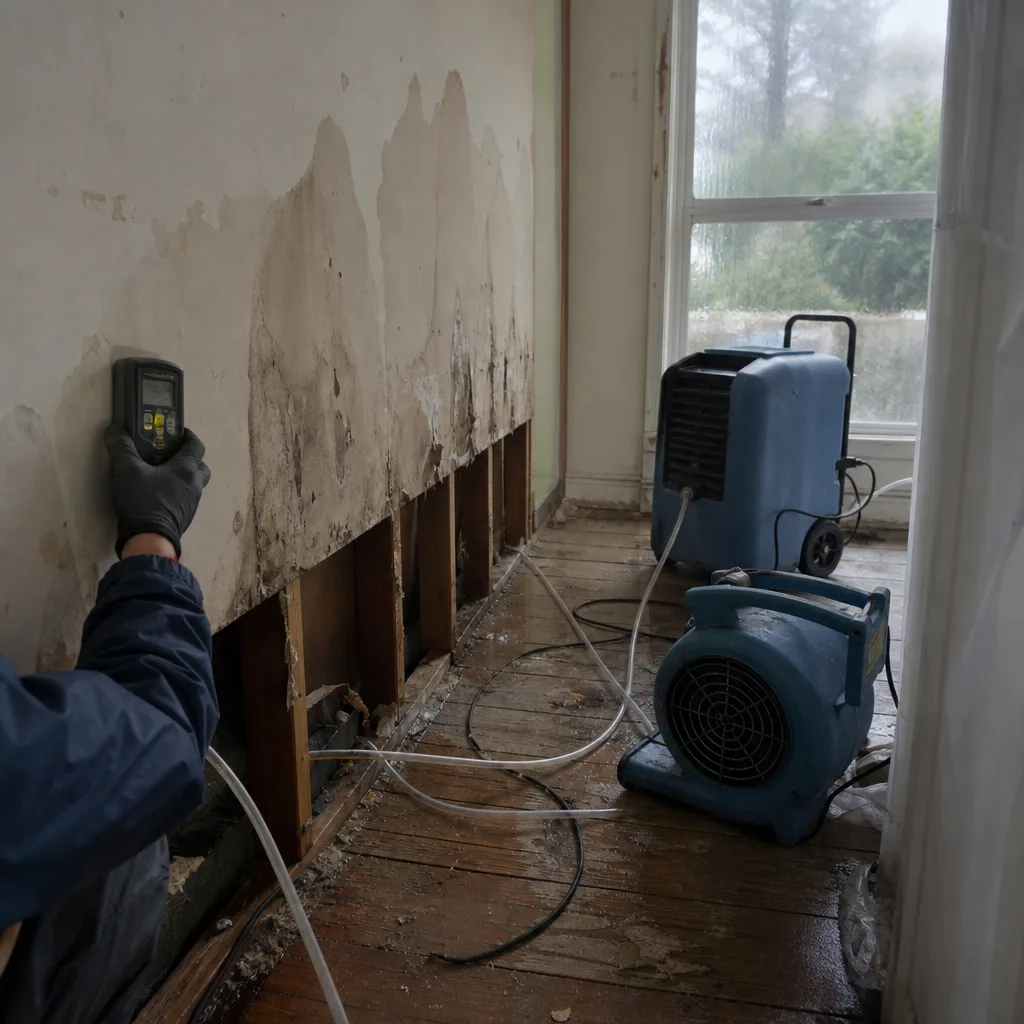 Before
 After
After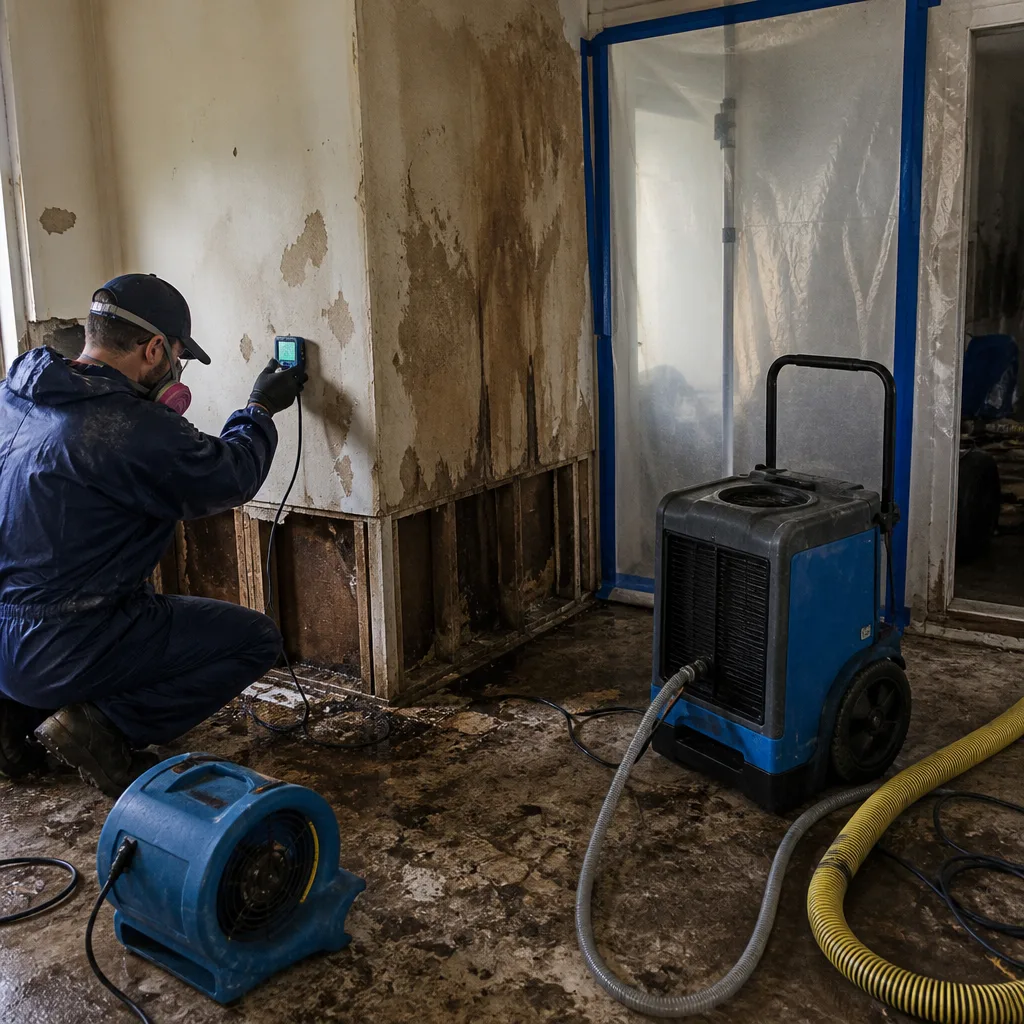 Before
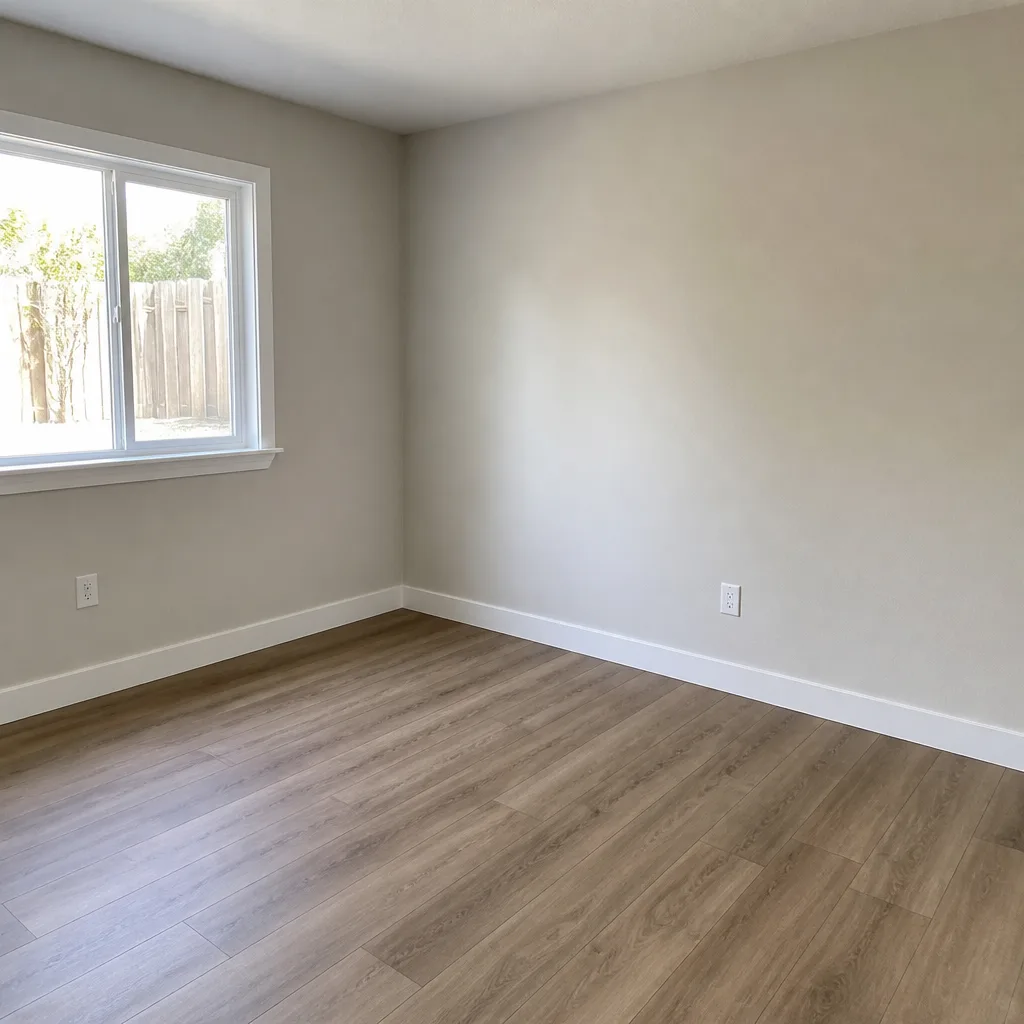 After
AfterHow to Hire a Damage Restoration Contractor in San Marcos: A Step-by-Step Guide
California law does not require a restoration contractor to give you a written estimate before starting work. That single gap in regulation is why thousands of San Marcos homeowners have paid inflated invoices after water, fire, or mold damage - invoices built on verbal scopes that grew by 40% or more once crews were inside. In the 14 years we’ve been documenting restorations across San Diego County, the pattern never changes: the costliest hiring mistake is not checking licenses or reading reviews. It’s signing without a written scope in hand.
This complete guide to damage restoration in San Marcos teaches you to treat contractor selection as a document audit. You’ll learn the four papers to demand before any work begins, how to spot post-disaster solicitation scams specific to North County, and why “works directly with your insurance” can sometimes mean “transfers your payment rights away without you understanding it.”
Quick Answer
To hire a damage restoration contractor in San Marcos, demand four documents before signing anything: a written scope of work with line-item pricing, proof of current IICRC certification, a certificate of liability insurance naming you as additionally insured, and a written warranty. Get at least two comparable bids using identical line items - equipment count, affected square footage, drying standard, and documentation deliverables - and never accept a verbal estimate or pressure to sign before your own adjuster inspects.
Table of Contents
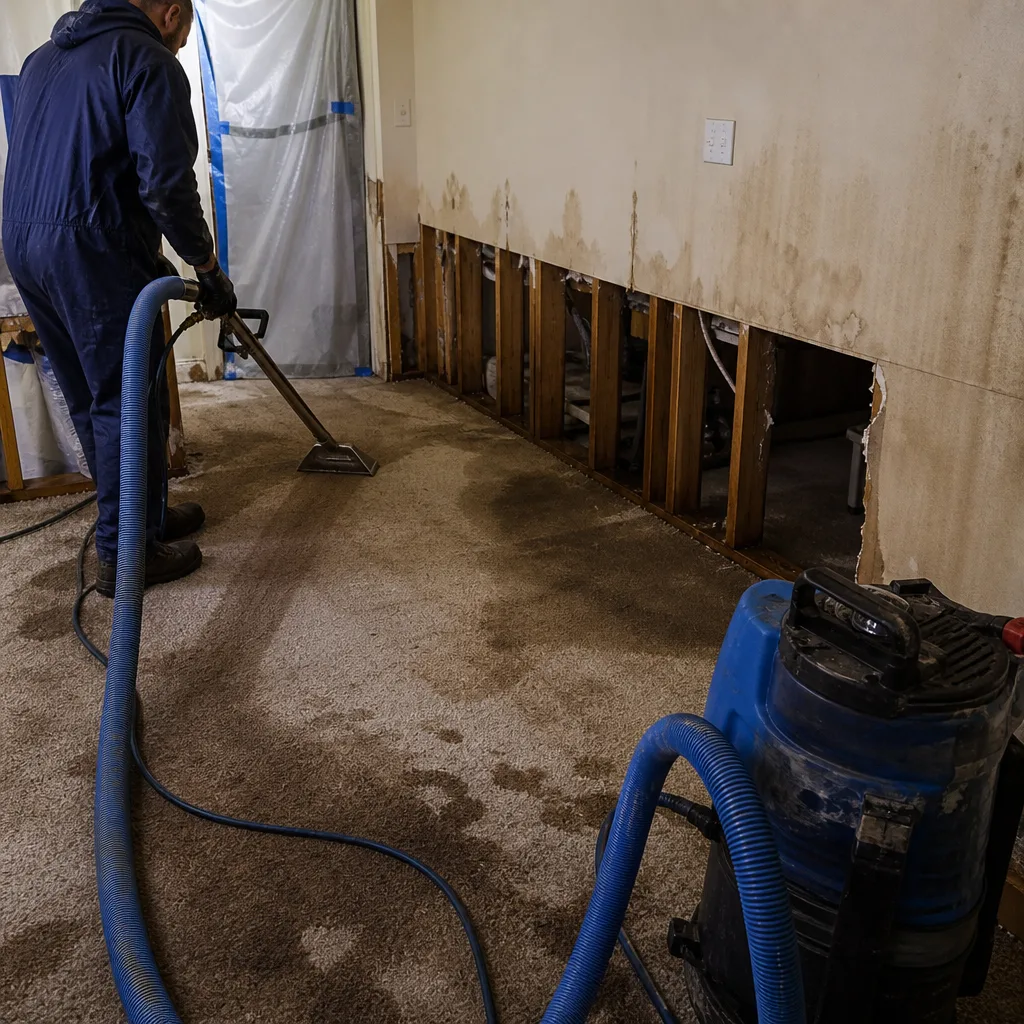
- Why a Written Scope Matters More Than Price
- The Four Documents to Demand Before Signing
- The “Works With Your Insurance” Trap
- Red Flags Specific to San Marcos and North County
- How to Compare Bids Apples-to-Apples
- How to Tell If Drying Logs Are Real or Reconstructed
- Common Mistakes to Avoid
- When to Call a Professional
- Frequently Asked Questions
- The Bottom Line
BeforeAfterWhy a Written Scope Matters More Than Price
Most homeowners in San Marcos start their search with one question: “How much will this cost?” The better question is: “What exactly are you doing, and how do I know you did it?”
A written scope of work is the only document that answers both. Without it, you have no baseline to measure completion, no defense against invoice inflation, and no evidence for your insurance adjuster. We’ve reviewed competitor invoices where “deodorization” became a $1,200 line item with no equipment specified, no hours logged, and no before-and-after photos. The homeowner signed a one-page authorization that said “restore to pre-loss condition” and trusted the rest to a handshake.
The San Marcos market compounds this risk. Our climate - coastal moisture rolling east through the Twin Oaks Valley, Santa Ana winds dropping humidity to 15% in October, winter rains that push groundwater through slab foundations - creates seasonal damage patterns that vary block by block. A contractor who scopes by template rather than by moisture reading will miss secondary damage in wall cavities every time. In the Discovery Hills neighborhood, we’ve found hidden mold behind intact drywall because the initial contractor dried the visible area and called it complete, with no vapor pressure differential readings to catch the trapped moisture.
Haven Standard, Clause 1 exists because of exactly this problem. Every job we perform in San Marcos begins with a written price before work starts, with no exceptions. The scope lists each room, each piece of equipment by model and count, each day of monitoring, and each documentation deliverable. You sign it. We sign it. Anything added requires a written change order with your approval. This is not customer service. It’s claim protection.
The three elements every written scope must include:
- Room-by-room square footage with material classification - Category 1 water on drywall versus Category 3 on lath-and-plaster requires different drying protocols and different prices.
- Equipment inventory by model and serial number - LGR dehumidifiers from Dri-Eaz or Phoenix operate at different capacities; axial air movers from XPOWER or B-Air move different CFM. The scope should name what goes where.
- Documentation deliverables - daily moisture logs, photo records, psychrometric data, and final clearance testing. If it’s not listed, you won’t receive it.
Ask for the scope in writing. Read it before authorizing work. Compare it to your insurance adjuster’s estimate. The 20 minutes this takes will save you weeks of dispute later.
The Four Documents to Demand Before Signing
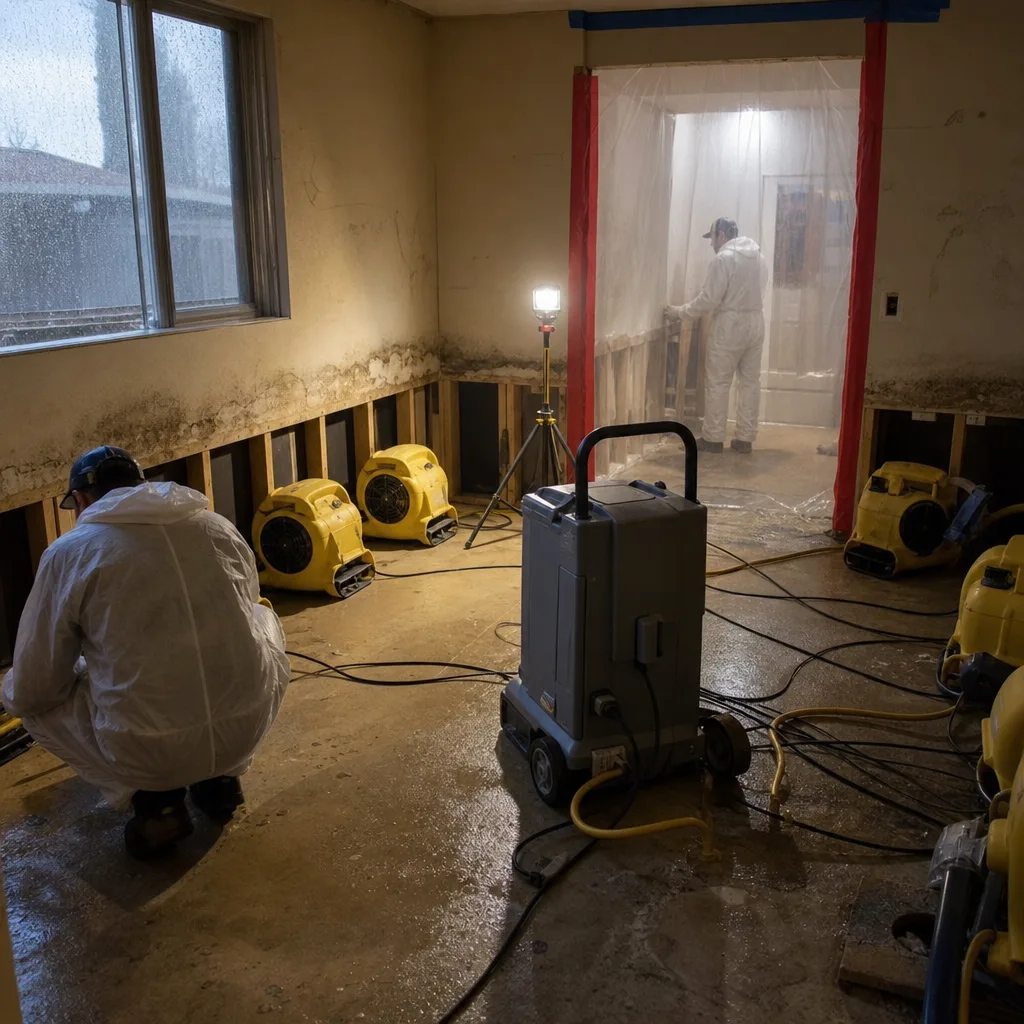
We’ve structured this as a checklist for San Marcos homeowners you can use during any contractor meeting. Do not authorize work until you have all four documents in hand, reviewed, and understood.
Document 1: Written Scope of Work with Line-Item Pricing
This is the contract. Not an estimate. Not a proposal. A scope of work that lists every task, every material, every piece of equipment, and every labor hour, with a price attached to each line.
Red flags in scope language:
- “Time and materials” without a not-to-exceed cap
- “Allowances” for equipment or labor that exceed 10% of total
- Phrases like “as needed” or “contractor’s discretion” without defined triggers
- Missing drying standard reference - IICRC S500 for water, S520 for mold
In San Marcos, where many homes built in the 1980s and 1990s have polybutylene plumbing or original slab foundations, scopes should specifically address material age and degradation risk. A contractor who scopes your San Elijo Hills townhome the same as a 1960s ranch in Lake San Marcos hasn’t looked closely enough.
Document 2: Proof of Current IICRC Certification
The Institute of Inspection, Cleaning and Restoration Certification (IICRC) sets the industry standards for water damage restoration (S500) and mold remediation (S520). Certification is not a license - California does not license restoration contractors separately from general contractors - but it is the recognized credential for proper technique.
Ask to see the technician’s IICRC card, not the company owner’s. The person running equipment in your home should hold current certification in the relevant category. Verify the certification number on IICRC’s online registry. We’ve encountered un-certified crews dispatched to San Marcos jobs where the “certified” supervisor never visited the site.
Document 3: Certificate of Liability Insurance Naming You as Additionally Insured
General liability insurance protects the contractor. Additional insured status protects you. Request a certificate of insurance (COI) issued directly from the insurance carrier, not a PDF from the contractor’s printer, naming you or your property address as additionally insured for the duration of the project.
Minimum coverage for residential restoration in San Marcos should include:
- General liability: $1,000,000 per occurrence
- Workers’ compensation: statutory limits (California requires this for any employee)
- Pollution liability: essential for mold and sewage jobs
Without additional insured status, you could face subrogation if a worker is injured on your property or if cross-contamination spreads to a neighbor’s unit in a condo complex like those along Rancho Santa Fe Road.
Document 4: Written Warranty
Verbal warranties are worthless in dispute. The warranty should specify duration, coverage scope, and the process for filing a claim. At DryMark Restoration San Marcos home, our 365-Day Done Right Promise under The Haven Standard is a signed guarantee, not a marketing phrase. It covers materials and workmanship, requires documented response within 24 hours, and specifies that we return at no charge to correct any deficiency.
Ask your prospective contractor: “Will you put your warranty in writing, with your signature, before work begins?” If the answer is hesitation, the answer is no.
The “Works With Your Insurance” Trap
This phrase sounds like convenience. It can be. It can also be a mechanism to transfer your payment rights and your ability to dispute charges.
Here’s how it works. After a water loss in San Marcos, a contractor tells you: “Don’t worry about the bill. We work directly with your insurer. You won’t pay anything out of pocket.” What they may not explain is that you’re signing an Assignment of Benefits (AOB) or Direction to Pay, which gives the contractor the right to bill your insurance company directly and, in some cases, to sue your insurer in your name if payment is disputed.
California does not prohibit AOB agreements, but they are less common here than in Florida or Texas. More frequently, San Marcos homeowners encounter “managed repair” programs where the contractor is on the insurer’s preferred vendor list. The convenience - direct billing, faster approval - comes with a trade: the contractor’s incentive aligns with the insurer’s cost controls, not necessarily with your property’s full restoration.
Three questions to ask any contractor who advertises insurance coordination:
- Do you require an Assignment of Benefits or Direction to Pay? If yes, have an attorney or your adjuster review it. Never sign under pressure.
- Are you on my insurer’s preferred vendor list, and what does that relationship require? Some programs cap equipment days or exclude certain documentation deliverables. Know what you’re agreeing to.
- Who holds the payment if my insurer disputes your invoice? If the answer is “you do,” the “direct billing” was never direct. If the answer is “we pursue it,” ask whether that pursuit includes liens against your property.
At DryMark Restoration San Marcos, we document every job to IICRC, RIA, and IFA standards precisely because insurer-preferred documentation often falls short of what proves a complete restoration. You can find more guides & resources on our blog. We coordinate with adjusters, provide photo-documented assessments, and offer direct billing where appropriate - but we never require an AOB, and we never begin work without your signed written scope. Haven Standard, Clause 1 applies even when insurance is involved.
Your strongest position: have your own adjuster inspect before authorizing work, then hire a contractor who answers to you, not to your insurer’s cost targets.
Red Flags Specific to San Marcos and North County
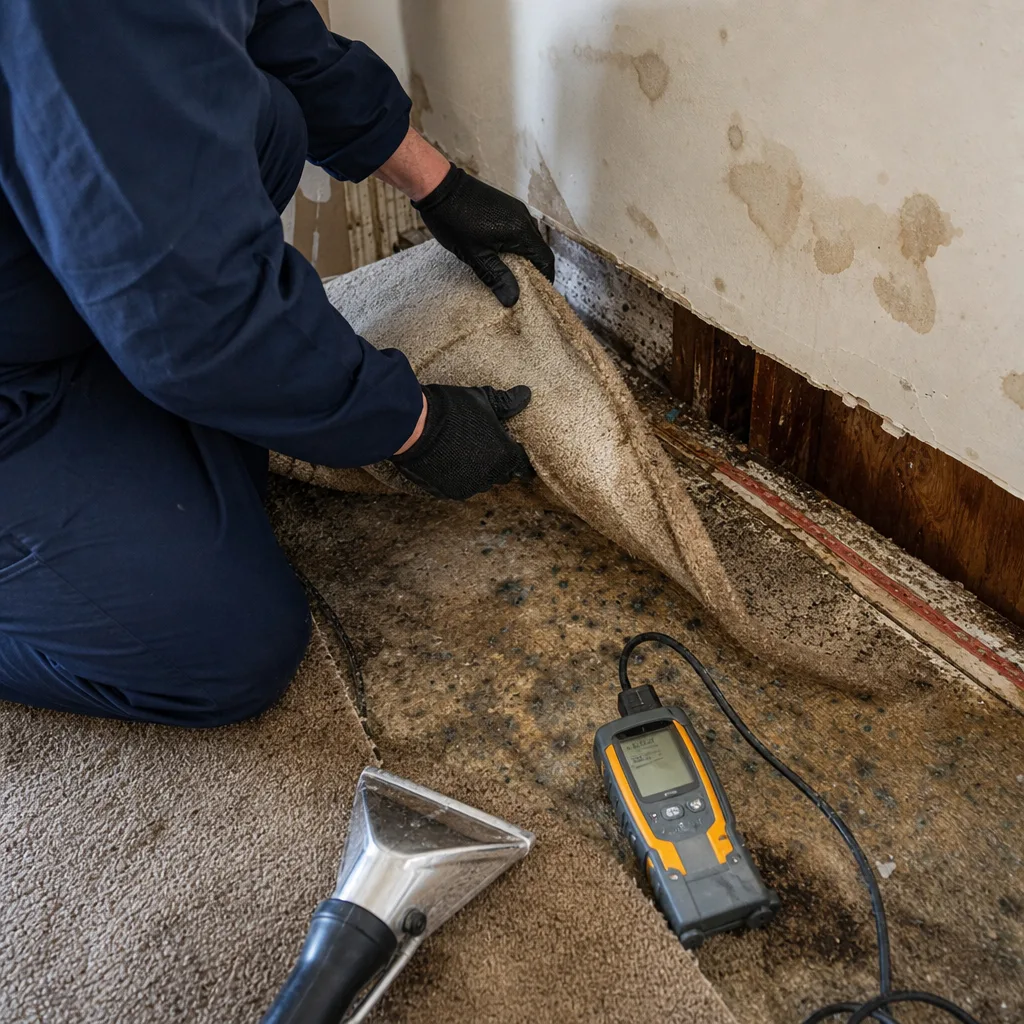
Post-disaster contractor fraud follows predictable patterns in San Marcos. Knowing the local variations protects you from schemes that legitimate-sounding pitches obscure.
Door-Knock Solicitation After Storm Events
When Santa Ana winds topple trees into roofs or winter storms overwhelm drainage in the San Marcos Creek floodplain, out-of-area contractors appear within hours. They canvas neighborhoods with flyers, knock doors, and offer “emergency tarping” or “free moisture inspections.” Some are legitimate responders. Many are chase crews who follow disaster patterns nationwide, perform minimal work, and disappear before insurance disputes arise.
San Marcos does not require solicitation permits for contractors, unlike some cities in Orange County. This makes verification your responsibility. Ask for a local business license, a physical address in San Diego County (not a PO box), and proof of completed jobs in San Marcos with homeowner references. Search the California State License Board for the contractor’s license number and disciplinary history.
Pressure to Sign Before Your Adjuster Inspects
The most expensive sentence in restoration: “We need to start immediately or mold will grow.” While delayed mitigation does cause secondary damage, 24 to 48 hours for proper scoping and adjuster inspection rarely changes outcomes in San Marcos’s moderate climate. A contractor who refuses to wait for your adjuster - or who claims your insurer “doesn’t need to see it first” - is prioritizing their invoice over your claim.
Document the damage yourself: photos, video, moisture meter readings from a hardware store if available. This preserves evidence for your adjuster and prevents disputes about pre-existing conditions.
“We’ll Handle Everything” Without Written Authorization
This phrase typically means the contractor will handle everything without your oversight. In North County, we’ve seen homeowners discover that “handling everything” included signing change orders in their name, authorizing demolition beyond the affected area, or accepting settlement offers from insurers without consultation.
Require written authorization for any work beyond the signed scope. Haven Standard, Clause 1 exists to prevent exactly this drift.
Unmarked Vehicles or Generic Business Names
Legitimate restoration contractors in San Marcos operate marked vehicles with company identification, license numbers, and insurance information. Generic white vans, magnetic signs that peel off, or business names that change seasonally are indicators of fly-by-night operations. Verify the business entity on the California Secretary of State’s website.
Requests for Large Upfront Payments
California law limits contractor deposits to $1,000 or 10% of contract value, whichever is less, for home improvement contracts. Restoration work sometimes requires emergency authorization, but a demand for full payment before work begins - or for “equipment rental” fees paid in cash - is a violation and a warning sign.
How to Compare Bids Apples-to-Apples
Homeowners in San Marcos often receive bids that differ by thousands of dollars for the same loss. The natural assumption is that one contractor is overcharging. More often, the bids describe different work.
To compare accurately, align these five elements across every proposal:
1. Equipment Count and Type
A proper drying plan specifies dehumidifiers, air movers, and specialty equipment by capacity and count. Compare:
- Dehumidifiers: LGR (low grain refrigerant) units from Dri-Eaz or Phoenix, rated in pints per day at AHAM conditions
- Air movers: axial or centrifugal, CFM rating, placement per room
- Specialty: Injectidry systems for wall cavity drying, negative air machines for containment
One bid with three air movers in a 400-square-foot living room and another with six are not comparable. The six-mover bid may be unnecessary - or the three-mover bid may be under-drying, extending the job and risking secondary damage.
2. Affected Square Footage by Material
Water damage is measured by what got wet, not by room dimensions. A bid should distinguish:
- Category of water: 1 (clean), 2 (gray), or 3 (black/sewage)
- Class of destruction: 1 (minimal, <5% absorption) to 4 (deep saturation, >40% absorption)
- Material type: drywall, plaster, hardwood, engineered flooring, concrete, etc.
In San Marcos, the prevalence of slab-on-grade construction in neighborhoods like Palomar Hills means Class 4 losses are more common than in areas with raised foundations. Bids that don’t classify by material and destruction class are guessing.
3. Drying Standard Reference
Every water damage bid should reference IICRC S500. Every mold bid should reference IICRC S520. If a bid references no standard, or a proprietary “company standard,” it cannot be verified or compared.
4. Documentation Deliverables
This is where Water Damage Restoration in San Marcos bids diverge most significantly. Compare what you receive:
- Daily moisture logs: readings in every affected room, with target goals and attainment dates
- Photo documentation: dated, geotagged, before/during/after for each phase
- Psychrometric data: temperature, relative humidity, and specific humidity readings that prove drying progress
- Final clearance: third-party verification or contractor-performed with documented methodology
A bid without documentation deliverables listed is a bid without accountability.
5. Labor Hours and Monitoring Frequency
Equipment placement is not a one-time event. Proper drying requires daily or every-other-day monitoring, equipment adjustment, and moisture reading updates. Compare:
- Number of site visits included
- Hours per visit
- Technician certification level for monitoring visits
A low bid that includes one placement visit and a pickup visit, with no interim monitoring, is not cheaper. It’s incomplete.
At DryMark Restoration San Marcos, we provide a Free Second Opinion on any competitor’s written estimate. Bring us your bids, and we’ll align the line items so you can see what’s actually being proposed. No charge, no obligation, no pressure to switch.
How to Tell If Drying Logs Are Real or Reconstructed
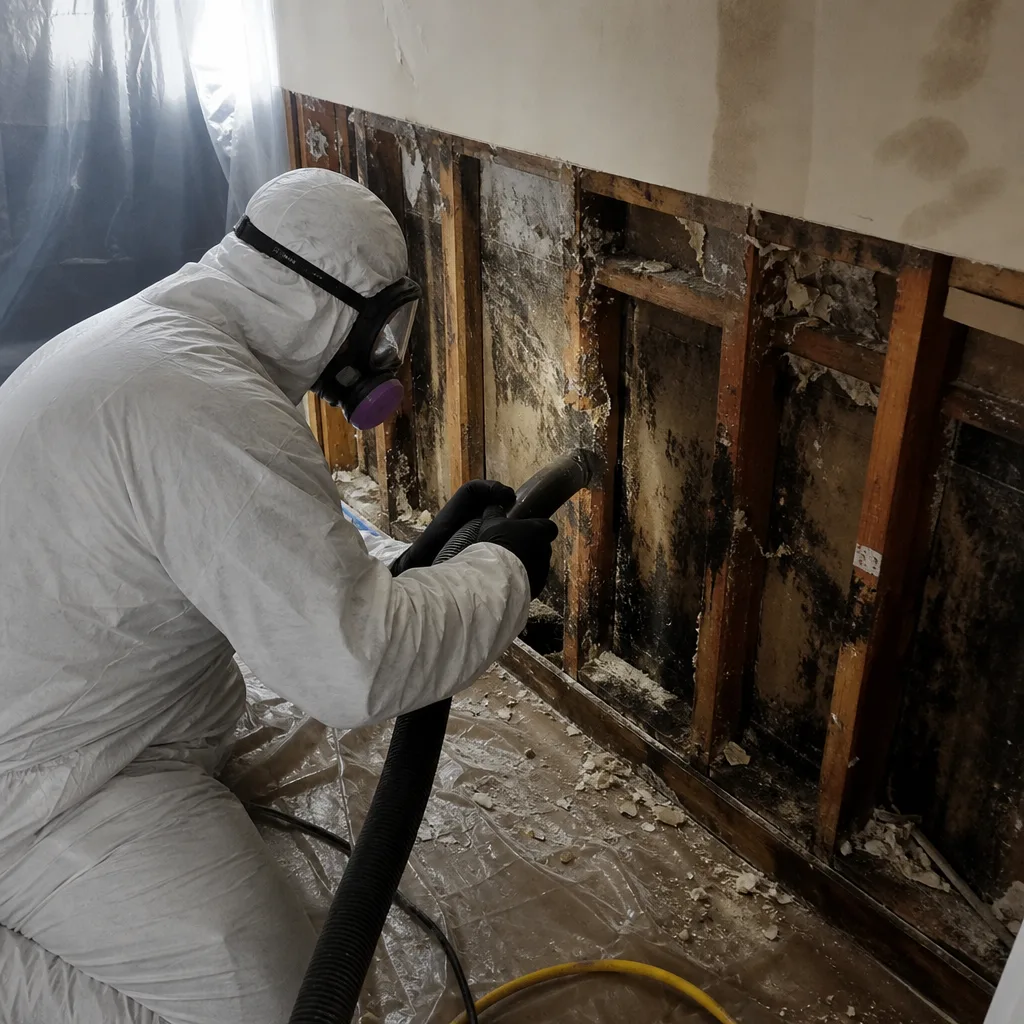
Daily moisture logs are the backbone of insurance claim documentation. They prove that drying occurred, that progress was monitored, and that equipment was justified for every day it ran. They are also the easiest document to falsify.
Reconstructed logs - created after the job ends, with plausible-looking numbers filled in retroactively - are a known problem in restoration. We’ve reviewed competitor files where moisture readings on consecutive days showed identical progress down to the decimal, or where readings were “taken” on Sundays when no technician visited. Adjusters spot these patterns. Claims get denied. Homeowners get stuck with the bill.
Six indicators of legitimate, real-time drying logs:
- Timestamped entries with technician name and certification number. Each reading should record who took it, when, and their IICRC credential.
- Varying moisture content readings that reflect actual drying curves. Wet wood doesn’t dry at a constant rate. Early readings drop slowly; later readings accelerate. Perfect linear progress is mathematically suspect.
- Equipment adjustments documented with reasons. “Added second LGR dehumidifier in master bedroom due to vapor pressure differential of 2.3” shows active management. “Equipment unchanged” for five days in a drying room shows neglect - or a log being filled in from memory.
- Psychrometric calculations, not just moisture meter numbers. Real drying science tracks the air’s capacity to absorb moisture, measured by specific humidity and vapor pressure. Logs with only surface moisture readings miss half the picture.
- Photo verification with date stamps. Each monitoring visit should produce photos of equipment in place, readings on the meter, and the affected area. These photos should match the log dates and times.
- Immediate upload to a shared portal or cloud system. Logs that appear only in a PDF at job completion, with no intermediate access, are more easily reconstructed than logs visible to you in real time.
Ask your prospective contractor: “Can I see a sample drying log from a completed job, with technician names and certification numbers?” Then ask: “Will I have access to readings as they’re taken, or only at completion?” The answers reveal whether documentation is operational or theatrical.
In San Marcos, where many homeowners are filing first-time claims on high-value properties purchased during the 2015-2025 market surge, adjuster scrutiny is particularly intense. Documented, real-time drying logs are the difference between a paid claim and a disputed one.
Common Mistakes to Avoid
- Accepting a verbal estimate because “it’s an emergency.” Emergency status does not suspend your right to a written scope. In San Marcos, even Category 3 sewage losses allow time for documentation before work begins. The contractor who refuses to write it down is the contractor who plans to change it later.
- Hiring the first contractor who answers at 2 a.m. Live phone coverage matters - we answer 24 hours a day, 7 days a week with no voicemail trees - but availability is not qualification. Verify credentials in daylight, even if you need emergency tarping or water shutoff immediately.
- Assuming your insurance company’s preferred vendor is vetted for quality. Preferred vendor lists are negotiated contracts, not quality certifications. The contractor’s incentive is to stay on the list by controlling costs, not by maximizing your restoration.
- Ignoring neighborhood-specific risks in scope review. San Marcos homes in the flood-adjacent areas near Discovery Lake face different groundwater patterns than hillside properties in Santa Fe Hills. A scope that doesn’t account for your specific location hasn’t been written for your job.
- Signing over payment rights without understanding the mechanism. Assignment of Benefits agreements, Direction to Pay forms, and similar documents transfer legal rights. Have them reviewed by someone who represents you, not the contractor or the insurer.
- Neglecting to verify that mold remediation bids reference IICRC S520. Water damage standards (S500) and mold standards (S520) are different protocols. A contractor certified in water damage is not automatically qualified for mold. Mold Remediation in San Marcos requires specific containment, negative air, and clearance testing procedures.
- Failing to request proof of additional insured status on the certificate of liability insurance. This single document protects you from subrogation if a worker is injured or if damage spreads. It takes 48 hours to obtain from most carriers. A contractor who “can’t get it” is a contractor who won’t pay for it.
When to Call a Professional
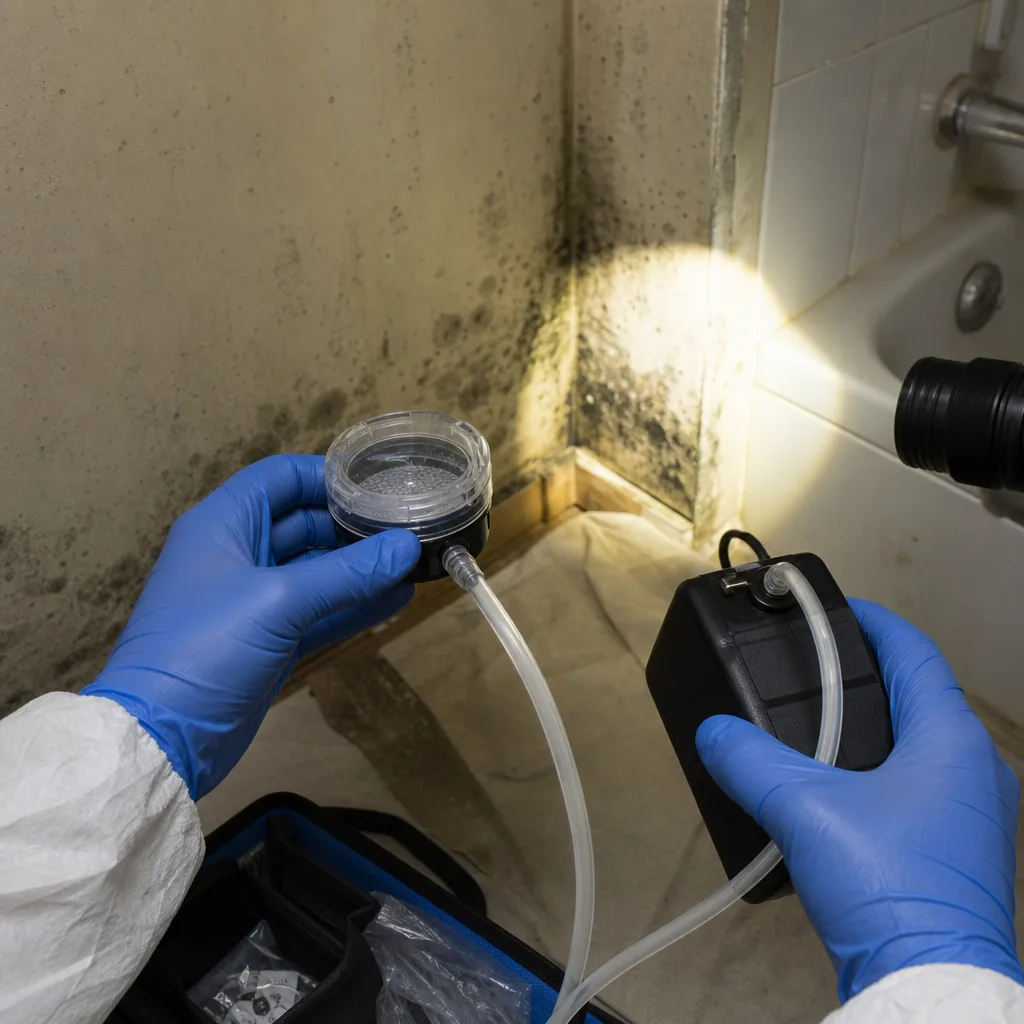
Some damage scenarios in San Marcos require immediate professional response regardless of your research timeline. Call a restoration contractor when:
- Water has saturated structural materials - subfloor, wall cavities, or ceiling drywall - for more than 24 hours
- Sewage or Category 3 water has entered living spaces
- Mold is visible on more than 10 square feet or is accompanied by musty odors with no visible source
- Fire damage has affected HVAC systems or structural framing
- Storm damage has compromised the building envelope, allowing ongoing water intrusion
In these scenarios, documentation remains essential even when speed is critical. Photograph everything before the contractor arrives. Request emergency scope language that limits work to stabilization until a full written scope is prepared. Most reputable contractors, including DryMark Restoration San Marcos, will provide emergency authorization forms that cap initial work and require your signature on the full scope within 24 hours.
DryMark Restoration San Marcos offers free estimates in San Marcos - call (858) 434-8474. Every estimate includes a written scope with line-item pricing, equipment specifications, and documentation deliverables before any work is authorized.
Frequently Asked Questions
Water damage mitigation in San Marcos generally ranges from $1,200 for limited Category 1 drying to $8,000+ for whole-house Category 3 remediation with reconstruction. Mold remediation typically runs $15-$30 per square foot of affected area, with containment and air scrubbing adding $500-$1,500 per contained zone. Fire and smoke restoration varies most widely, from $3,000 for localized cleaning to $25,000+ for structural reconstruction. These ranges reflect San Diego County labor rates and the prevalence of slab-on-grade construction, which complicates drying. Call (858) 434-8474 for an exact quote - estimates are free.
Most San Marcos homeowners’ policies cover sudden and accidental water damage, fire damage, and storm damage, subject to your deductible and coverage limits. Flood damage from rising groundwater requires separate flood insurance, which few San Marcos homeowners carry unless mandated by their mortgage lender in FEMA-designated zones. Mold coverage varies by policy - some cap it at $10,000, others exclude it entirely. The key to coverage is documentation: photo evidence, a written scope from a qualified contractor, and moisture logs that prove the damage was sudden, not long-term neglect. We coordinate directly with adjusters and provide the documented evidence that supports your claim.
Emergency response times in San Marcos typically range from 45 minutes to 2 hours during business hours, and 1 to 3 hours overnight, depending on contractor location and current call volume. Be wary of promises under 30 minutes - they often mean a dispatcher is answering, not a crew is en route. For water and sewage emergencies, speed matters for mitigation: every hour of delay increases secondary damage risk. For reconstruction and rebuild work, same-day response is neither necessary nor typical; that work is scoped, scheduled, and priced in writing like any remodel. DryMark Restoration San Marcos maintains live phone coverage 24 hours a day, 7 days a week with no voicemail, and dispatches background-checked, uniformed technicians with documented arrival times.
For water damage affecting less than 10 square feet of surface material with no structural saturation, DIY drying with fans and a consumer dehumidifier may suffice. For anything beyond that, professional remediation is warranted - and for Category 2 or 3 water, mold exceeding 10 square feet, or fire/smoke damage, it’s essential for health and claim protection. California’s warm, dry climate does not prevent mold; it selects for different species, including Aspergillus and Penicillium, that thrive in wall cavities with trapped moisture. Self-cleaning visible mold without containment and negative air pressure spreads spores and voids most insurance coverage for subsequent professional work.
You retain final responsibility for your claim, but a qualified contractor should coordinate directly with your adjuster to provide documentation, answer technical questions, and align scope. The danger arises when a contractor negotiates settlement without your involvement or signs agreements in your name. At DryMark Restoration San Marcos, we provide photo-documented assessments, written scopes, and daily drying logs directly to your adjuster - with your authorization and your copy on every document. You remain in control. Haven Standard, Clause 1 applies: written price before work begins, even when insurance is paying.
Mitigation is emergency stabilization - water extraction, drying, mold containment, debris removal. Reconstruction is rebuilding - drywall, flooring, painting, fixtures. Different skills, different licensing, different pricing structures. Some contractors do both; many subcontract reconstruction. In San Marcos, general contractors performing reconstruction on jobs over $500 must hold a California B-license. Water mitigation requires no separate license, but IICRC certification is the quality standard. When comparing bids, clarify whether you’re hiring one company for both phases or managing separate contractors. Our Fire & Smoke Damage Restoration in San Marcos includes both mitigation and reconstruction coordination, with separate written scopes for each phase.
The Bottom Line
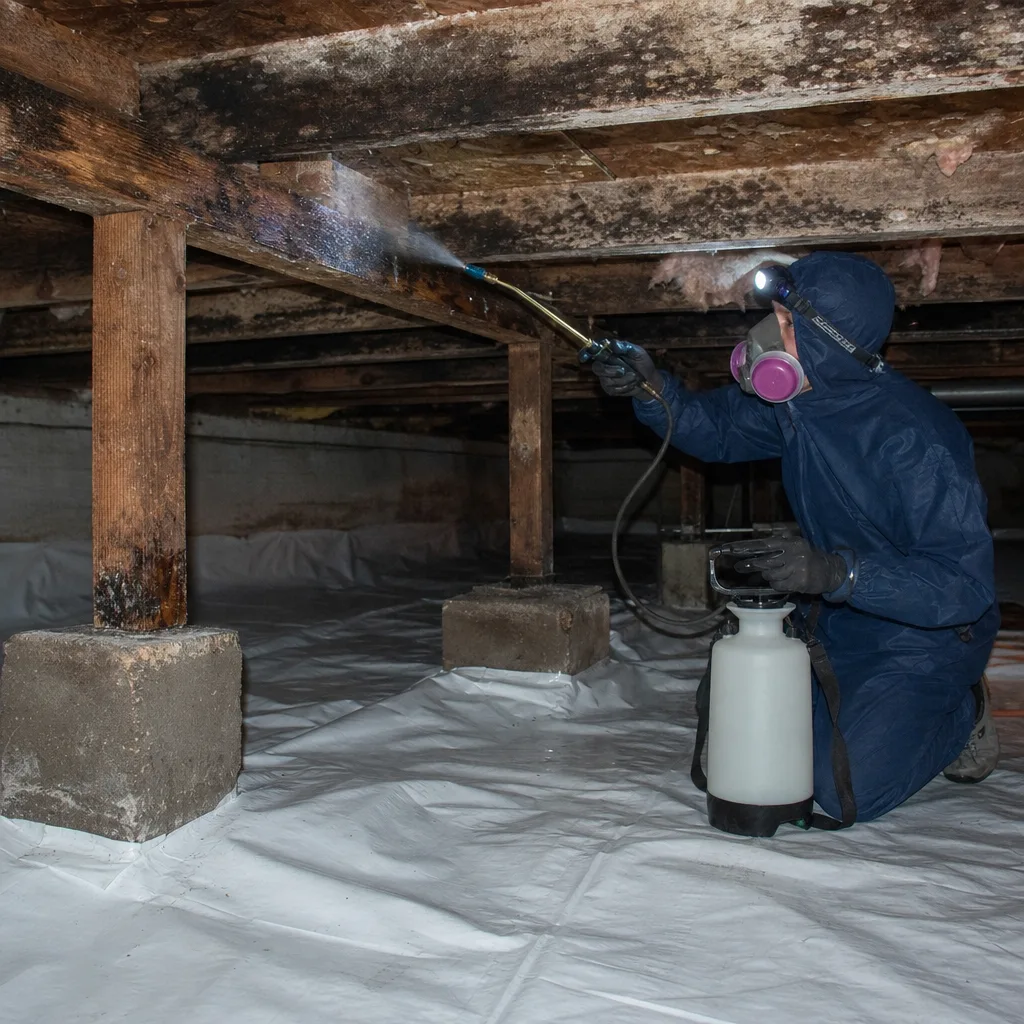
Hiring a restoration contractor in San Marcos is not a personality decision. It’s a document audit. The four papers - written scope, IICRC certification, insurance certificate naming you as additionally insured, and written warranty - are your only enforceable protections in a market where California law requires none of them. Compare bids by equipment, square footage, standard, and documentation, not by headline price. Treat “works with your insurance” as a relationship to investigate, not a benefit to accept blindly. And demand drying logs that are real-time, technician-attributed, and accessible to you as they’re created, not reconstructed after the fact.
The contractors who resist this process are telling you exactly who they are. The ones who welcome it - who build their operation around documentation as we have since 2011 - are telling you something else entirely.
Written by Alicia Brennan, Owner at DryMark Restoration San Marcos, serving San Marcos since 2011.