
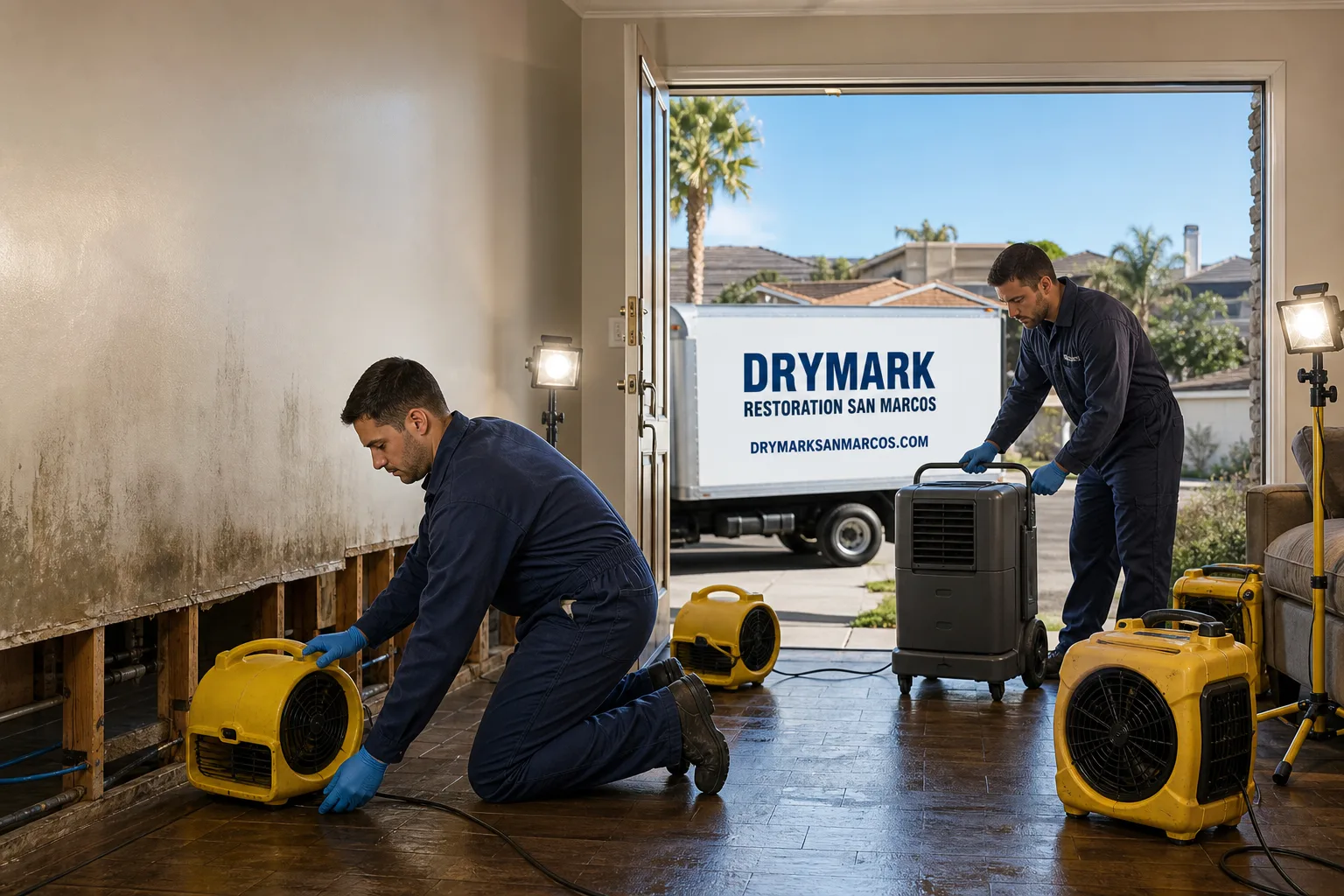
Free visual inspection and a written scope of work before any mitigation begins - photos, moisture readings, and drying logs go in your claim file
The scope we write is the scope we bill. Anything new gets shown to you, in writing, before we touch it.
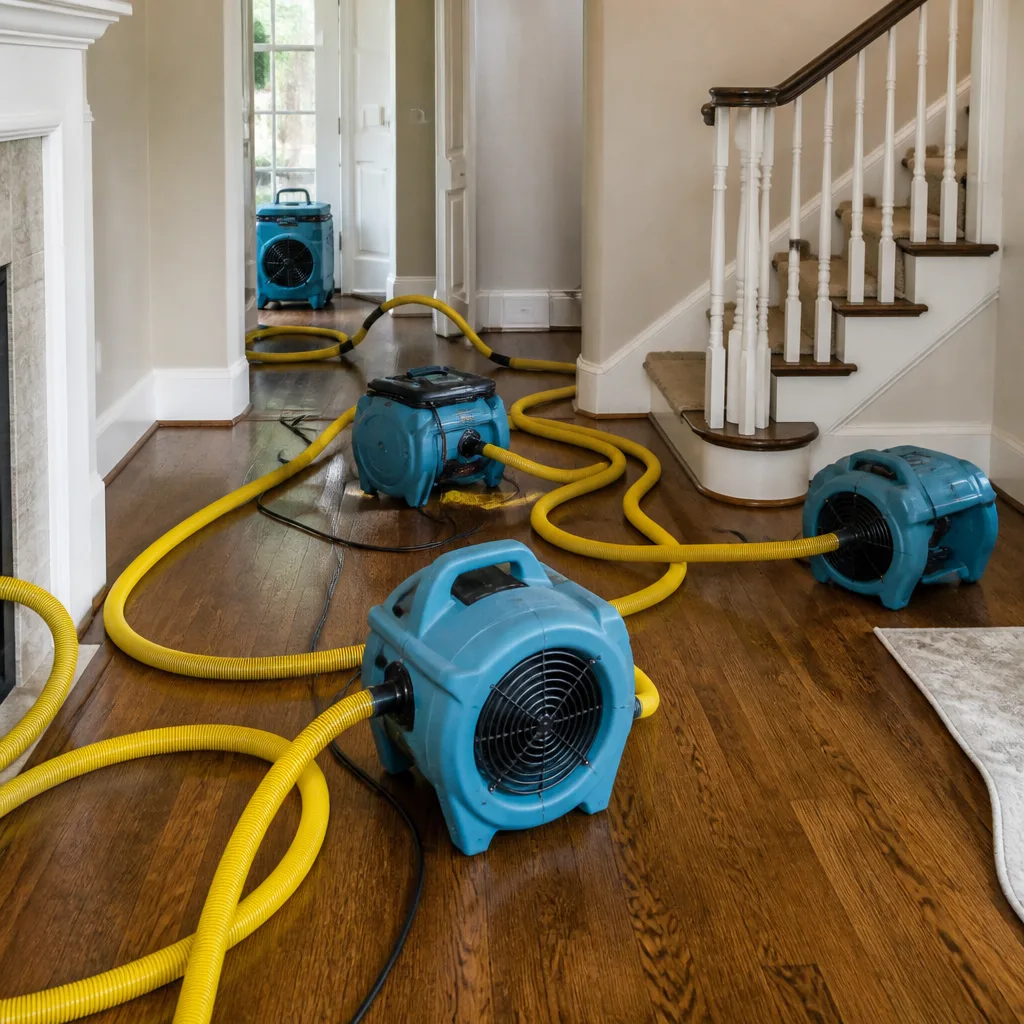

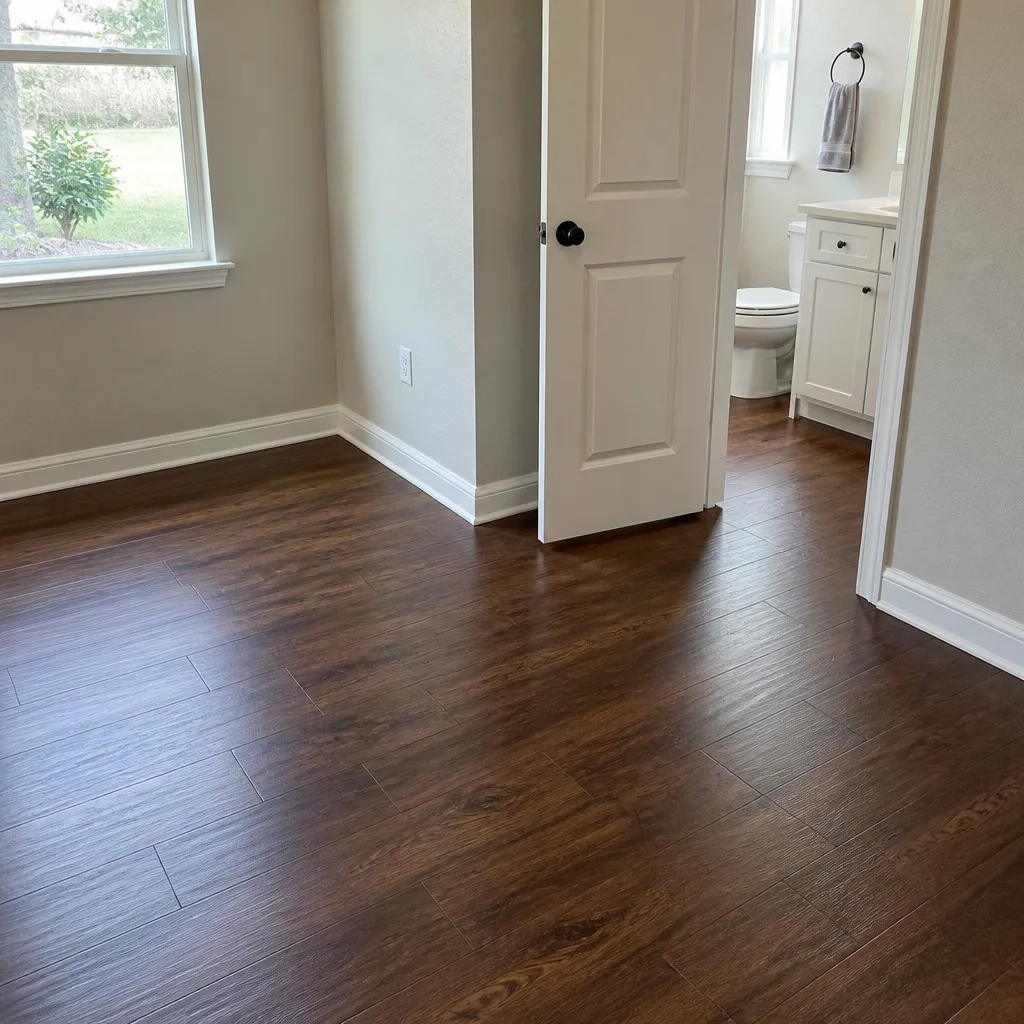

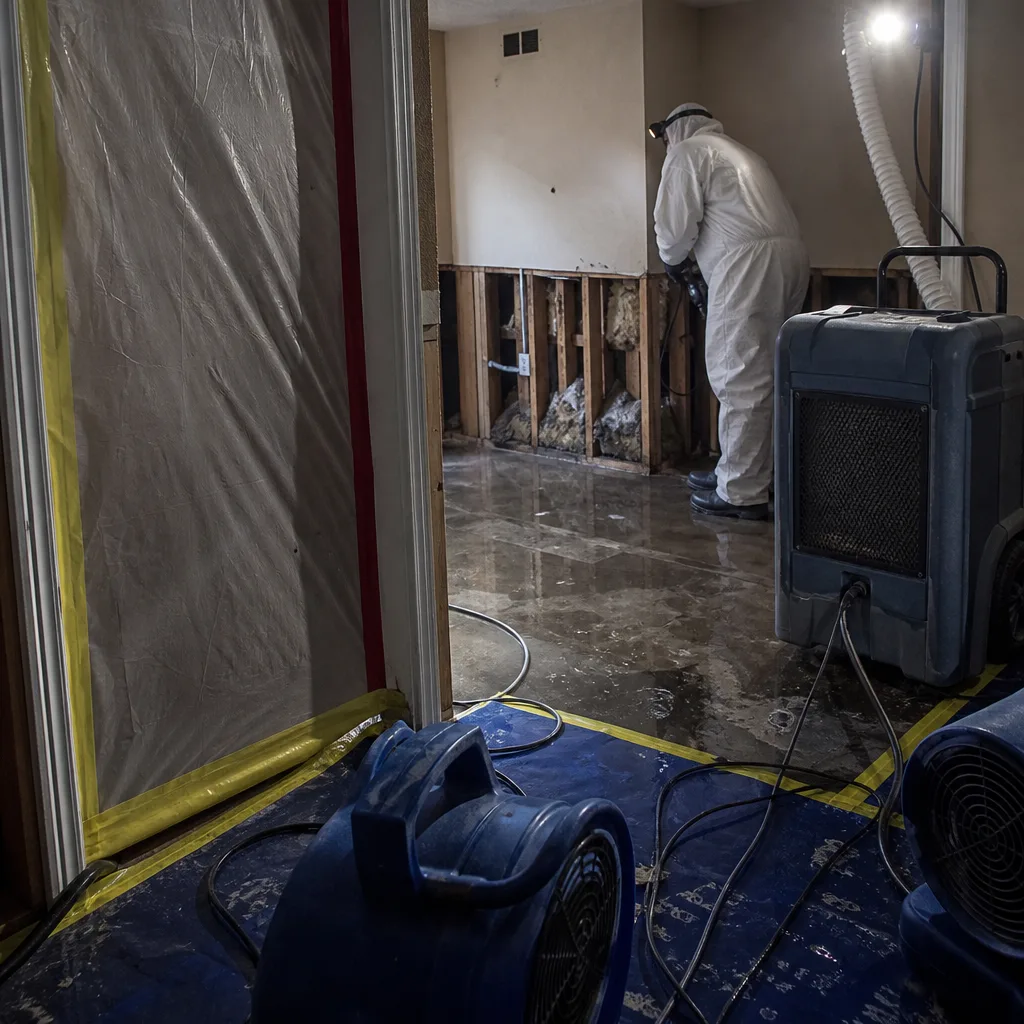 Before
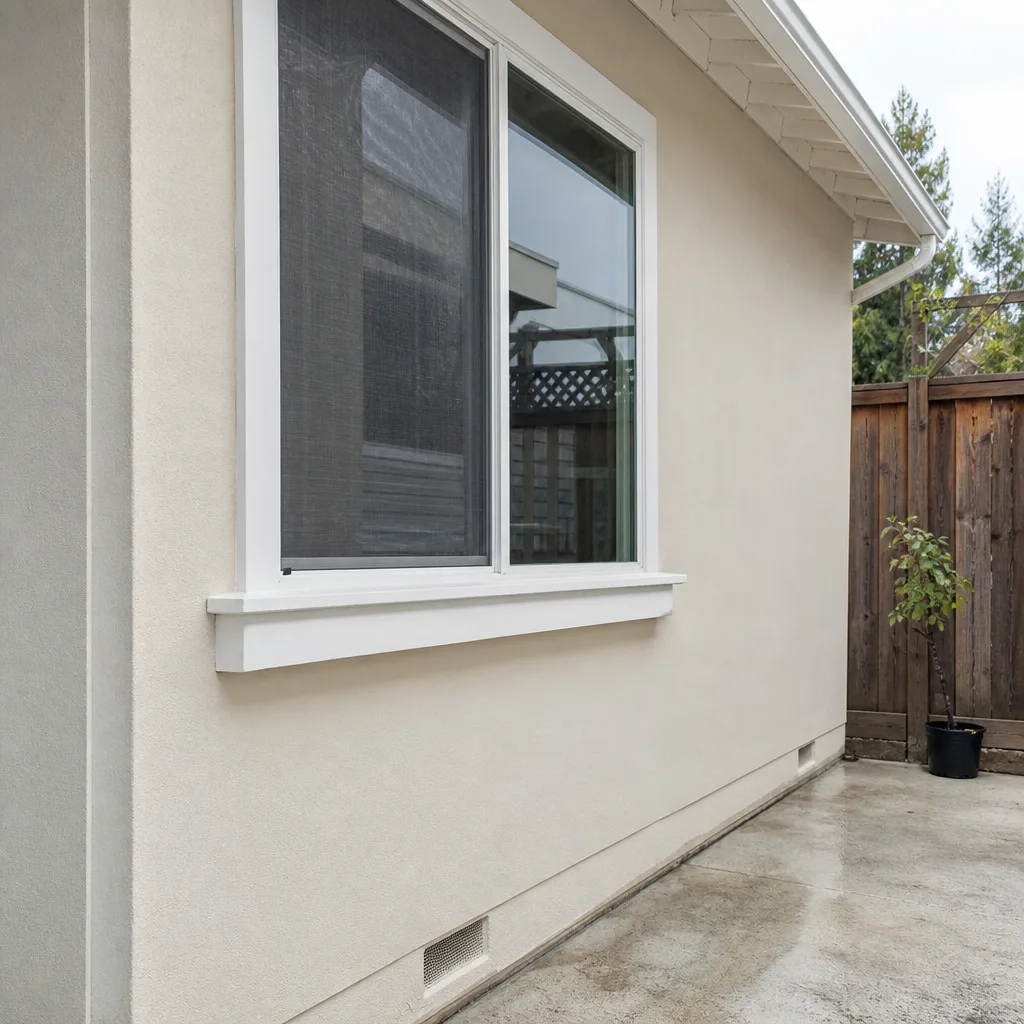 After
After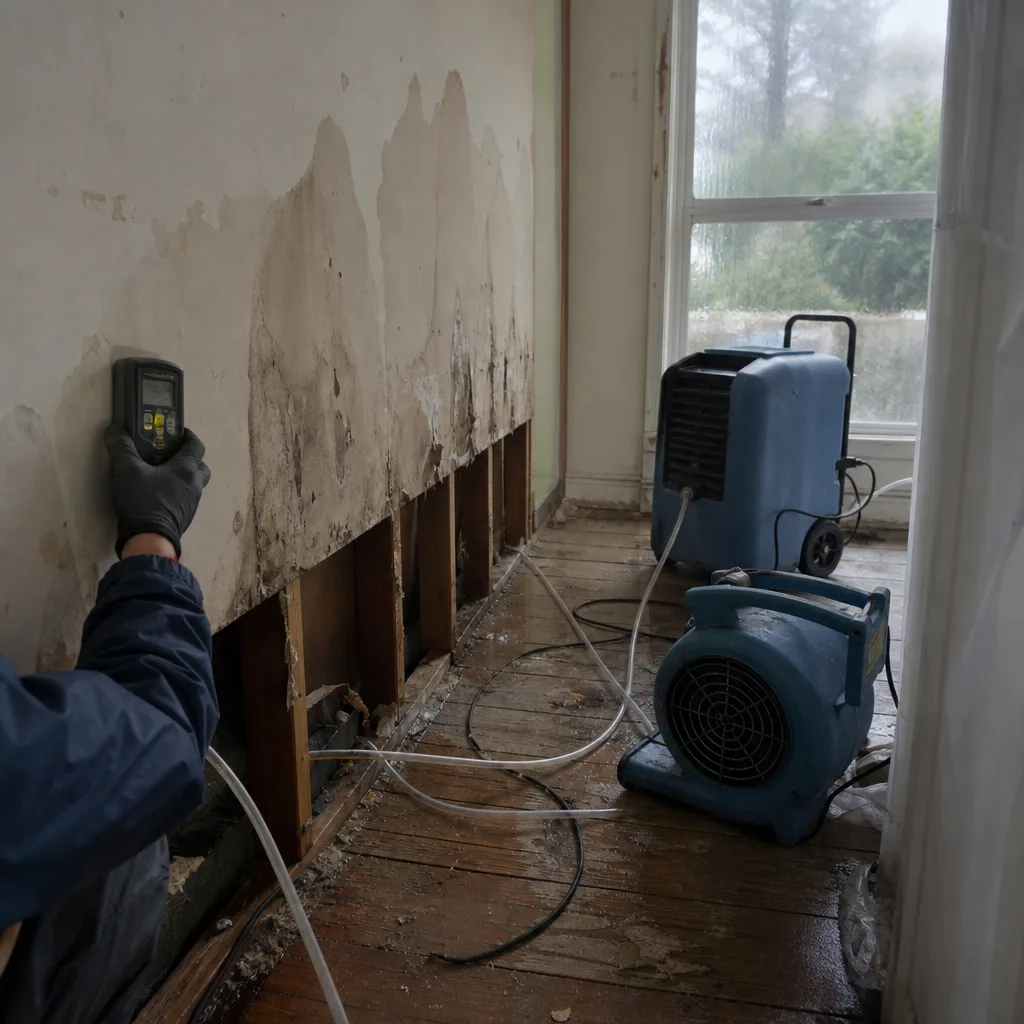 Before
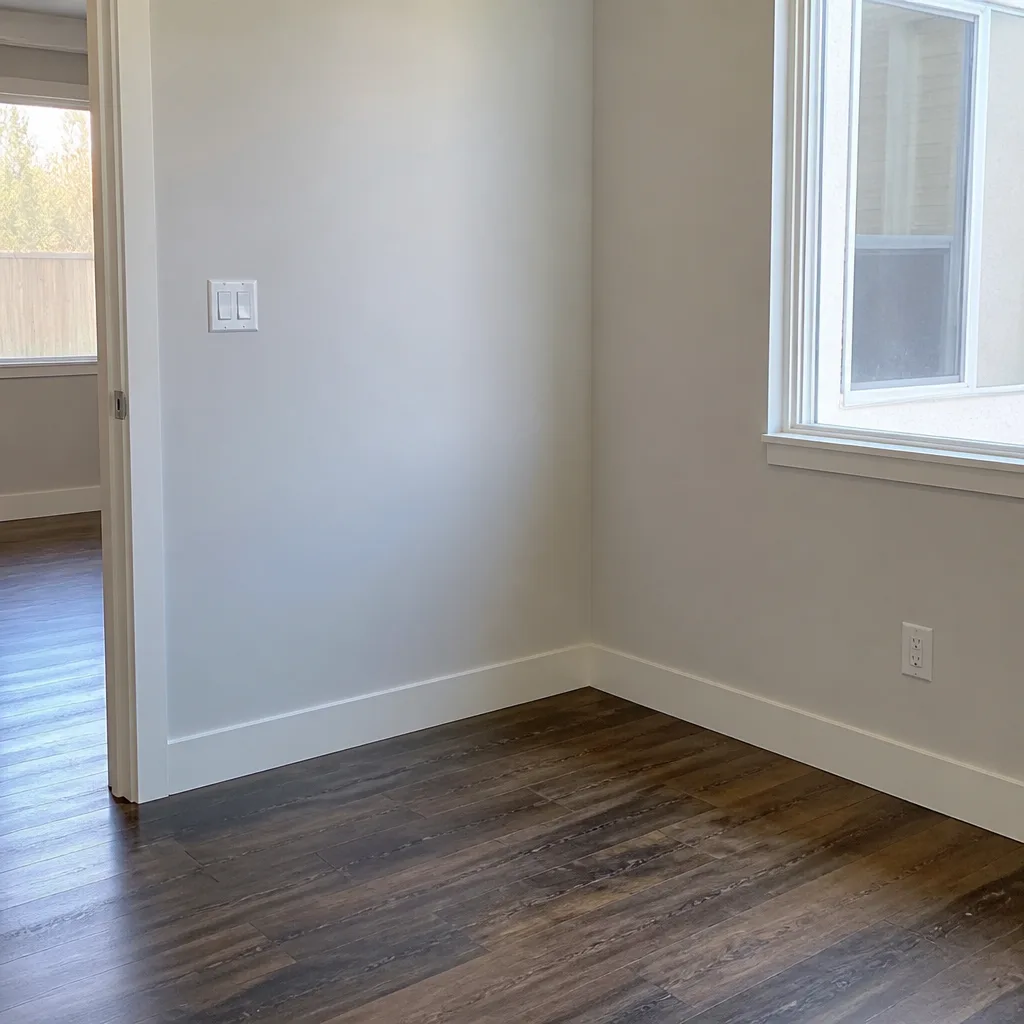 After
After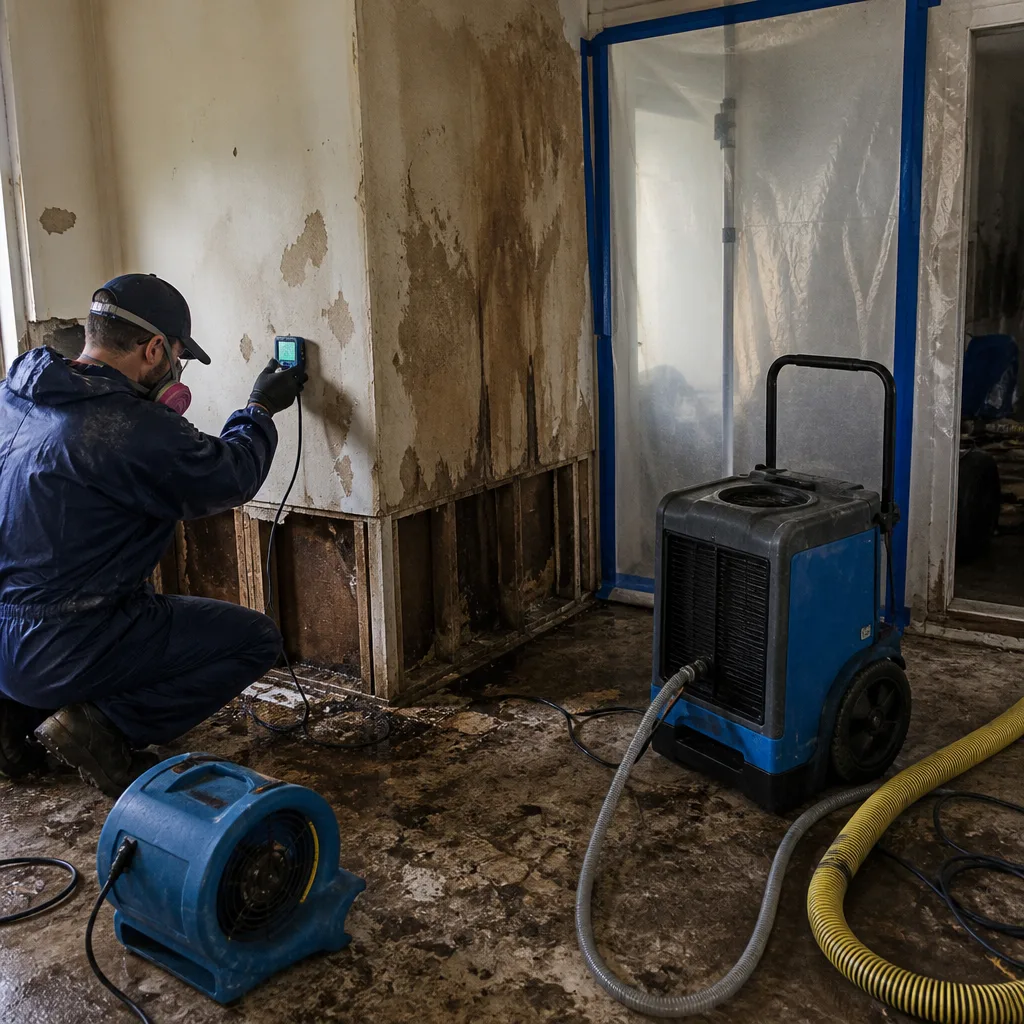 Before
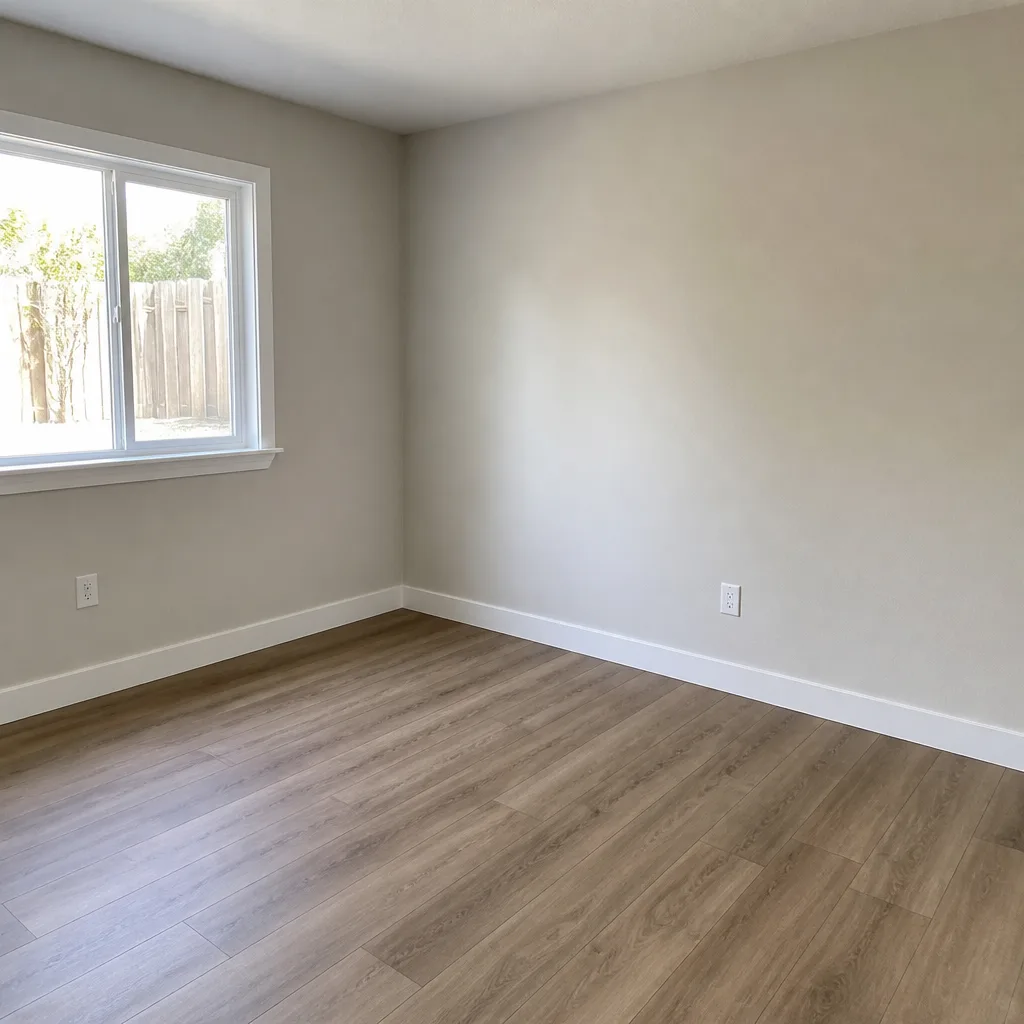 After
AfterTrusted Storm & Disaster Restoration for San Marcos Homeowners
Our Storm & Disaster Restoration cost guide shows San Marcos jobs typically run $2,800-$18,500 depending on damage scope, with emergency board-up and roof tarping starting at $450-$1,200. Most San Marcos homeowners see crews on-site within 60-90 minutes of calling, and full documentation for insurance begins on the first visit. Call (858) 434-8474 now - a live person answers, 24 hours a day, 7 days a week, and a written price arrives before any work starts.
San Marcos sits in a tricky spot. The hills behind Discovery Lake funnel wind down into the San Marcos Creek corridor. The 78 freeway corridor traps heat that builds afternoon thunderstorms in August and September. And when the Santa Ana winds arrive - usually October through January - they hit the ridge-top homes along Twin Oaks Valley Road with sustained gusts that peel back composition shingles and drive rain through ridge vents. We’ve restored more than 12,000 homes since 2011 through our San Marcos Storm & Disaster Restoration services, and the pattern here is consistent: the damage that looks minor from the street often hides moisture migration inside wall cavities that standard adjusters miss without psychrometric documentation.
Alicia Brennan founded Back to Dry Restoration after working claims on the carrier side and watching homeowners lose thousands on disputes over “pre-existing” damage that was actually storm-driven. That’s why every San Marcos job starts with a written price before work begins - Haven Standard, Clause 1 - and ends with a photo record, a drying log, and a signed 365-Day Done Right Promise. No scope creep. No voicemail trees while water keeps moving. Just documented evidence that turns your restoration invoice into a claim your adjuster pays without a fight.
What Our Storm & Disaster Restoration Service Includes
Storm Damage Cleanup
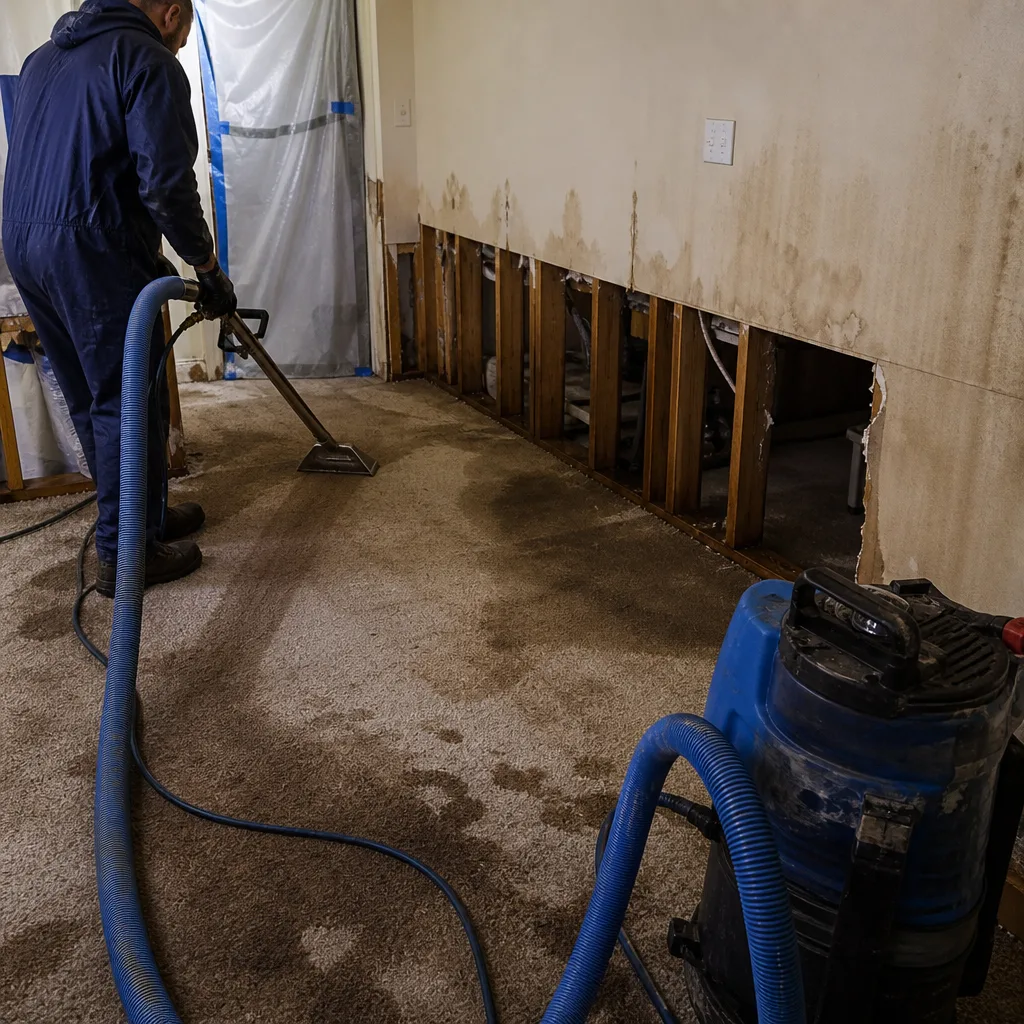
Storm damage cleanup is the systematic removal of water, debris, and compromised materials after a weather event, followed by structural drying and documentation for insurance. In San Marcos, we see this most after the fast-moving cells that drop half an inch of rain in twenty minutes onto already-saturated soil in the San Elijo Hills area. Our crews arrive with moisture meters, thermal imaging, and extraction units from Phoenix and XPOWER to map exactly what got wet, document it with photos, and begin controlled drying before mold spores activate - usually 24 to 48 hours after saturation.
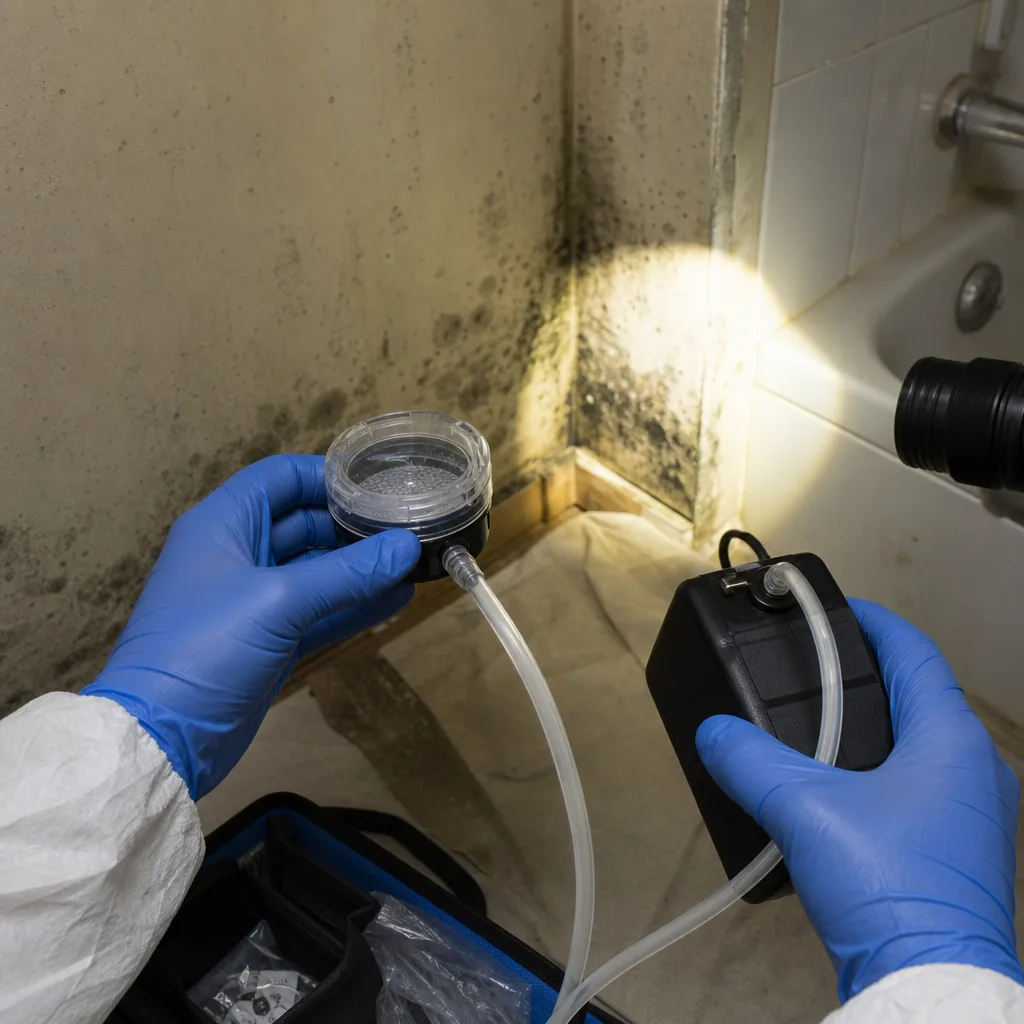
Flood Damage Restoration
Flood damage restoration addresses standing water intrusion from overwhelmed drainage, creek overflow, or failed sump systems, distinct from simple leaks because it involves Category 2 or 3 water requiring antimicrobial treatment. San Marcos Creek runs full and fast after winter storms, and homes near the creek bed in the Civic Center neighborhood have seen foundation seepage that rose two feet up finished walls. We deploy Injectidry cavity drying systems and B-Air axial fans to force air through wall voids without destructive tear-out, documenting every moisture reading to IICRC standards so your carrier sees exactly why each line item was necessary.
Emergency Board-Up
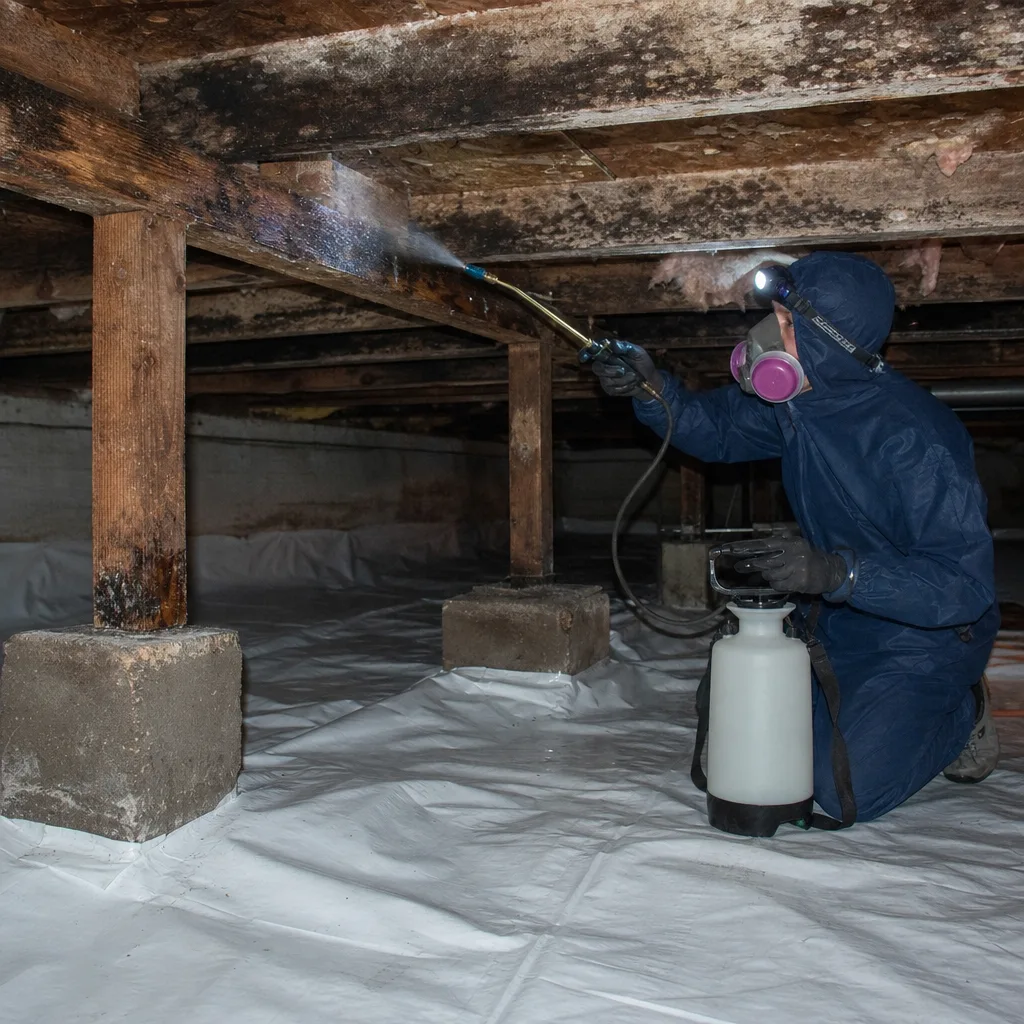
Emergency board-up is the temporary securing of broken windows, doors, and structural openings to prevent further water intrusion, vandalism, and liability exposure after storm damage. In San Marcos, we board up most often after wind-driven debris shatters sliding glass doors in the hillside homes above Mission Road, or after tree strikes punch through garage doors in the older neighborhoods near Woodland Parkway. Our crews carry pre-cut plywood inventory in standard door and window dimensions, plus a battery-powered cutting station for custom sizes, and we photo-document the before condition of every opening to protect you from disputes about pre-existing damage.
Roof Tarping
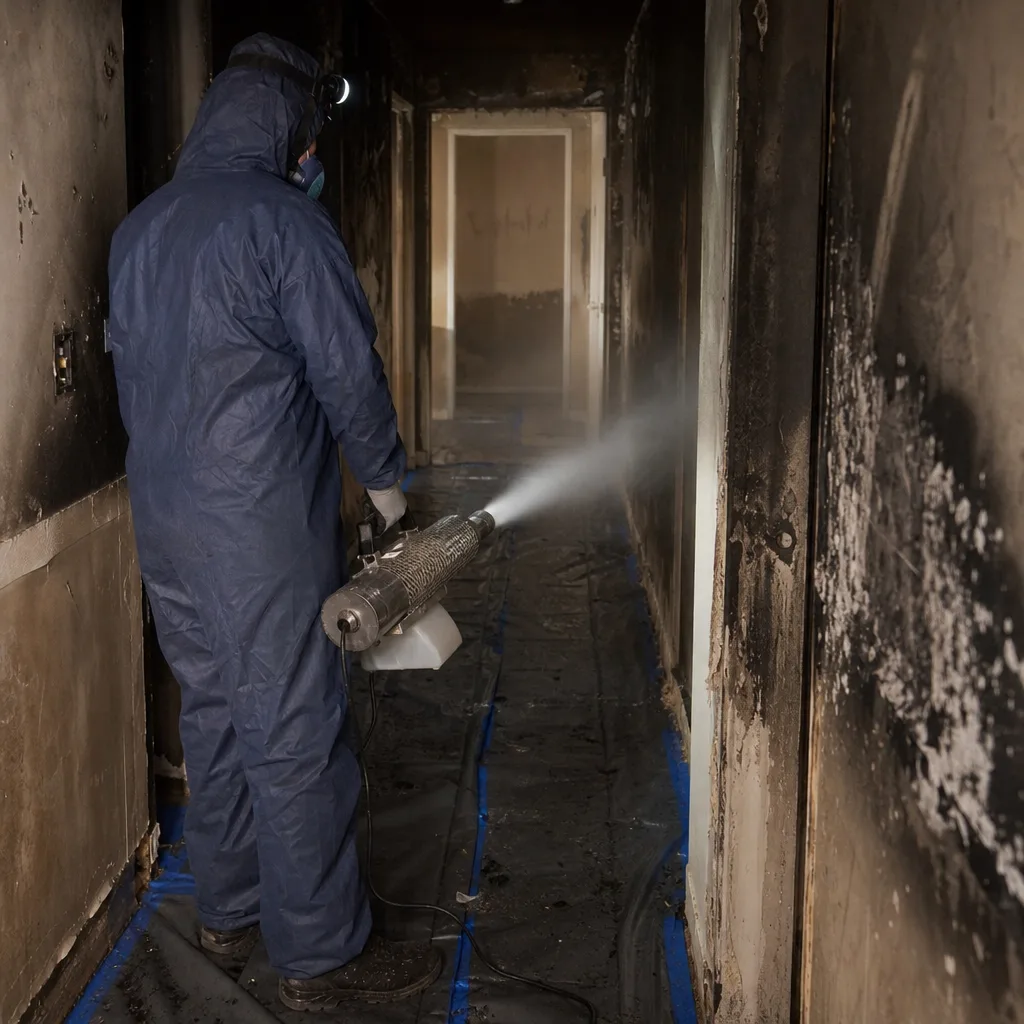
Roof tarping is the temporary weatherproofing of compromised roofing to stop active leaks until permanent repairs or replacement can be scheduled and scoped. The Santa Ana wind events that hit San Marcos hardest - particularly along the exposed ridgelines of Rancho Dorado and the hills above Lake San Marcos - often leave continuous sections of lifted or missing shingles that channel rain directly into attic insulation, similar to the Storm & Disaster Restoration in Vista we perform for neighboring communities. We use 10-ounce reinforced polyethylene tarps with 2×4 anchor boards, not just weighted edges, because San Marcos afternoon winds can peel back anything less secure. Every tarp installation is photographed from multiple angles for your adjuster, with a written scope for permanent repair priced separately so you know exactly what temporary protection costs versus full restoration.
Debris Removal
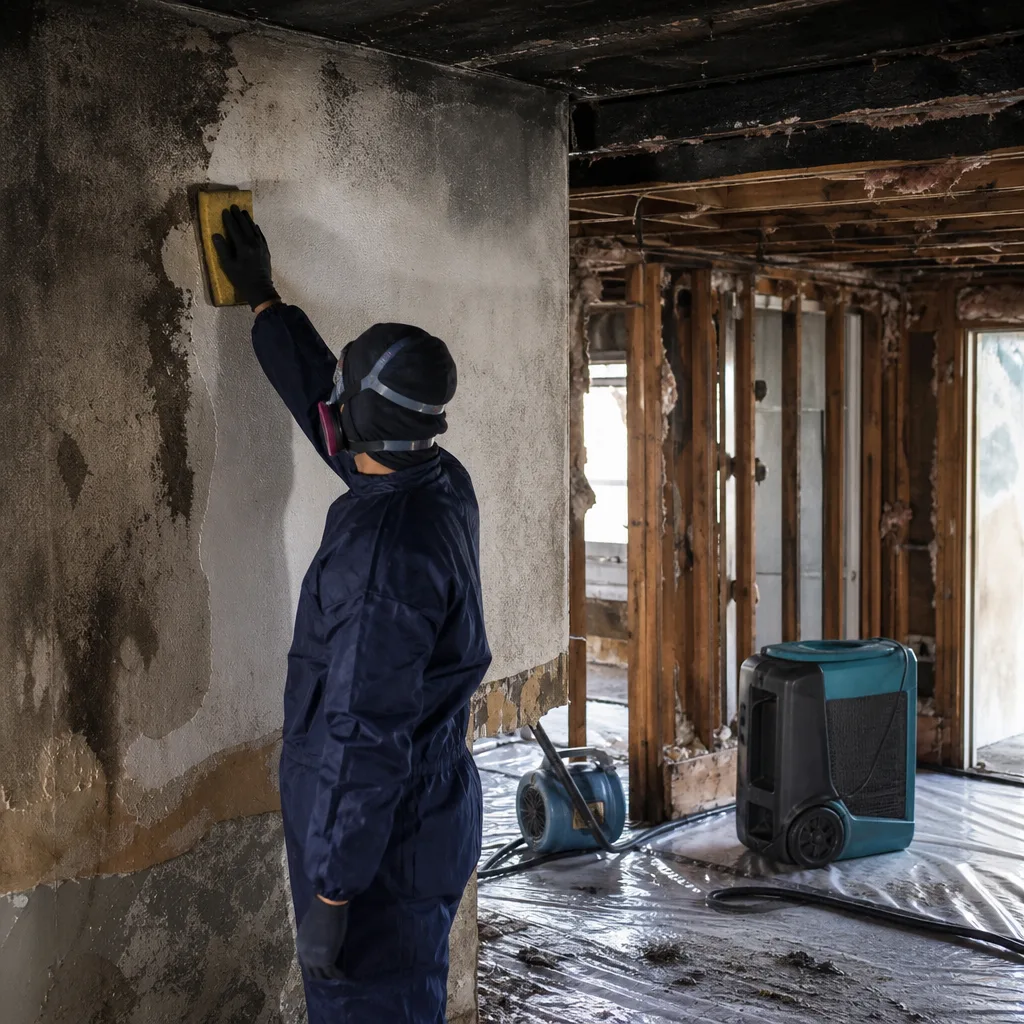
Debris removal is the controlled hauling and disposal of storm-damaged materials - tree limbs, shattered fencing, saturated drywall, ruined insulation - that cannot be restored and pose safety or secondary damage risks. After the 2023 January storms, we removed seventeen tons of debris from a single San Marcos property where a mature eucalyptus on the Cal State San Marcos hillside came down across a pool enclosure and guest house. We sort debris by material classification for proper disposal documentation, which matters because carriers reimburse at different rates for vegetative debris versus construction debris, and our photos of each load prove what left your property and why.
Wind Damage Repair
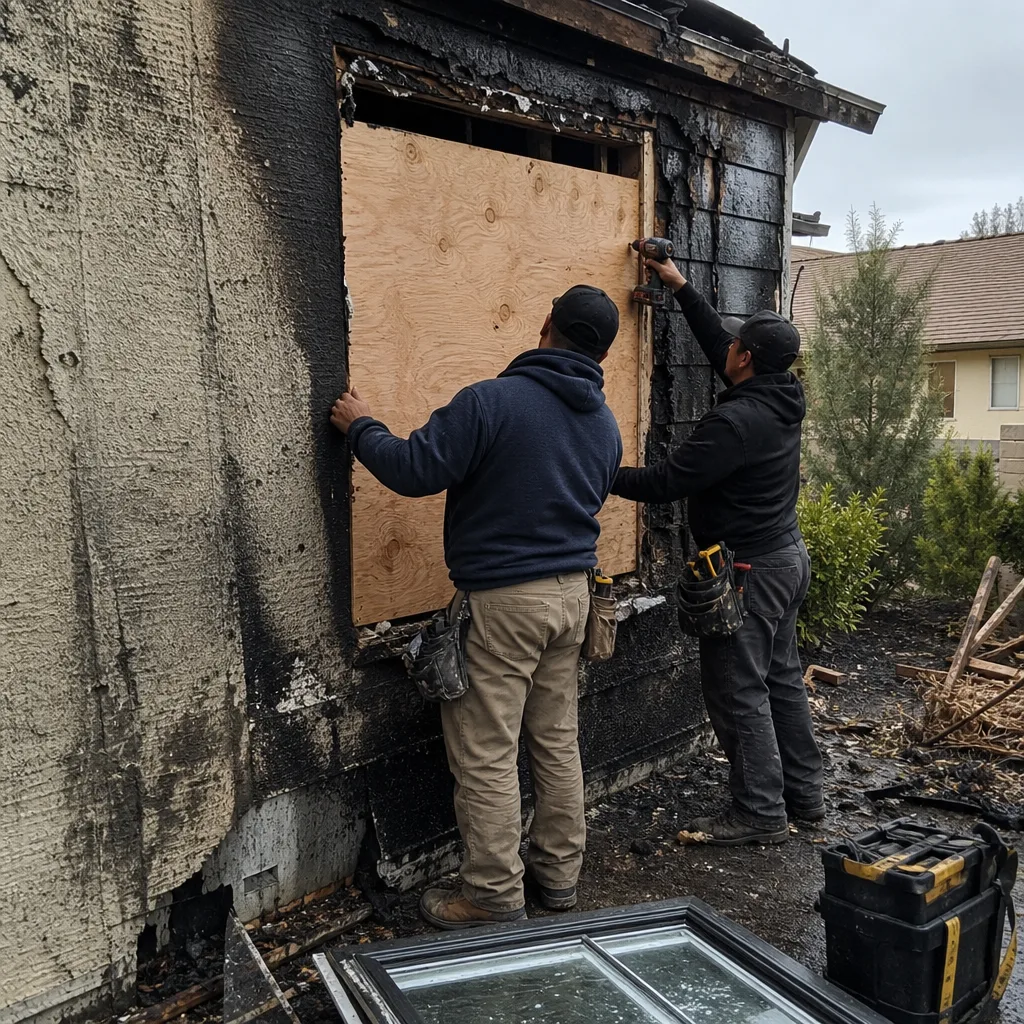
Wind damage repair restores structural and envelope components - siding, soffits, fascia, roofing, and exterior doors - that have been deformed, detached, or penetrated by sustained or gust-driven air pressure. San Marcos wind damage concentrates in two zones: the exposed western slopes above Palomar College where the terrain accelerates prevailing winds, and the newer construction in San Elijo Hills where builder-grade trim and siding fasteners sometimes fail under loads they were never tested for. We don’t just reattach what blew off; we inspect the substrate for hidden moisture intrusion, document the fastener pattern and material specification, and write a scope that addresses why the failure happened so your repair lasts past the next storm season.
What happens when you call
- 1
A real person answersNo phone trees - you reach a local pro.
- 2
You get an upfront price rangeHonest numbers before anyone is dispatched.
- 3
A background-checked tech heads outLicensed & insured, dispatched right away.
- 4
You approve before work beginsNothing starts until you say go.
Brands We Service for Storm & Disaster Restoration
Our equipment fleet includes professional-grade drying and air-moving systems from Phoenix, XPOWER, and B-Air, each selected for specific performance characteristics in San Marcos’s coastal-influenced climate. Phoenix LGR dehumidifiers extract more moisture per amp draw than conventional units, which matters when we’re running six machines on a generator in a power-outage scenario after a winter storm - common in the hillside neighborhoods above South Rancho Santa Fe Road where SDG&E lines are overhead and tree-exposed. XPOWER’s axial fan design produces the high-velocity airflow that accelerates surface evaporation on concrete slab foundations, the standard construction type in San Marcos’s 1990s and 2000s housing stock, where slab edge moisture can wick upward into wall bottom plates for weeks if not aggressively dried.
B-Air’s compact footprint units fit inside the smaller utility closets and secondary bedrooms typical of San Marcos’s townhome developments along Knoll Road, letting us establish drying zones without displacing residents to hotels. Whether your property requires Phoenix’s capacity, XPOWER’s velocity, B-Air’s maneuverability, or Injectidry’s cavity-specific pressure drying, we match the equipment to the moisture profile - and we document which machines ran where, for how many hours, with what psychrometric readings, so your carrier understands exactly what they paid for. If you have equipment from any of these manufacturers already in place from a previous mitigation attempt, we’ll assess its condition and capacity honestly: sometimes we supplement, sometimes we replace, and we’ll tell you which before any work starts.
BeforeAfterSigns You Need Storm & Disaster Restoration Right Now
- Water stains spreading on ceilings or walls after a storm event. These indicate active or recent moisture intrusion through the roof envelope or siding, and in San Marcos’s warm climate, drywall paper facing begins supporting mold colonization within 48 to 72 hours of saturation. Don’t wait for visible mold - the staining itself documents a breach that requires inspection, moisture mapping, and likely controlled drying even if the leak appears to have stopped.
- Missing, lifted, or creased shingles visible from ground level or a neighbor’s report. A single missing shingle in a wind field exposes the underlayment and roof deck to the next rain, and San Marcos’s position in the rain shadow of the coastal hills means storms can arrive with little warning after days of dry weather that makes shingles brittle. We tarp immediately and scope permanent repair separately, with photos of each damaged area for your adjuster.
- Standing water in crawl spaces, garages, or against foundation walls. San Marcos’s clay-heavy soils in the Discovery Hills area shed water slowly, and even modest rainfall can pool against stem walls if drainage was compromised by prior landscaping or hardscape settlement. This water wicks into sill plates and rim joists, causing decay that progresses silently until floors sag or doors bind - by which point the repair scope has tripled.
- Sagging or separated soffits, fascia, or gutters after wind events. These components protect the roof edge and direct water away from the foundation; when they’re compromised, water runs behind the gutter, down the fascia, and into the wall cavity through the gap between the frieze board and siding. In San Marcos’s Eichler-influenced mid-century homes near the old Highway 395 corridor, this detail is particularly vulnerable because the original construction lacked modern drip-edge flashing.
- Musty odors appearing within 24-48 hours after any water intrusion. Odor indicates microbial activity has begun, even if visible mold hasn’t developed yet. San Marcos’s afternoon temperatures in the 70s and 80s through much of the year create ideal conditions for rapid colonization, and once mold establishes in porous materials like insulation and drywall, removal and replacement becomes necessary rather than cleaning and drying.
Our Storm & Disaster Restoration Process - Step by Step
- 1
Emergency Contact and Dispatch - When you call (858) 434-8474, a live person answers, 24 hours a day, 7 days a week. We don’t use voicemail trees or answering services that callback-queue your emergency. We gather your San Marcos address, the nature of the damage, whether power is on or off, and whether the structure is safe to enter. If board-up or tarping is needed immediately, we dispatch a securement crew while the full restoration team mobilizes equipment.
- 2
On-Site Assessment and Documentation - Our technician arrives with a moisture meter, thermal imaging camera, and photo documentation tablet. We walk the property with you, identify all affected areas including hidden moisture pockets, and take timestamped photos of every damaged surface before anything is moved or removed. In San Marcos, we pay particular attention to slab-edge wicking in homes near the creek corridor and wind-driven rain penetration in ridge-top exposures. You receive a copy of all photos within 24 hours.
- 3
Written Scope and Price Before Work Begins - Haven Standard, Clause 1 requires a written price before any work starts, with no exceptions. Your scope lists every task, material, and equipment hour, with line-item pricing. For insurance claims, we format the scope to carrier standards and can submit directly to your adjuster with your authorization. For self-pay, we offer the same documentation so you can compare against any competitor’s quote - and our Free Second Opinion applies if you bring us another written estimate.
- 4
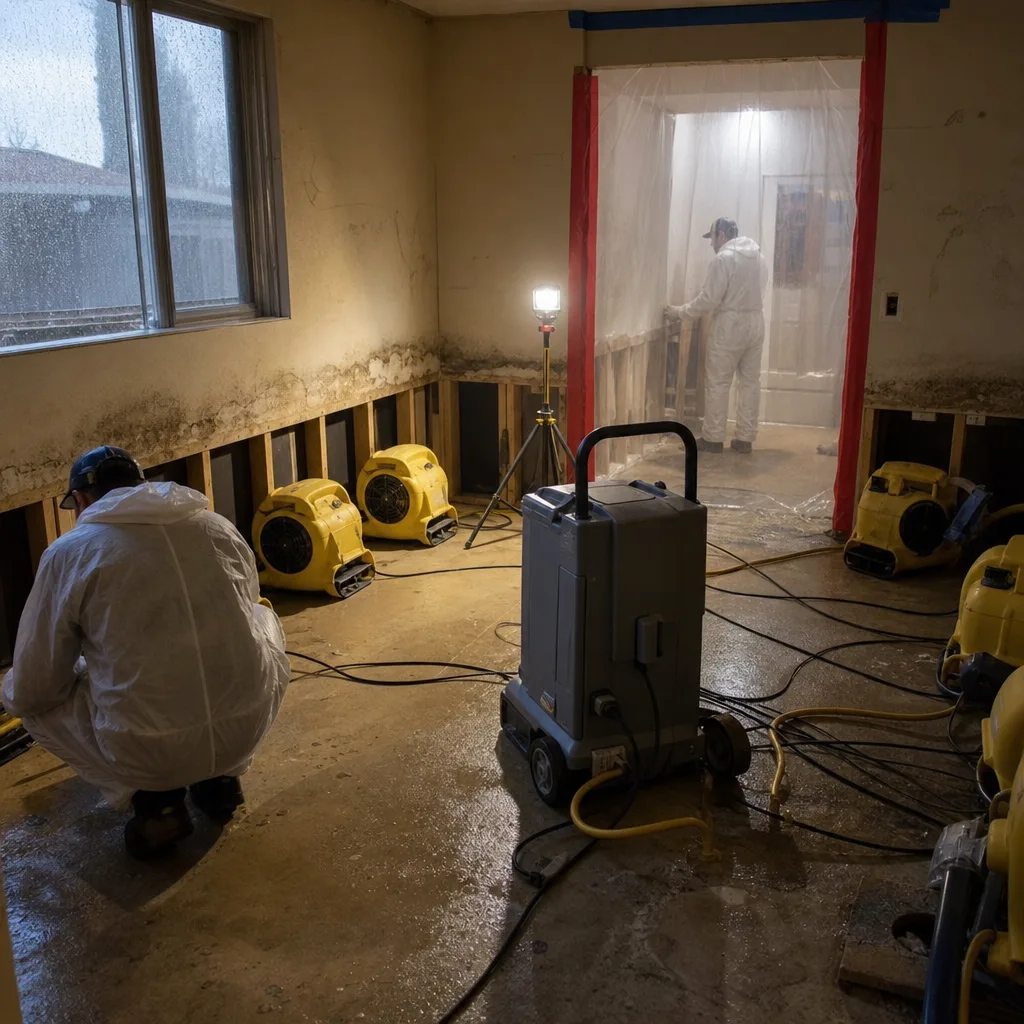
Secure, Extract, Dry, and Document - Board-up and tarping happen first if the envelope is compromised. Then water extraction, then placement of drying equipment selected for your specific moisture profile. We record psychrometric data - temperature, relative humidity, and vapor pressure differential, which is the force that actually drives moisture out of materials into the air - at least daily, more often in the first 48 hours. These logs become part of your documentation package and prove to your carrier that drying was achieved scientifically, not guessed.
- 5
Verification, Rebuild Scope, and Warranty - We verify dryness with moisture meters calibrated to the specific material species in your home - oak trim reads differently than pine, stucco differently than drywall. Once verified, we present a rebuild scope if structural or finish repair is needed, priced separately from mitigation. Every job closes with a signed 365-Day Done Right Promise under The Haven Standard: if anything we dried or repaired fails due to our work, we make it right at no charge.
How Much Does Storm & Disaster Restoration Cost in San Marcos?
Storm and disaster restoration pricing in San Marcos reflects the specific damage type, the affected square footage, and whether the work is emergency stabilization or full restoration. Here are the ranges we see most often:
| Service | Typical Range in San Marcos | What Drives the Price |
|---|---|---|
| Emergency board-up (standard openings) | $450-$1,200 | Number of openings, custom cuts needed, height/access difficulty |
| Roof tarping (up to 2,000 sq ft roof area) | $650-$1,800 | Roof pitch, wind exposure, need for interior water diversion |
| Water extraction and initial drying (per affected area) | $1,400-$4,200 | Category of water, affected square footage, equipment count and days |
| Full flood damage restoration (typical San Marcos home) | $6,500-$18,500 | Depth of water, duration before extraction, finish materials affected, mold prevention needs |
| Wind damage repair (structural envelope) | $2,800-$12,000 | Extent of siding/roof damage, hidden moisture in wall cavities, matching existing finishes |
| Debris removal (per load, sorted and documented) | $380-$950 | Volume, material type, access for hauling equipment, disposal classification |
What moves a job toward the higher end: Category 3 water (sewage or ground-source flooding), delayed discovery where mold has established, structural components that require engineering review, and homes with custom or discontinued finishes that require extended sourcing. What keeps costs controlled: fast extraction, immediate documentation that prevents scope disputes, and accurate moisture mapping that avoids unnecessary tear-out of dry materials.
Every estimate we provide is free, written, and itemized. Haven Standard, Clause 1 means the price you approve is the price you pay - no additions once our crew is inside your home. Bring a competitor’s written estimate and we’ll review it at no charge; if we can meet or beat their scope with equivalent documentation, we’ll show you how. If their scope is missing critical steps, we’ll point that out too. Call (858) 434-8474 for your written estimate.
Storm & Disaster Restoration Near San Marcos - Our Service Area
Back to Dry Restoration responds to storm and disaster calls throughout northern San Diego County, with crews positioned for 60-90 minute arrival across San Marcos, Lake San Marcos, and Escondido. We regularly serve Vista, Carlsbad, Encinitas, Oceanside, Solana Beach, Valley Center, Del Mar, Poway, and Camp Pendleton South. The 78 corridor connects our warehouse to San Marcos in under twenty minutes, and our familiarity with local building departments - San Marcos’s permit requirements for roof replacement differ from Escondido’s, for instance - means your restoration documentation meets the standard your adjuster and your city both expect. Response to Lake San Marcos and the hillside neighborhoods above Twin Oaks Valley Road typically runs toward the faster end of our range; Camp Pendleton South and Valley Center may extend toward 90 minutes depending on gate access and rural addressing.
Serving San Marcos, CA - Our Local Coverage Area
We’re based in the San Marcos area and know this community well. Use the map below to see our service coverage - if you’re nearby, we can almost certainly help.
Frequently Asked Questions - Storm & Disaster Restoration in San Marcos
Storm and disaster restoration is the professional recovery of a property’s structure, systems, and finishes after weather-related damage, distinct from simple repair because it addresses hidden moisture, microbial risk, and documentation for insurance. In San Marcos, this typically means water extraction, structural drying, debris removal, temporary weatherproofing, and rebuild coordination after events ranging from Santa Ana wind damage to flash flooding in the creek corridor - work we also provide through our Storm & Disaster Restoration in Escondido. We document every phase with photos, moisture logs, and written scopes so your carrier understands what was done and why.
Emergency stabilization - board-up, tarping, and initial water extraction - usually completes within 2 to 6 hours of our arrival. Structural drying runs 3 to 7 days depending on material saturation, ambient conditions, and whether we need to access wall or floor cavities with Injectidry systems. Full restoration including rebuild of finished surfaces typically spans 2 to 8 weeks, driven by material availability and any required permit timelines with the City of San Marcos. We provide a written schedule with your scope so you know what happens when, and we update it if conditions change.
Most San Marcos homeowners pay between $2,800 and $18,500 for full storm restoration, with emergency services like board-up and tarping starting at $450-$1,200. The final cost depends on damage category, affected square footage, finish materials, and whether mold prevention or remediation is required. Every Back to Dry job starts with a free, written, itemized price before work begins - Haven Standard, Clause 1 - and we offer a Free Second Opinion on any competitor’s written estimate. Call (858) 434-8474 for your specific quote.
Yes - we deploy Phoenix dehumidifiers, XPOWER and B-Air air movers, and Injectidry cavity drying systems on San Marcos jobs regularly, and we can assess existing equipment from these manufacturers if a prior mitigation attempt was incomplete. Our technicians are trained on the specific maintenance indicators and performance specifications of each brand, and we document which equipment ran where, for how long, with what results. If you own equipment from any of these manufacturers and need verification of its adequacy for your situation, we’ll evaluate honestly and tell you whether it can be supplemented or should be replaced.
Yes - a live person answers our phone 24 hours a day, 7 days a week, with no voicemail trees or next-business-day callbacks. Storm damage doesn’t wait for business hours, and water keeps moving through wall cavities and into subfloors while you wait. We dispatch emergency crews for board-up, tarping, and extraction within 60-90 minutes across San Marcos, including the San Elijo Hills, Discovery Hills, and Lake San Marcos areas. Call (858) 434-8474 anytime.
Every job is covered by our 365-Day Done Right Promise under The Haven Standard - a signed, written warranty, not a verbal assurance. If any work we performed fails due to our materials or methods within one year, we return and make it right at no charge. This applies to drying performance, rebuild quality, and documentation accuracy. The warranty transfers if you sell your home during the coverage period, and we maintain your job file with photos, moisture logs, and scope documents for the full year so any question can be answered with evidence.
If the structure is safe to enter, turn off electricity to affected areas at the breaker panel - standing water and energized circuits are a lethal combination, and San Marcos’s older neighborhoods near Woodland Parkway still have original Zinsco or Federal Pacific panels that require extra caution. Gather your insurance policy number and agent contact, photograph the damage yourself if you can do so safely, and move valuable items out of affected areas if they haven’t been contaminated. Don’t enter crawl spaces or attics with visible structural damage, don’t operate electrical equipment near water, and don’t attempt DIY water extraction if the water is gray or black category - the health risk and documentation complications aren’t worth it. We’ll handle the rest when we arrive.
Schedule Your Storm & Disaster Restoration Service in San Marcos Today
Call (858) 434-8474 now - a live person answers, 24 hours a day, 7 days a week. We’ll dispatch a crew, document the damage, and deliver a written price before any work starts. Every job carries our 365-Day Done Right Promise, and every estimate is free with no obligation. Back to Dry Restoration has served San Marcos since 2011 with the documentation-first approach that turns restoration invoices into paid claims.
Written by Alicia Brennan, Owner at Back to Dry Restoration, serving San Marcos since 2011.