
Last updated September 23, 2026
Free visual inspection and a written scope of work before any mitigation begins - photos, moisture readings, and drying logs go in your claim file
The scope we write is the scope we bill. Anything new gets shown to you, in writing, before we touch it.
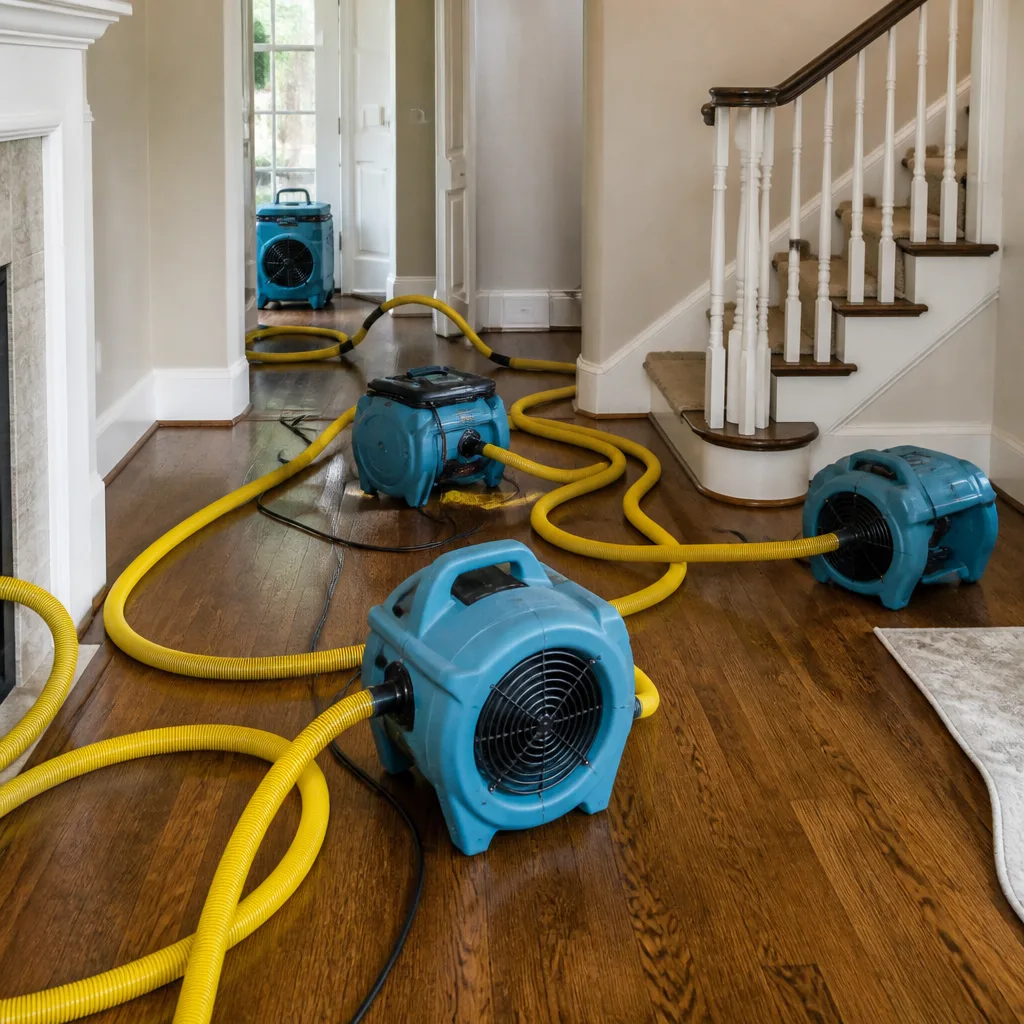


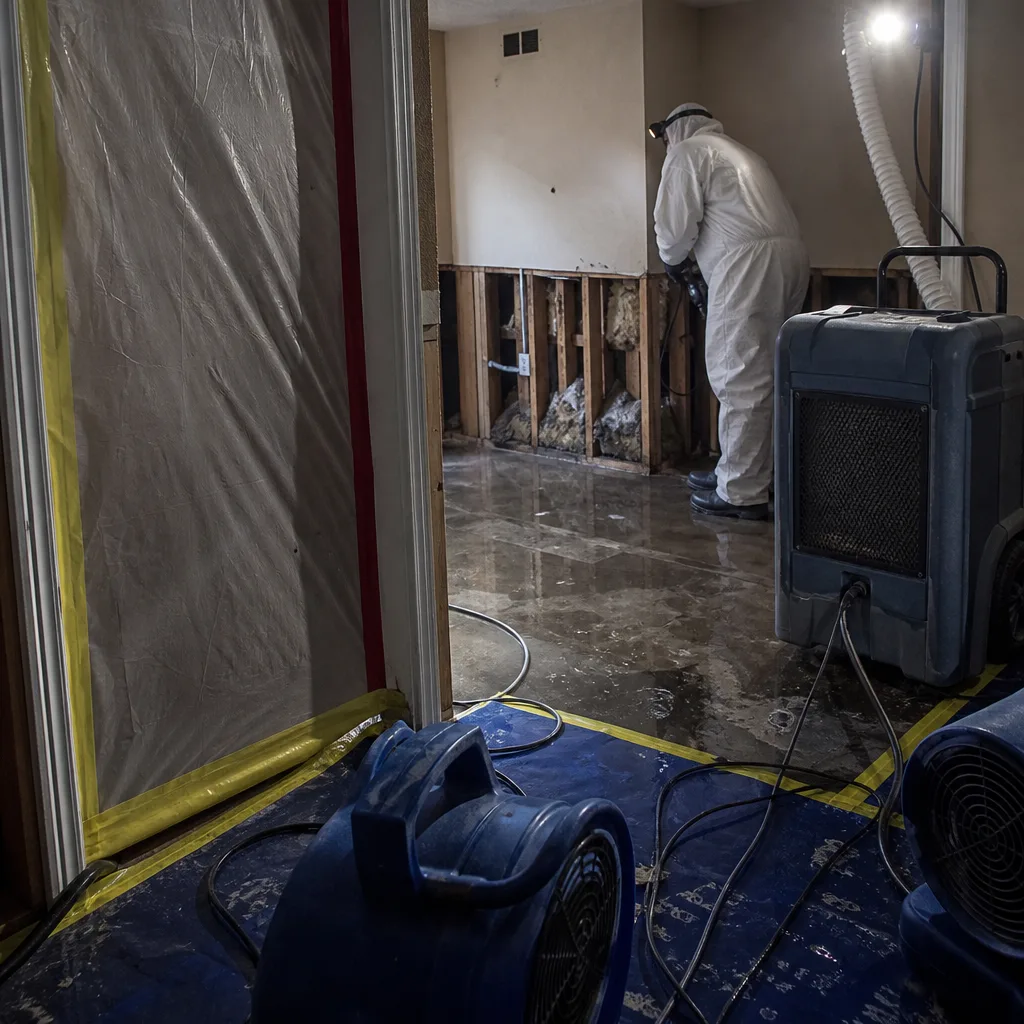 Before
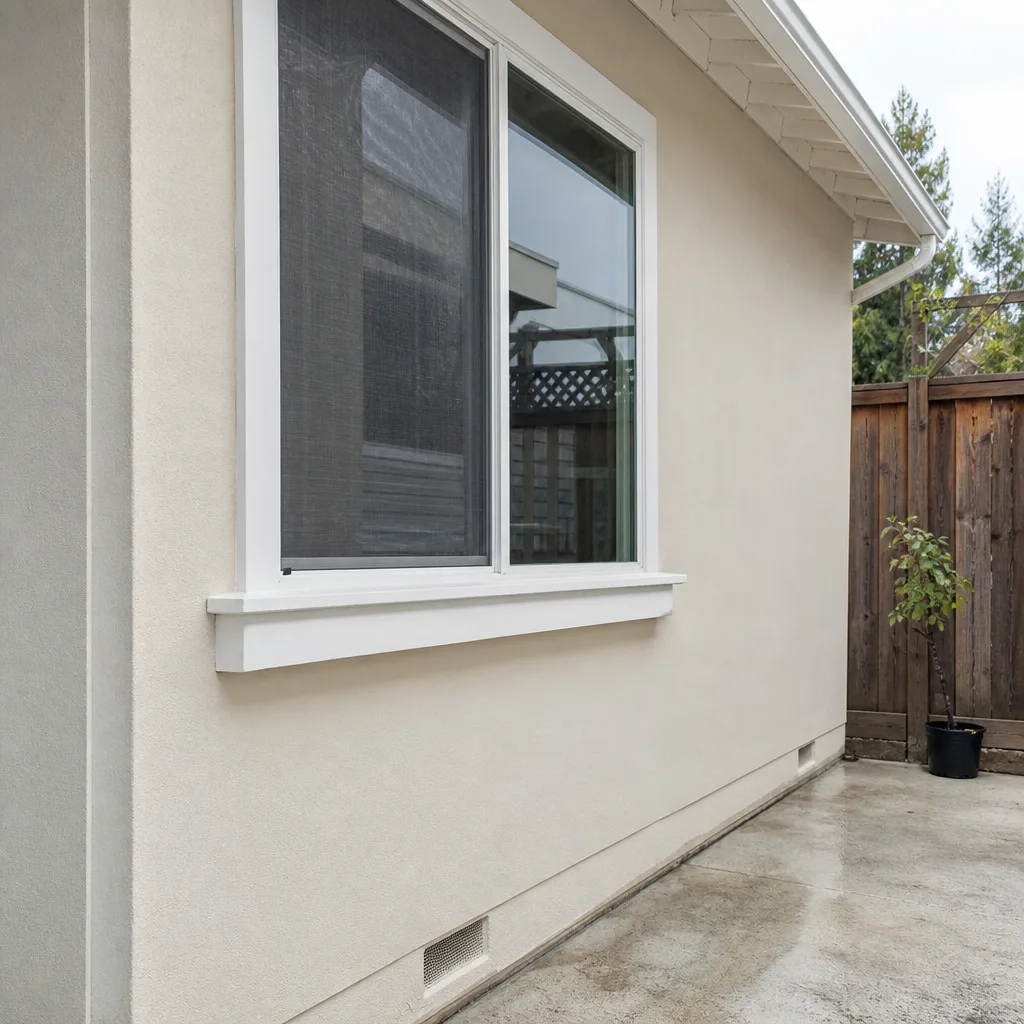 After
After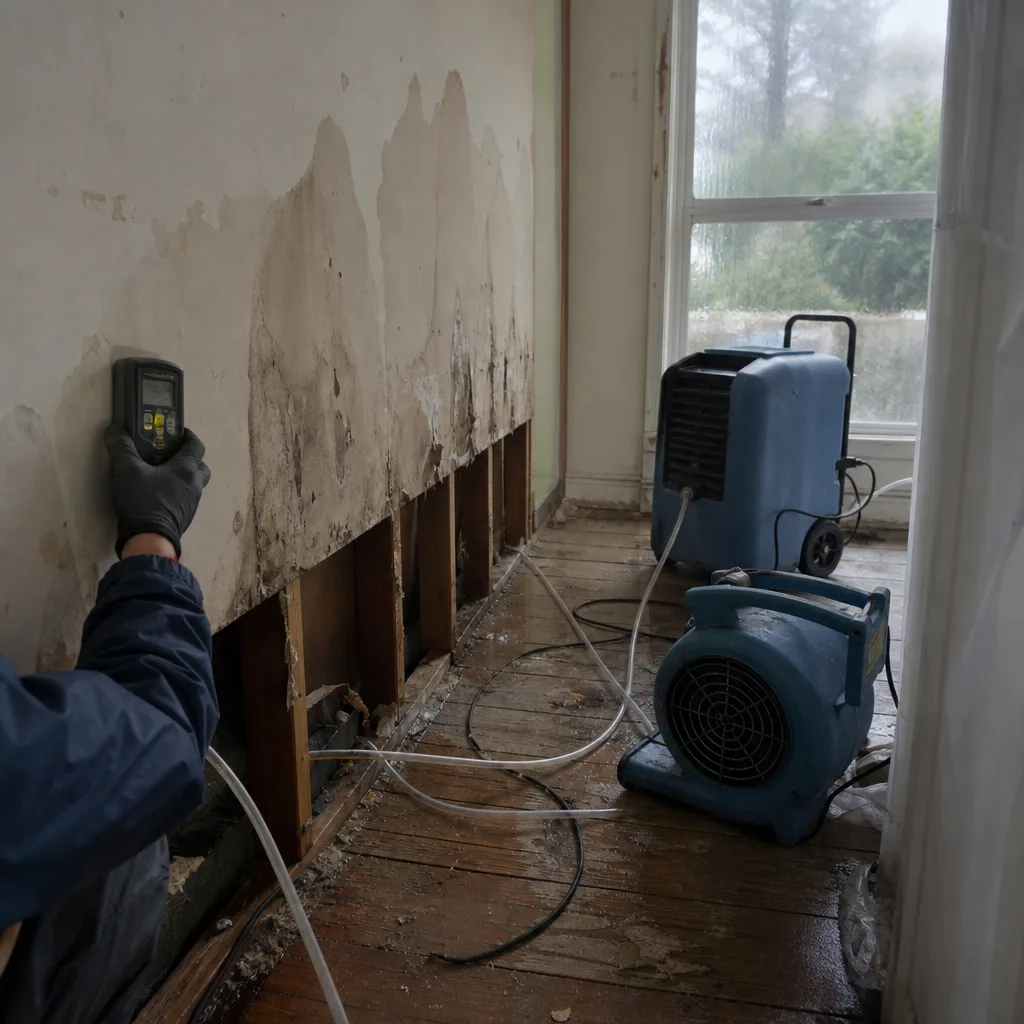 Before
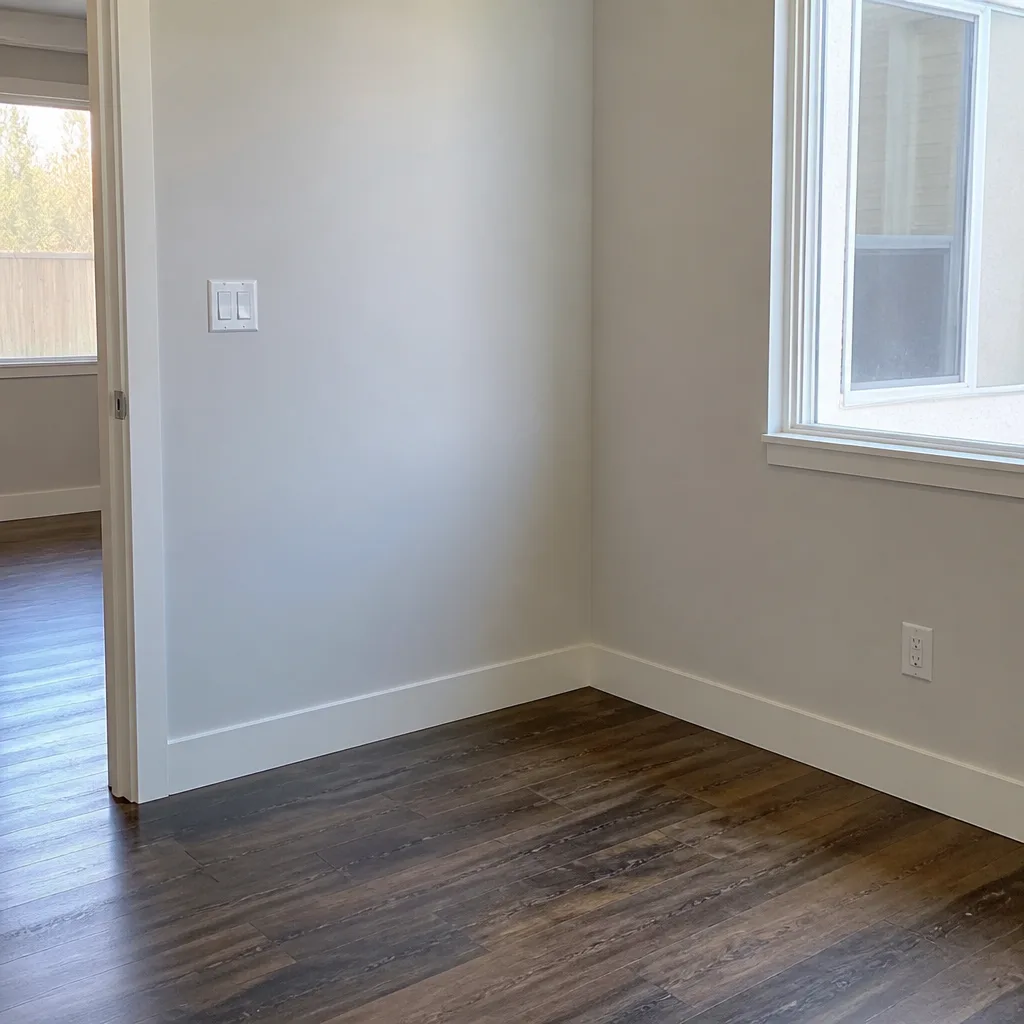 After
After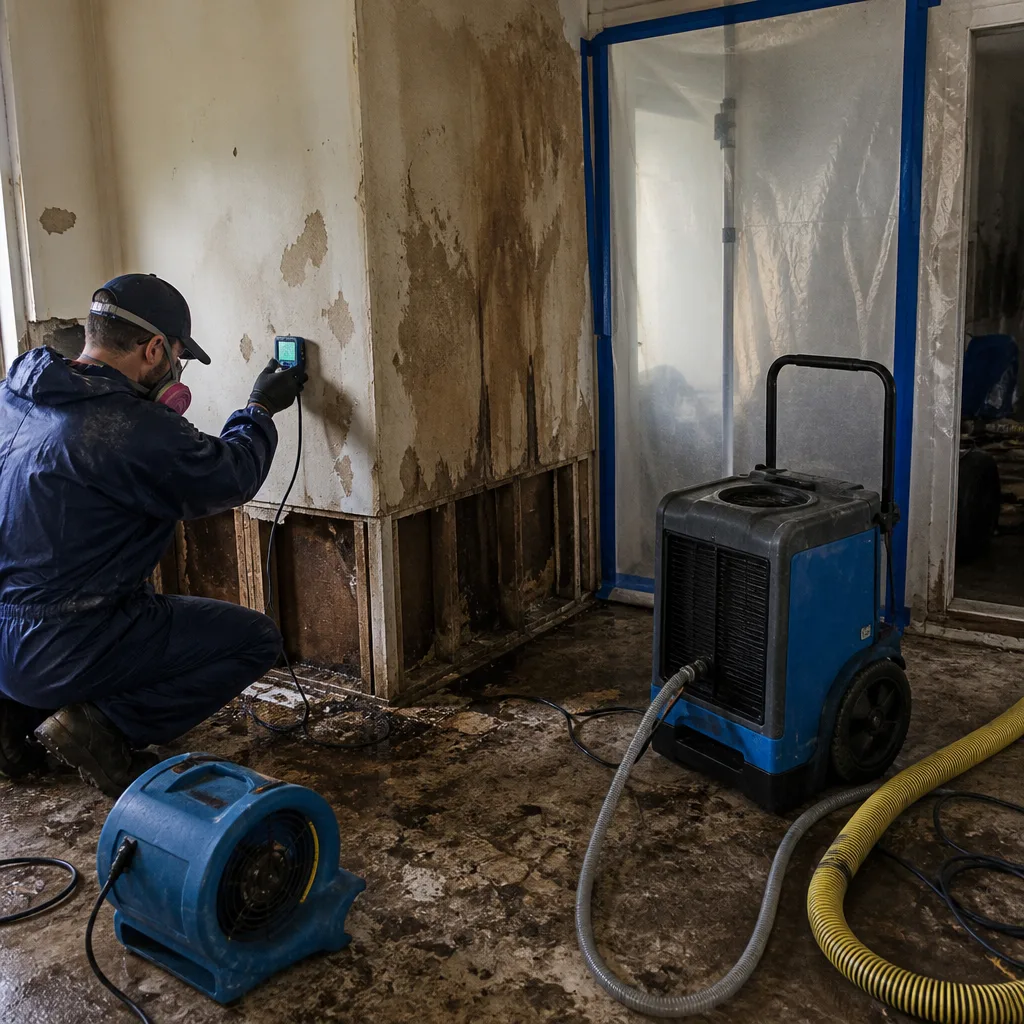 Before
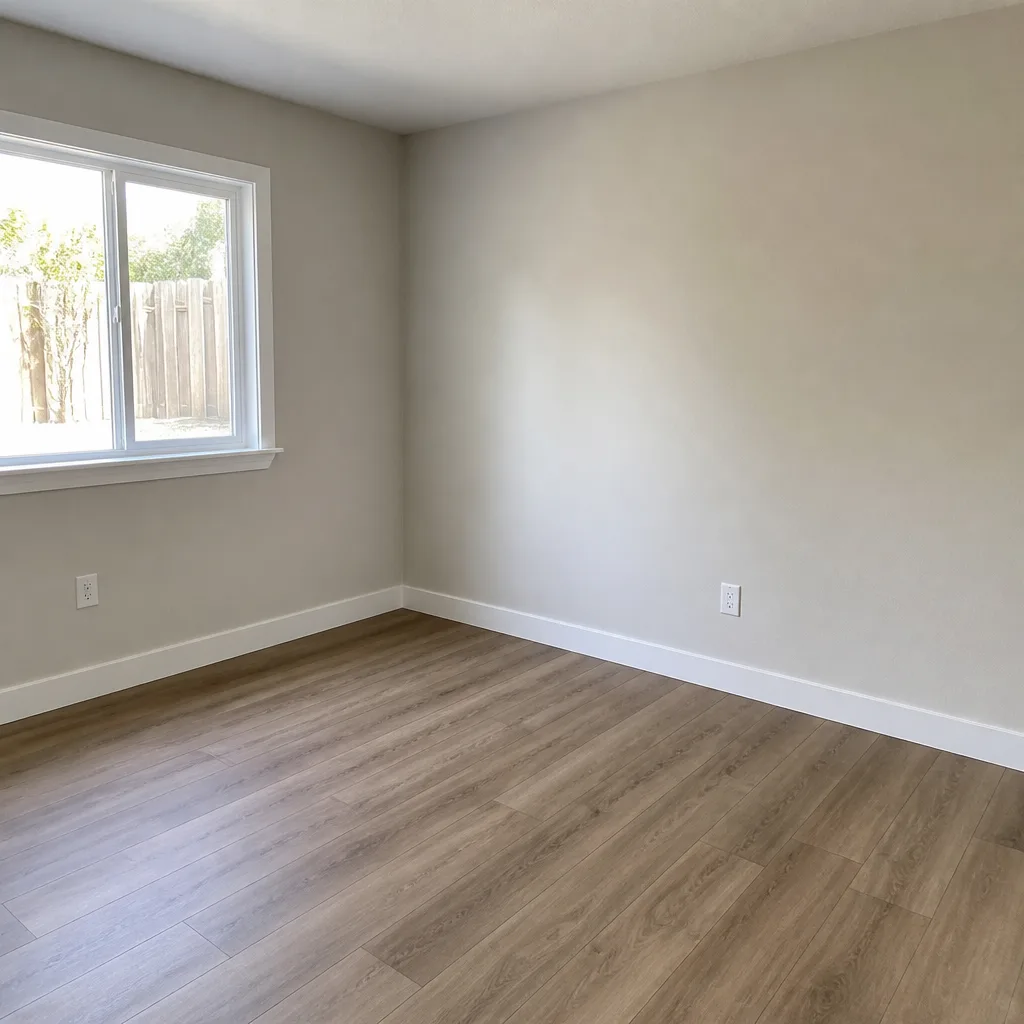 After
AfterDamage Restoration Cost Breakdown: The San Marcos Homeowner’s Reference for 2026
The same 200-square-foot water loss in San Marcos can generate invoices ranging from $4,200 to $11,800 from different contractors. In most cases, the lower bid is missing equipment charges that the insurer will require documented proof of anyway. This guide and our DIY vs Professional Damage Restoration: The San Marcos Homeowner’s Decision Guide decode every line item so you can read a restoration bid the way a claims adjuster does: by tracing how material type, moisture category, affected square footage, and documentation requirements compound into a final number. You’ll learn what San Marcos homeowners actually paid in 2025, why IICRC water categories legally change your labor rate, and how to spot a scope that’s built to survive an insurance review versus one built to win your signature.
Quick Answer
Water damage restoration in San Marcos typically costs $4.50-$12.00 per square foot depending on water category, material type, and documentation standard. A documented job with daily moisture logs, photo records, and a written closeout file runs 8-15% higher upfront than an undocumented bid, but eliminates the adjuster disputes that cost homeowners thousands in uncovered charges. For an exact written price before any work begins, call DryMark Restoration San Marcos at (858) 434-8474.
Table of Contents
- Why the Same Loss Gets Different Prices
- San Marcos Market Rates for 2026
- How IICRC Water Categories Change Your Bill
- Equipment Line Items: What You’re Actually Renting
- The Documentation Premium: Paying for Proof
- How to Read a Xactimate Estimate
- San Marcos Labor Market Factors
- Common Mistakes to Avoid
- When to Call a Professional
- Frequently Asked Questions
- The Bottom Line
BeforeAfterWhy the Same Loss Gets Different Prices
Three contractors walk into a San Marcos home with water in the hallway. One quotes $3,800, one quotes $6,200, and one quotes $9,400. The homeowner assumes the middle bid is safest. Often, the middle bid is simply the most complete.
Here’s what we see after 12,000 homes restored since 2011: low bids typically omit four categories that appear later as “additional services.” These are equipment rental extensions, content manipulation (moving furniture to access wet areas), antimicrobial treatment, and documentation fees. When the adjuster requests daily drying logs and photo evidence, the contractor who bid $3,800 either adds charges or produces handwritten notes that the insurer rejects.
The compounding variables that separate a $4,200 job from an $11,800 job include:
- Water category: Category 1 clean water costs roughly 40% less to remediate than Category 3 black water, which requires PPE, specialized disposal, and more labor hours
- Material classification: Wet plaster and lath in a 1970s San Marcos ranch home takes longer to dry than wet drywall in a 2019 build, and the equipment rental period extends accordingly
- Access difficulty: Crawl space water in the hilly terrain near Discovery Lake requires content manipulation, confined-space protocols, and sometimes temporary HVAC shutdown
- Documentation standard: A job with psychrometric readings, photo timestamps, and a written closeout file carries labor overhead that undocumented jobs skip
In our experience serving San Marcos since 2011, the homes that finish restoration with fully paid claims are the ones where the scope was written completely before work started. Haven Standard, Clause 1: written price before work begins. No exceptions.
San Marcos Market Rates for 2026
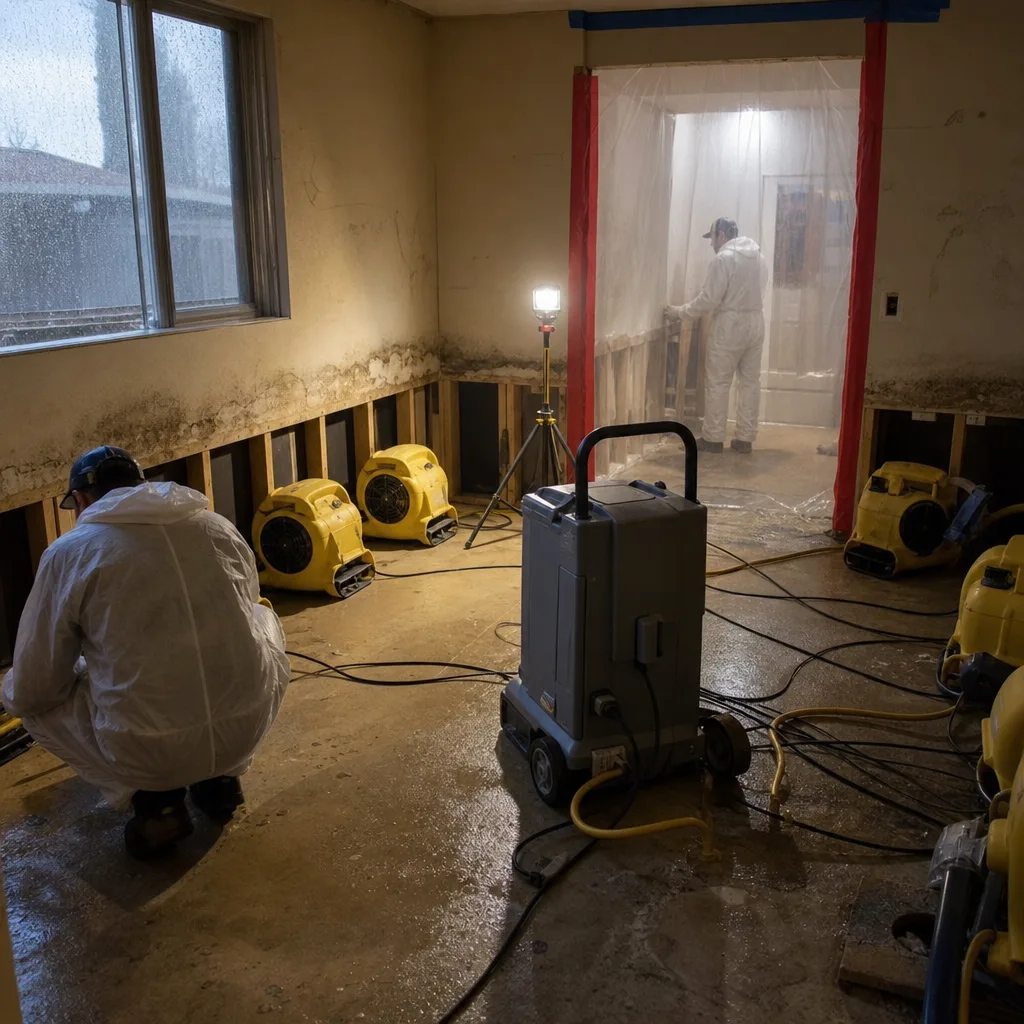
These ranges reflect what San Marcos homeowners paid in 2025, adjusted for 2026 labor and material trends. San Marcos sits in North San Diego County, where restoration crew wages run 12-18% above inland Riverside County benchmarks due to competition from HVAC, solar, and general construction trades. Every figure below assumes a documented job with photo records and written closeout.
Water Damage Restoration - Per-Square-Foot Pricing
| Service Component | Category 1 (Clean Water) | Category 2 (Gray Water) | Category 3 (Black Water) |
|---|---|---|---|
| Water extraction (per sq ft) | $1.50 - $2.50 | $2.00 - $3.25 | $3.50 - $5.00 |
| Structural drying (per sq ft, 3-5 day avg) | $2.00 - $3.50 | $3.00 - $5.00 | $4.50 - $7.00 |
| Antimicrobial treatment (per sq ft) | $0.35 - $0.60 | $0.60 - $1.00 | $1.00 - $1.75 |
| Content manipulation (per room) | $150 - $250 | $200 - $350 | $300 - $500 |
| Documentation & admin (per job) | $350 - $550 | $450 - $700 | $600 - $950 |
Equipment Daily Rental Rates (Billed to Job)
| Equipment Type | Daily Rate | Typical Deployment |
|---|---|---|
| LGR dehumidifier (Dri-Eaz, Phoenix) | $85 - $140 | 1 per 400-600 sq ft affected |
| Desiccant dehumidifier (large loss) | $220 - $380 | Commercial or whole-home losses |
| Air mover (XPOWER, B-Air) | $25 - $40 | 1 per 50-70 linear feet of wall |
| Injectidry hardwood floor drying system | $180 - $280 | Salvageable hardwood, not subfloor replacement |
| HEPA air scrubber | $45 - $75 | Category 2-3, mold-suspect, or odor jobs |
| Thermal imaging moisture survey | $200 - $350 | Initial assessment and verification |
A typical 1,200-square-foot San Marcos home with a Category 1 kitchen supply line leak uses 2 LGR dehumidifiers, 8-10 air movers, and 1 HEPA scrubber for 3-4 days. Equipment rental alone: $1,800-$3,200. The contractor who omits this line item is either absorbing it (unlikely) or planning to add it later.
Fire and smoke damage runs on a different scale entirely. Fire & Smoke Damage Restoration in San Marcos typically ranges $15-$35 per square foot for structural cleaning, with contents restoration billed separately at $75-$150 per item or $4-$8 per pound for soft goods. Soot damage in the humid months near San Marcos Creek can set more aggressively than inland, requiring additional degreasing passes.
How IICRC Water Categories Change Your Bill
The IICRC S500 Standard defines three water categories that determine labor rates, disposal requirements, and equipment specifications. A contractor who doesn’t identify the category in writing before starting work can reclassify mid-job, and the reclassification always moves upward in cost.
Category 1: Clean Water
Originates from a sanitary source: broken supply line, tub overflow without contaminants, melting ice. No significant risk if addressed within 24-48 hours. Labor rate: standard. Disposal: standard construction waste. In San Marcos, we see Category 1 losses most often in newer construction near San Elijo Hills, where PEX supply lines fail at fittings.
Category 2: Gray Water
Contains significant contamination: dishwasher discharge, washing machine overflow, sump pump failures. Requires antimicrobial treatment, faster response times, and limited PPE. Labor rate: 1.3-1.5x Category 1. Disposal: regulated waste documentation required. Category 2 degrades to Category 3 if left untreated beyond 48 hours, a common scenario when homeowners wait for insurance approval before calling.
Category 3: Black Water
Grossly contaminated: sewage, seawater, rising floodwater, water from beyond the trap. Requires full PPE, health department notification in some San Diego County jurisdictions, and specialized disposal at permitted facilities. Labor rate: 2.0-2.5x Category 1. Equipment: HEPA containment, negative air pressure, possible temporary relocation of occupants.
The legal significance: California’s Division of Occupational Safety and Health (Cal/OSHA) mandates specific training and PPE for Category 3 work. A contractor performing Category 3 remediation without documented technician training is exposed to liability, and that liability transfers to the homeowner’s property record if the work is later questioned.
Always require the category in writing before work begins. Haven Standard, Clause 1 applies here: the written price must include the category classification, and any reclassification requires a revised written scope signed by both parties.
Equipment Line Items: What You’re Actually Renting
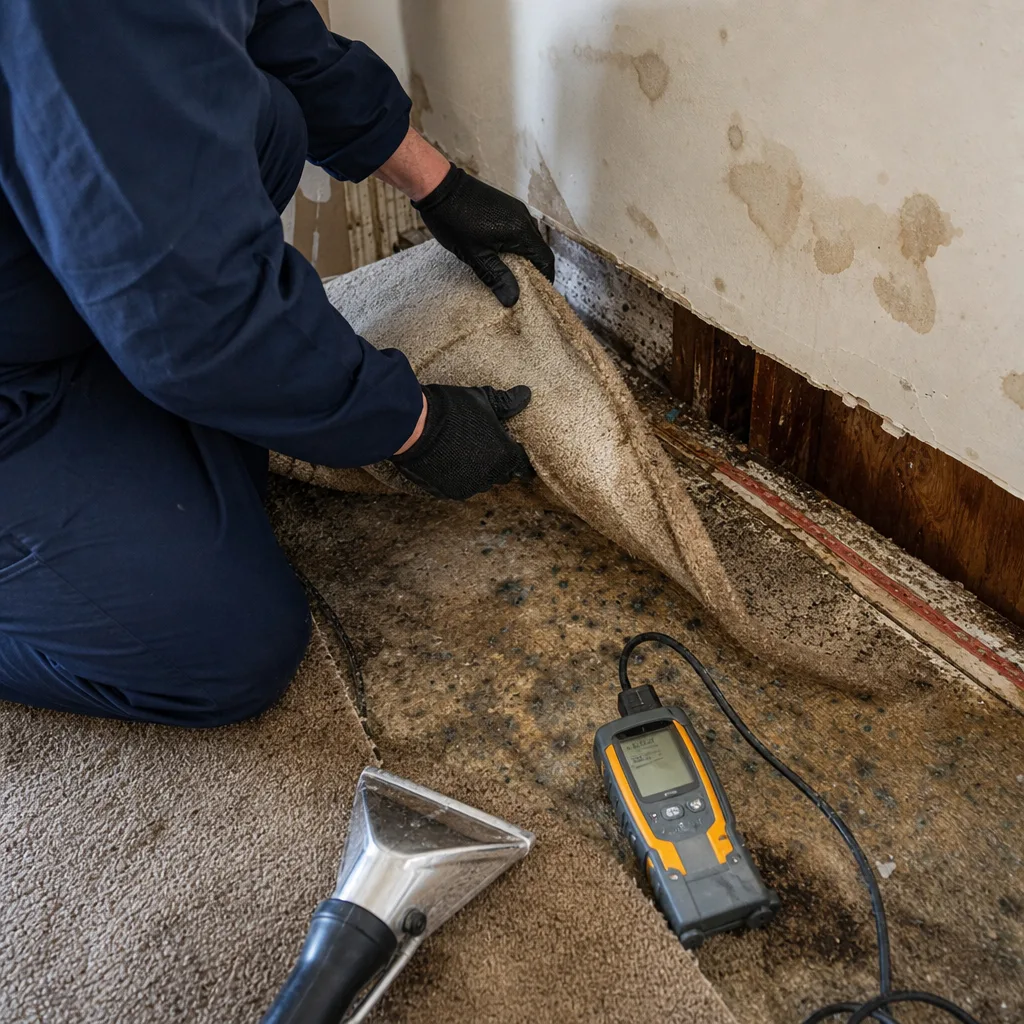
Restoration equipment isn’t purchased for your job. It’s rented from the contractor’s inventory, and the daily rate continues until the structure reaches dry standard. Understanding what each machine does helps you verify whether the count on your estimate matches the loss.
- LGR dehumidifier: Low-grain refrigerant units pull moisture from air that’s already been dried once. “Low grain” means they work below 40 grains per pound, the range where standard refrigerants stop being effective. A typical San Marcos home in summer starts at 110-130 grains per pound; dry standard is 40-60. The LGR bridges that gap. One unit per 400-600 square feet is IICRC guideline.
- Desiccant dehumidifier: Uses silica gel, not refrigeration, to reach extremely low grains. Deployed on hardwood floors, plaster, or large commercial losses where vapor pressure differential must be forced. The daily rate is higher, but the drying period may shorten by 30-50% on dense materials.
- Air mover: Creates laminar airflow across wet surfaces, accelerating evaporation. The count matters: too few, and drying extends; too many, and you’re paying for turbulence that doesn’t increase evaporation. IICRC specifies one per 50-70 linear feet of wall.
- Injectidry system: Panel system that delivers dry air through sealed chambers to hardwood floors from below, salvaging boards that would otherwise require removal. In San Marcos neighborhoods with original oak or maple flooring, this $180-$280 daily investment often prevents $8,000-$15,000 in replacement costs.
- HEPA air scrubber: Filters 99.97% of particles 0.3 microns or larger. Required for Category 2-3, mold-suspect, or fire jobs. Also protects occupants and technicians during active work.
Psychrometric data, the temperature and humidity readings taken daily, determines when equipment comes off. A contractor without daily logs is guessing at removal timing, and early removal means trapped moisture that breeds mold. Our crews document to IICRC, RIA, and IFA standards using Dri-Eaz and Phoenix equipment, with readings uploaded to the job file each visit.
The Documentation Premium: Paying for Proof
The 8-15% price gap between documented and undocumented restoration isn’t markup. It’s the labor cost of producing evidence that an insurer will accept.
Here’s what documentation includes and why each element has a line-item cost:
- Daily moisture logs: Psychrometric readings at multiple points, plotted against dry standard. Requires 15-20 minutes of technician time per visit, plus data entry. Adjusters request these in 60-70% of claims over $5,000.
- Photo record with timestamps: Every visit, every room, every material change. Not phone snapshots, but geotagged, time-stamped images stored to the job file. Required for most California insurers; absence is the leading cause of partial claim denial.
- Written scope of work: Room-by-room description of materials affected, equipment deployed, and work performed. The document that prevents “he said, she said” between contractor and adjuster.
- Closeout file: Final moisture readings, equipment removal documentation, and signed completion statement. Required for warranty activation and claim closure.
We built Back to Dry around this gap. Our founder was a claims adjuster who watched homeowners lose legitimate coverage because their contractor’s documentation consisted of a handwritten invoice and a verbal promise. Every job since 2011 has included a photo record, drying log, and written scope as standard deliverables, never upsells.
The 365-Day Done Right Promise, backed by The Haven Standard, requires this documentation to exist before the warranty activates. If we can’t prove what we did, we can’t warranty it.
How to Read a Xactimate Estimate
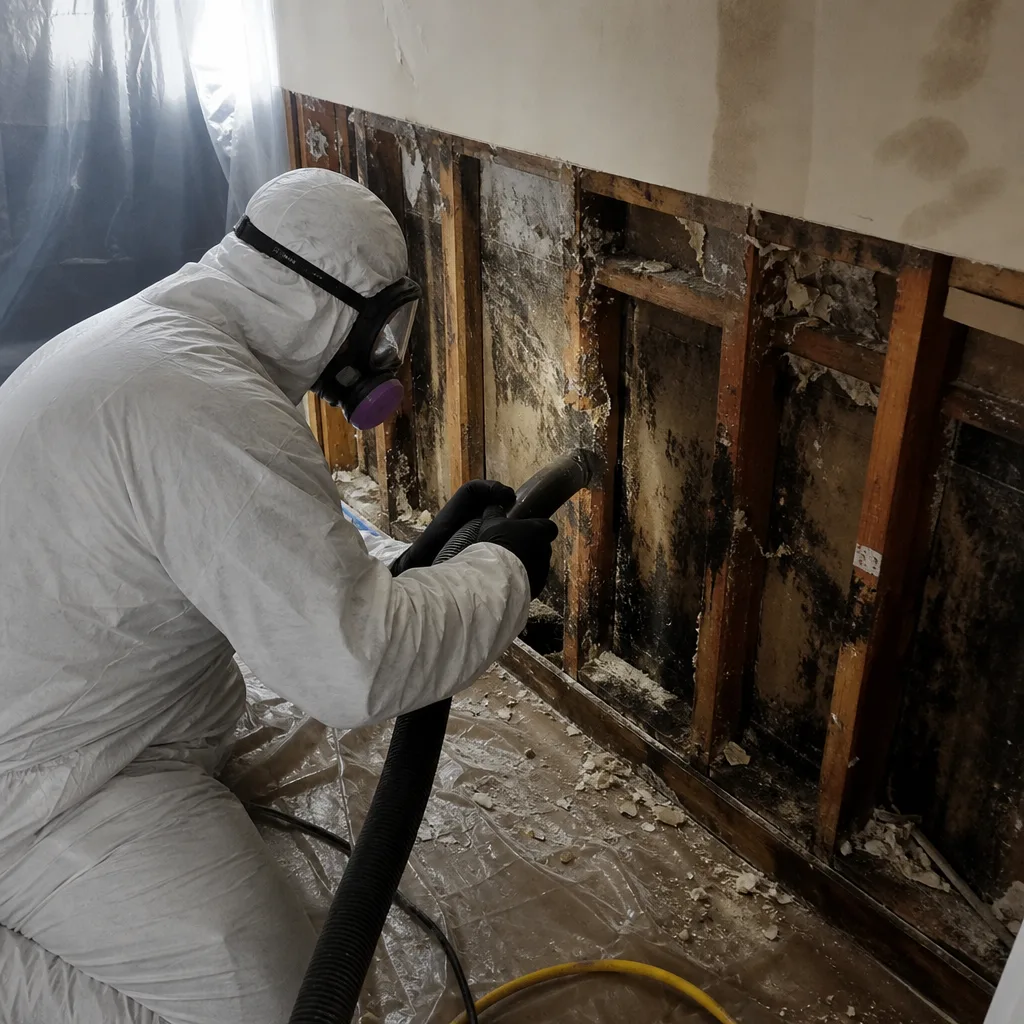
Most California insurers use Xactimate, the pricing database developed by Verisk. Contractors who work with insurance claims either write Xactimate estimates or convert their bids to Xactimate format for adjuster review. Understanding the line-item structure lets you verify that your contractor’s scope matches what the insurer is being billed.
The Xactimate Line Item Format
Each line contains: description, quantity, unit (EA for each, SF for square foot, LF for linear foot), unit price, and extended total. The unit price derives from Xactimate’s regional cost database, updated quarterly. San Marcos falls under the San Diego region code.
Key sections to review:
- DMO (Demolition): Removal of wet materials. Verify that quantities match your actual affected area, not rounded-up estimates. A 12×14 bedroom is 168 SF, not 200 SF.
- RFG (Restoration/Finish General): Replacement of removed materials. This is where scope creep happens, contractors replacing undamaged materials because the line item is already open.
- WTR (Water Mitigation): Extraction, drying, and antimicrobial work. Equipment counts should match your physical count and the IICRC guidelines above.
- CLN (Cleaning): Contents cleaning, often underestimated in initial scopes. Verify whether this is included or billed separately.
- FRM (Framing): Structural repairs beyond surface finish. Often omitted in initial water mitigation scopes, then added during reconstruction.
Red flags in Xactimate estimates: unit prices that don’t match the regional database (available through public adjuster review), quantities that exceed physical measurements, and line items with no corresponding work description. The Free Second Opinion on Any Written Estimate that we offer exists precisely because Xactimate literacy among homeowners is low, and contractors know it.
If your adjuster and contractor disagree on scope, the documented job wins. Daily moisture logs with timestamps prove that equipment was deployed and effective. Photo records prove that materials were wet and required removal. A written scope proves what was agreed before work started. Haven Standard, Clause 1: no work without a written price, no dispute without written proof.
San Marcos Labor Market Factors
Restoration pricing in San Marcos doesn’t exist in a vacuum. It reflects regional labor costs, seasonal demand patterns, and the specific challenges of North San Diego County geography.
Trade competition: San Marcos sits between San Diego’s metro core and Escondido’s inland market. HVAC technicians, solar installers, and general construction crews draw from the same labor pool as restoration companies. In 2025, restoration crew wages in San Diego County averaged $28-$38 per hour for technicians and $42-$58 for project managers, compared to $22-$32 and $35-$48 in Riverside County. That differential flows directly to per-square-foot pricing.
Seasonal demand: San Marcos sees two peak periods. January-March brings winter storm damage, particularly in the hilly terrain near Double Peak Park where drainage patterns concentrate runoff. July-September brings wildfire smoke intrusion and monsoonal moisture events. During peaks, equipment availability tightens and some contractors extend lead times or add rush charges. Our 24-hour live dispatch operates without surge pricing, but industry-wide, expect 10-20% increases during peak demand.
Geographic constraints: The San Marcos Creek floodplain and the steep grades near Discovery Lake and Lake San Marcos affect access, equipment staging, and disposal routing. A job on Rancho Santa Fe Road requires different logistics than a job in the flat grid near Cal State San Marcos, and competent estimates account for this.
Code and permit requirements: San Marcos follows San Diego County building codes with local amendments. Any reconstruction involving electrical, plumbing, or structural repair requires permits and inspections, adding 5-10 business days and associated fees; see Damage Restoration Permits, Codes & Inspections in CA: What You Need to Know for specifics. Contractors who omit permit costs from reconstruction scopes are either unaware or planning to perform unpermitted work.
Common Mistakes to Avoid
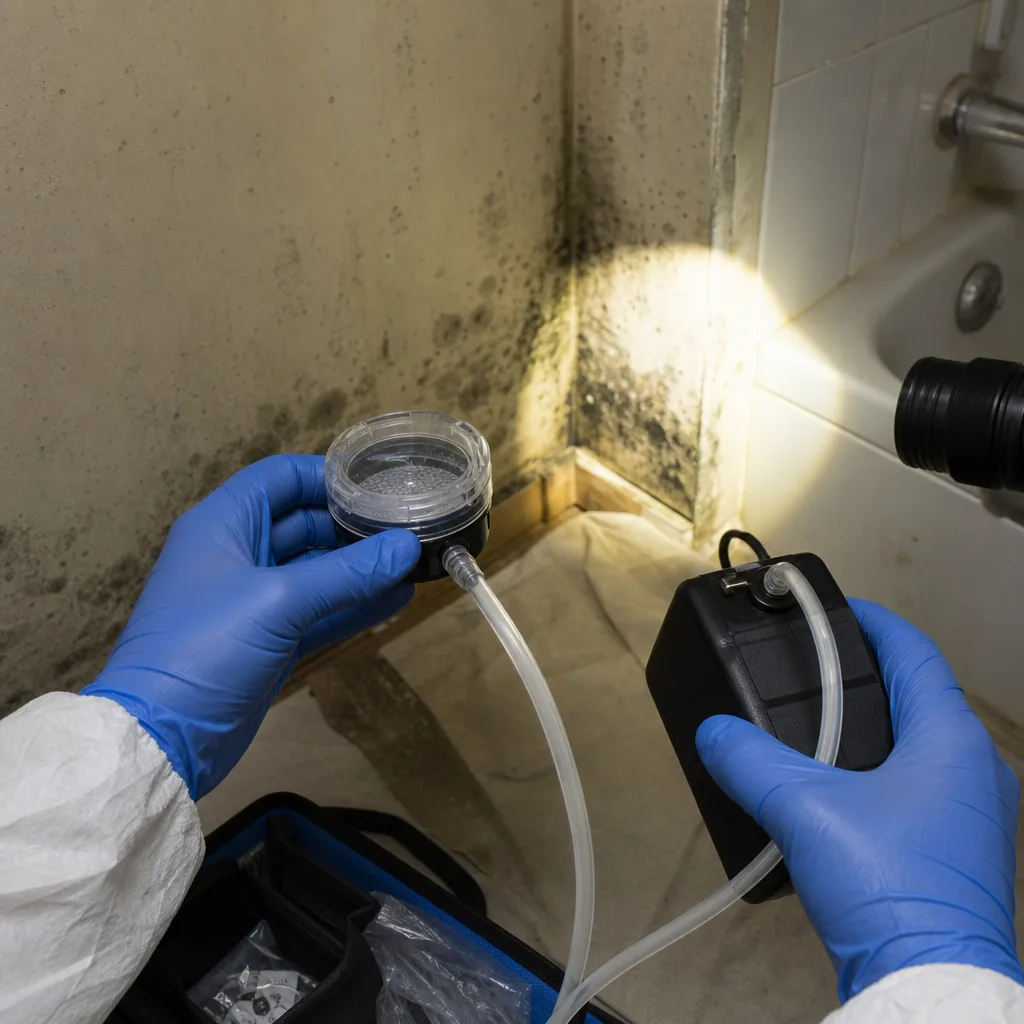
- Accepting a verbal estimate for emergency work. In San Marcos, we’ve seen homeowners sign blank work authorizations at 2 a.m. that become $15,000 invoices with no itemization. Haven Standard, Clause 1 exists to prevent this: written price before work begins, every time.
- Confusing mitigation with reconstruction. Mitigation (drying, cleaning, stabilization) is urgent and billed by the day. Reconstruction (rebuilding, refinishing, replacing) is scheduled and priced in writing like a remodel. A contractor who quotes “the whole job” as one number is likely underpricing one phase and recovering on the other.
- Ignoring water category classification. A contractor who won’t state Category 1, 2, or 3 in writing before starting is reserving the right to reclassify upward. This is the most common source of mid-job price increases in our market.
- Assuming insurance covers everything. California policies vary in mold coverage limits, sewage backup riders, and temporary relocation allowances. The contractor who promises “insurance will take care of it” without reviewing your declaration page is selling comfort, not accuracy. We coordinate directly with adjusters and document every conversation, but coverage limits are between you and your insurer.
- Choosing the lowest bid without equipment verification. Count the dehumidifiers and air movers on the estimate, then count them in your home. Missing equipment is the fastest way to extend drying time and trigger secondary damage. Daily photo records prevent this; undocumented jobs invite it.
- Delaying the call to minimize cost. In San Marcos’s warm, dry climate, homeowners sometimes wait 48-72 hours hoping water will “dry on its own.” By day three, Category 1 becomes Category 2, mold growth begins, and the salvageable becomes replaceable. The cost of immediate response is always lower than the cost of delayed mitigation.
- Failing to get a second opinion on a competitor’s estimate. Our Free Second Opinion exists because Xactimate scopes often contain errors that homeowners can’t spot. A 20-minute review has saved San Marcos homeowners $2,000-$8,000 in unnecessary charges.
When to Call a Professional
Call immediately when water reaches multiple rooms, originates from an unknown source, or has been present more than 24 hours. Call when you smell mustiness after a previous leak, see discoloration spreading on walls or ceilings, or find standing water in a crawl space, as covered in our Damage Restoration Warning Signs: A San Marcos Homeowner’s Reference Guide. Call after any fire, even a small kitchen fire, because smoke particles continue etching surfaces until professionally removed.
For Water Damage Restoration in San Marcos, speed limits secondary damage. For reconstruction, speed is less important than scope accuracy. Know which phase you’re in.
DryMark Restoration San Marcos offers free estimates in San Marcos. A live person answers every call, 24 hours a day, 7 days a week, with no voicemail on emergency lines. Every job is quoted in writing before work begins, documented with a photo record on every visit, and covered by the 365-Day Done Right Promise. Call (858) 434-8474.
Frequently Asked Questions
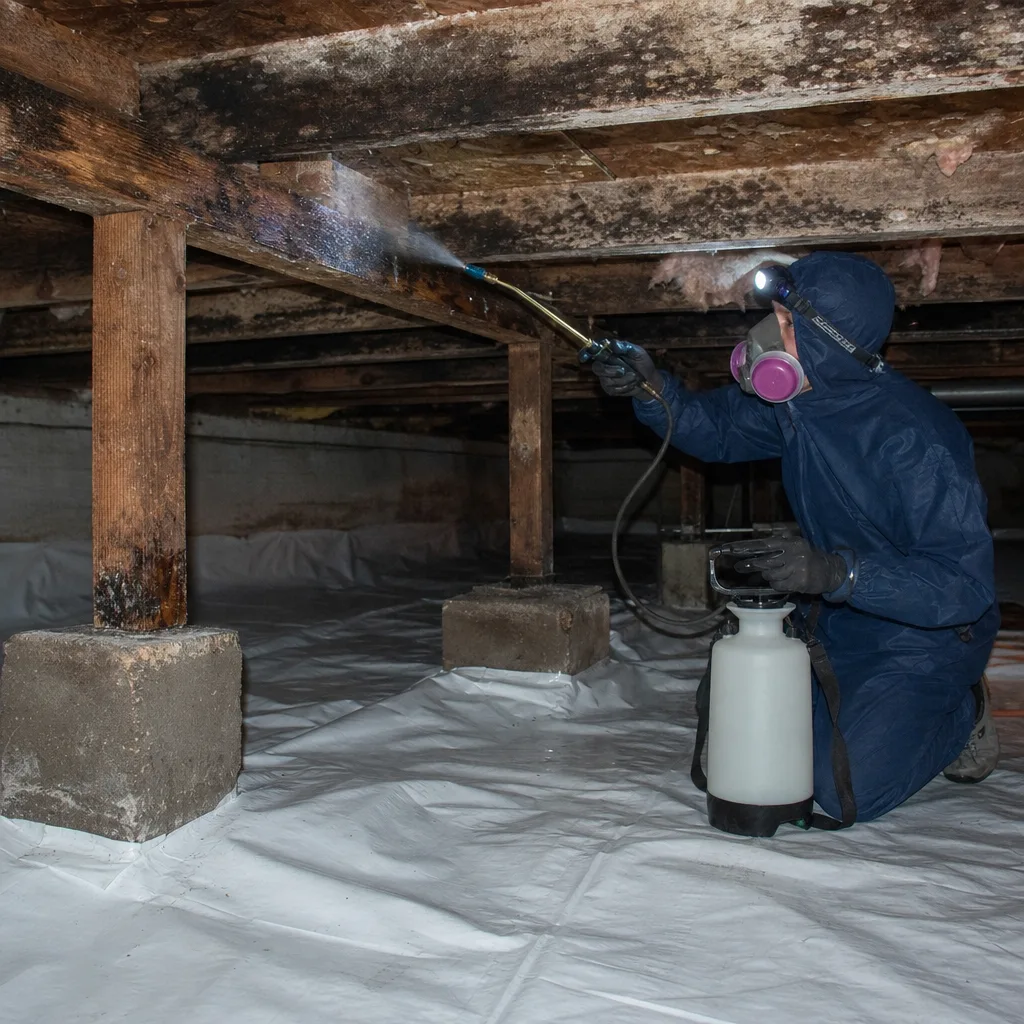
Water damage restoration in San Marcos costs $4.50-$12.00 per square foot for completed mitigation, depending on water category, material type, and documentation standard. Category 1 clean water on drywall in a flat-access home runs toward the lower end; Category 3 black water in a crawl space with hardwood floors runs toward the upper end. Call (858) 434-8474 for a written price before any work begins.
Most San Marcos homeowners policies cover sudden and accidental water damage, but coverage varies by endorsement, deductible, and cause of loss. Mold coverage often has a separate sublimit, typically $5,000-$10,000. Sewage backup requires a specific rider that many policies exclude. We document every job to insurance standards and coordinate directly with adjusters, but we review your declaration page with you before promising coverage. Call (858) 434-8474 and bring your policy number.
Our live dispatch answers immediately, and emergency crews typically arrive within 60-90 minutes for active water losses in San Marcos. Response time varies by contractor, season, and your location relative to their staging area. During peak demand, some companies extend to 4-6 hours or next-day service. Ask for arrival time in writing before authorizing work.
The lower bid usually omits equipment rental, content manipulation, antimicrobial treatment, or documentation fees that appear later as additions. It may also use a lower water category classification that gets revised upward mid-job. Always compare line-item counts of dehumidifiers, air movers, and labor hours, not just bottom-line totals. Our Free Second Opinion reviews competitor estimates at no charge.
Category 1 water losses under 10 square feet on non-porous materials can sometimes be handled by a homeowner with a wet/dry vacuum and fans. Anything larger, anything involving carpet or drywall, any Category 2 or 3 water, or any loss present more than 24 hours requires professional equipment and documentation for insurance purposes. Improper DIY drying leaves trapped moisture that causes mold and voids future coverage for the same event. We provide a written assessment with moisture readings so you can decide from evidence, not pressure.
Mitigation is emergency stabilization: water extraction, drying, cleaning, and prevention of further damage. It’s urgent, billed by equipment and labor days, and often partially covered by insurance even when reconstruction is not. Reconstruction is rebuilding: drywall, flooring, painting, fixtures. It’s scheduled, priced in writing before starting, and managed like a remodel. A contractor who blurs this distinction is likely underpricing mitigation to win the job, then recovering margin on reconstruction. Haven Standard, Clause 1 requires separate written prices for each phase.
The Bottom Line
Restoration pricing in San Marcos is not arbitrary. It’s the sum of measurable variables: water category, material type, affected square footage, equipment count, labor hours, and documentation standard. The homeowner who can read these variables in a bid can spot the incomplete scope, the missing equipment, and the undocumented job that will cost more in adjuster disputes than it saved upfront; explore more guides & resources to sharpen that skill.
The 8-15% documentation premium pays for itself in paid claims, warranty protection, and the elimination of mid-job surprises. A written price before work begins, daily moisture logs, photo records on every visit, and a signed closeout file turn a restoration invoice into evidence that survives review. That’s what The Haven Standard requires, what we deliver on every job, and what 12,000 homes restored since 2011 have proven necessary.
For a written estimate with line-item detail, call DryMark Restoration San Marcos at (858) 434-8474. Estimates are free. Second opinions on competitor quotes are free. And no work starts without a price you see and sign.
Written by Alicia Brennan, Owner at DryMark Restoration San Marcos, serving San Marcos since 2011.