
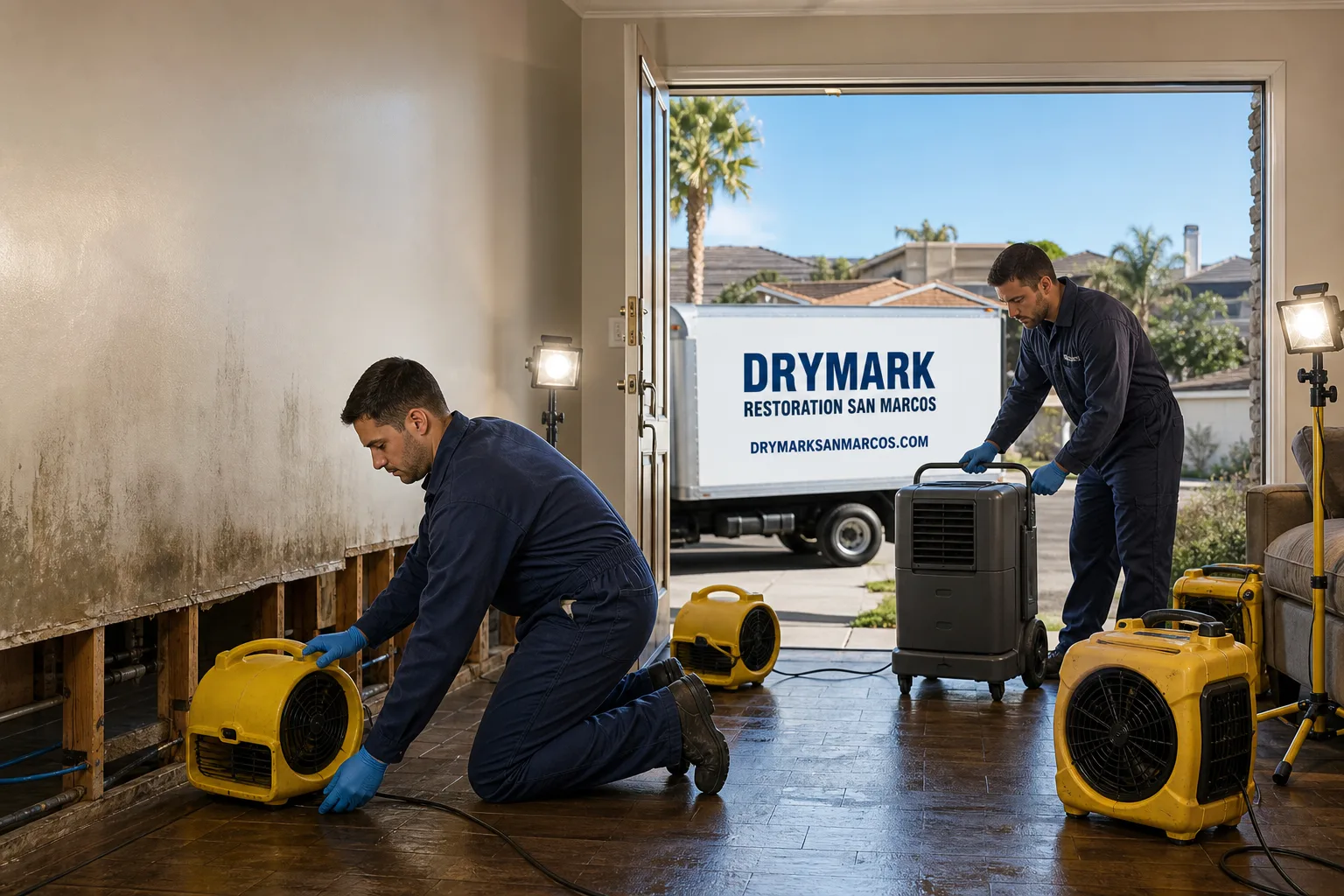
Free visual inspection and a written scope of work before any mitigation begins - photos, moisture readings, and drying logs go in your claim file
The scope we write is the scope we bill. Anything new gets shown to you, in writing, before we touch it.
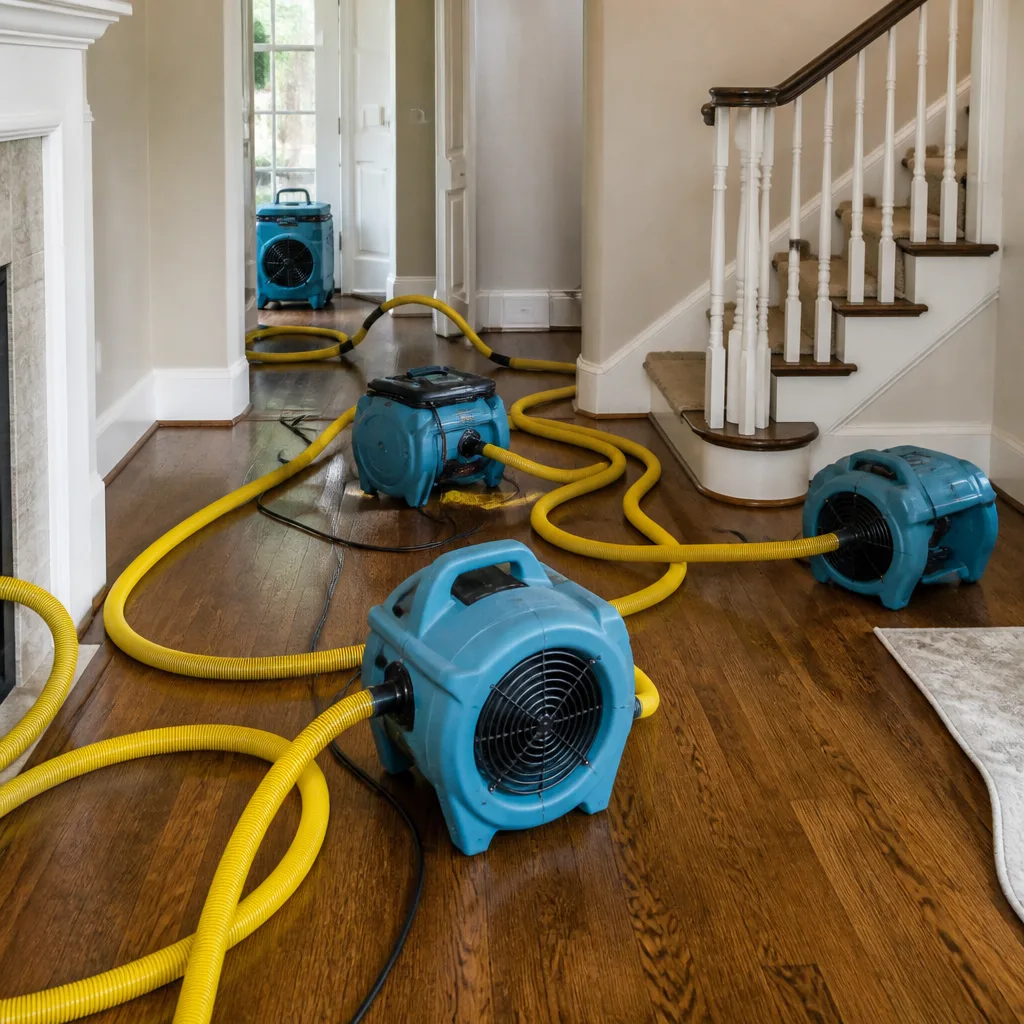


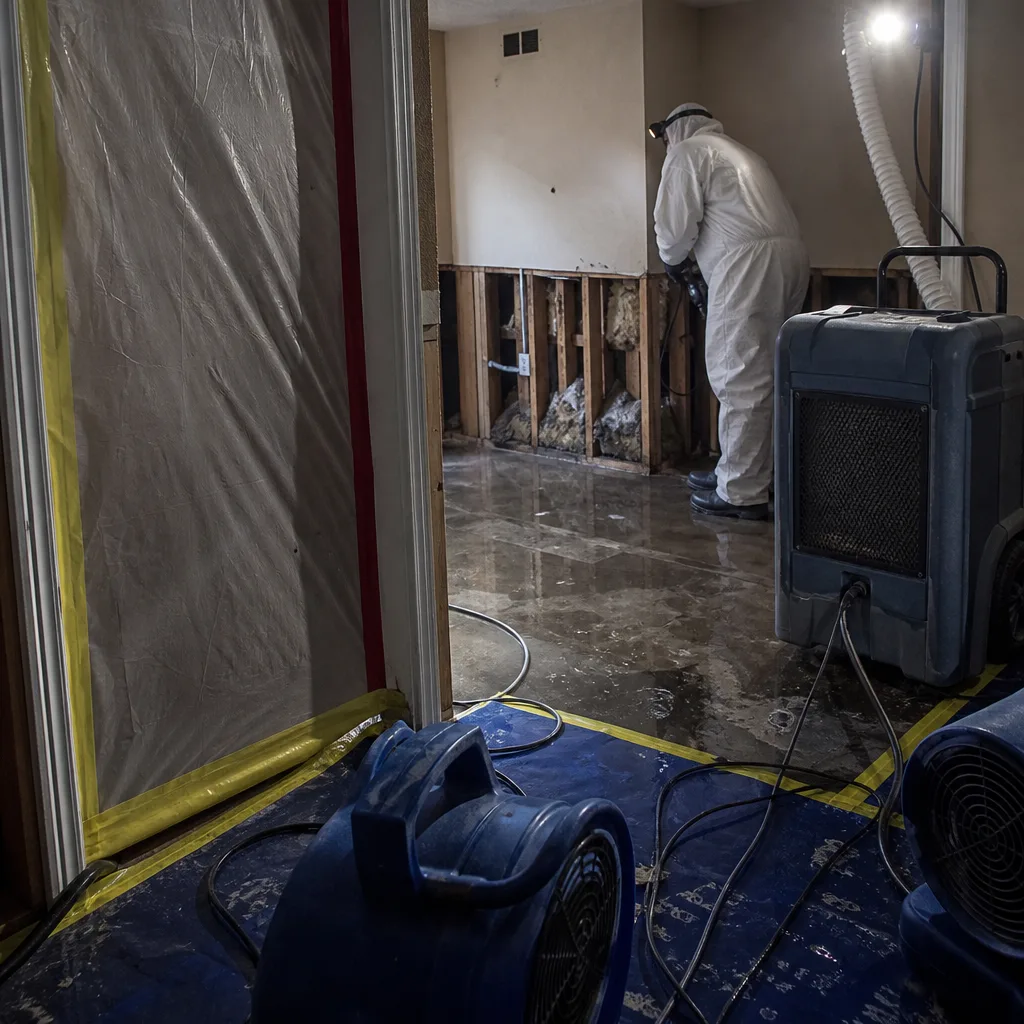 Before
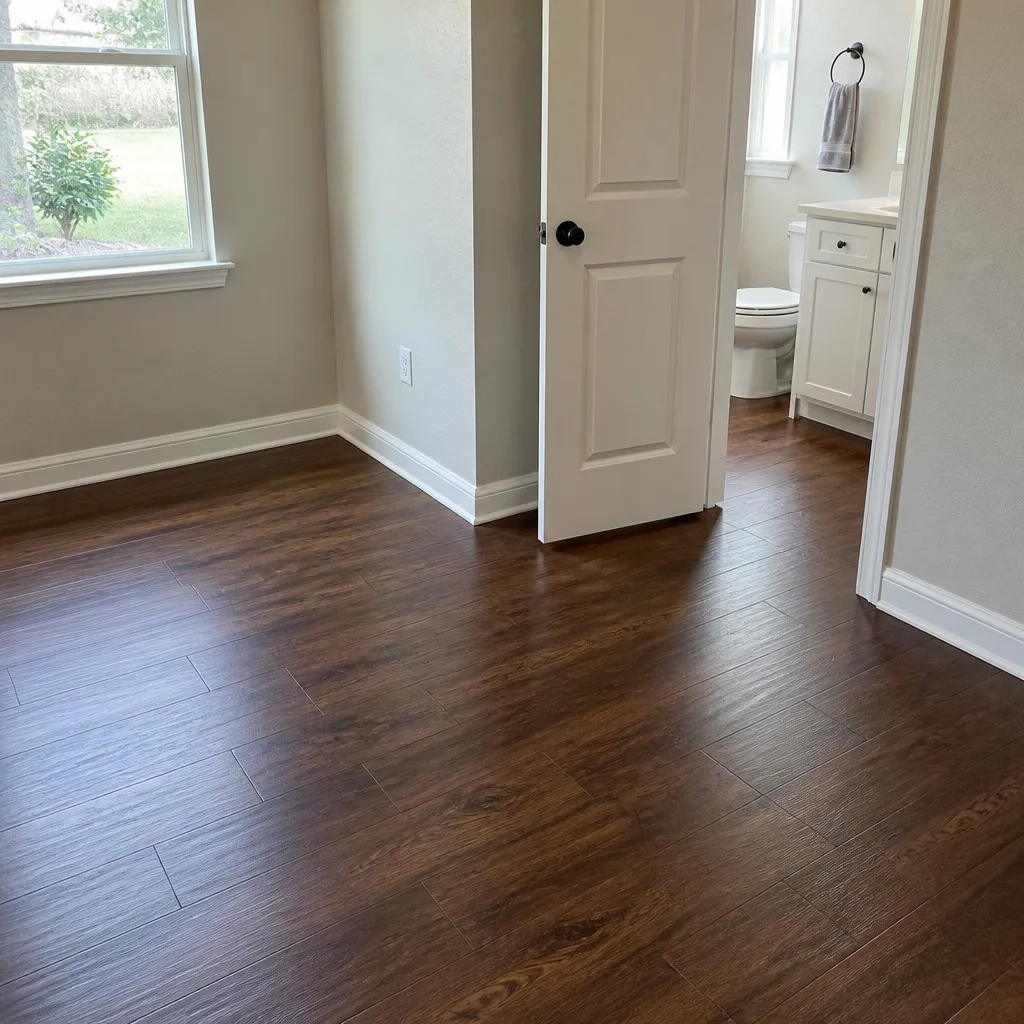
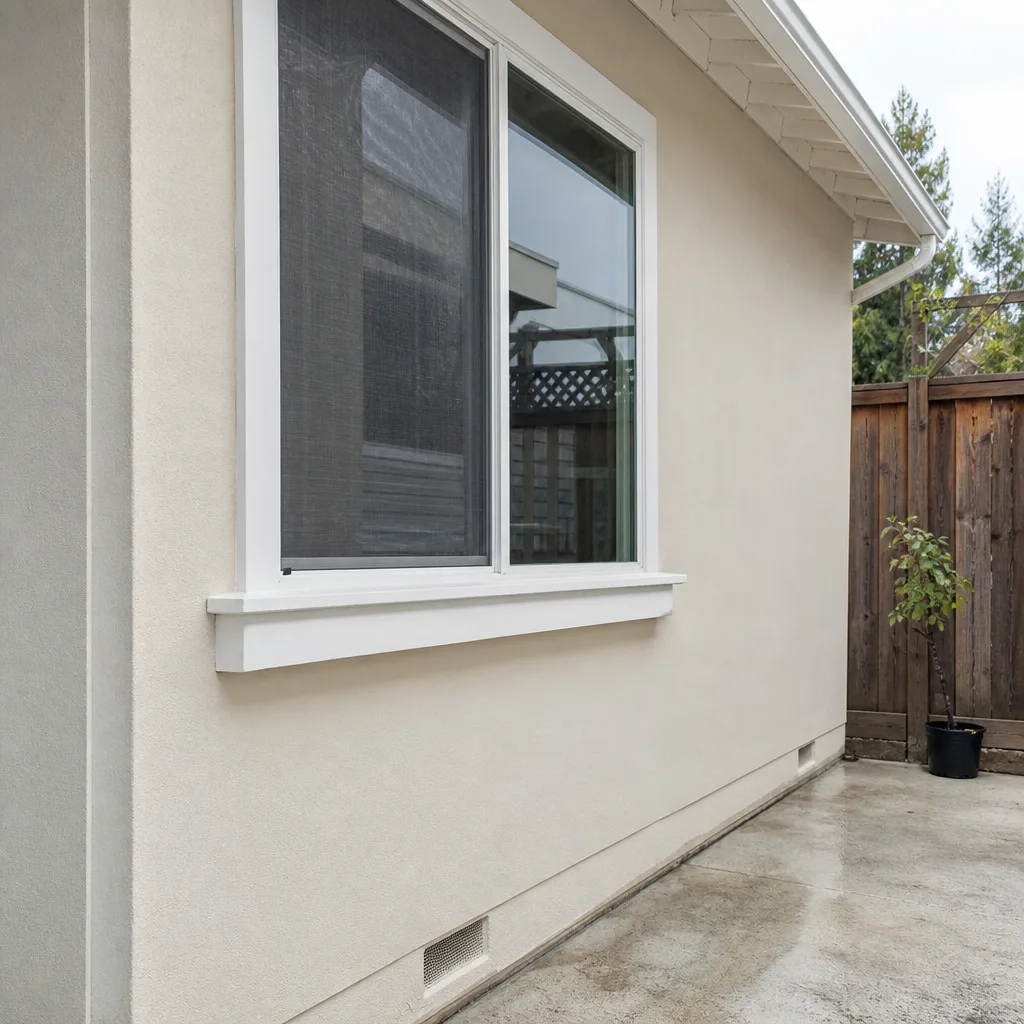 After
After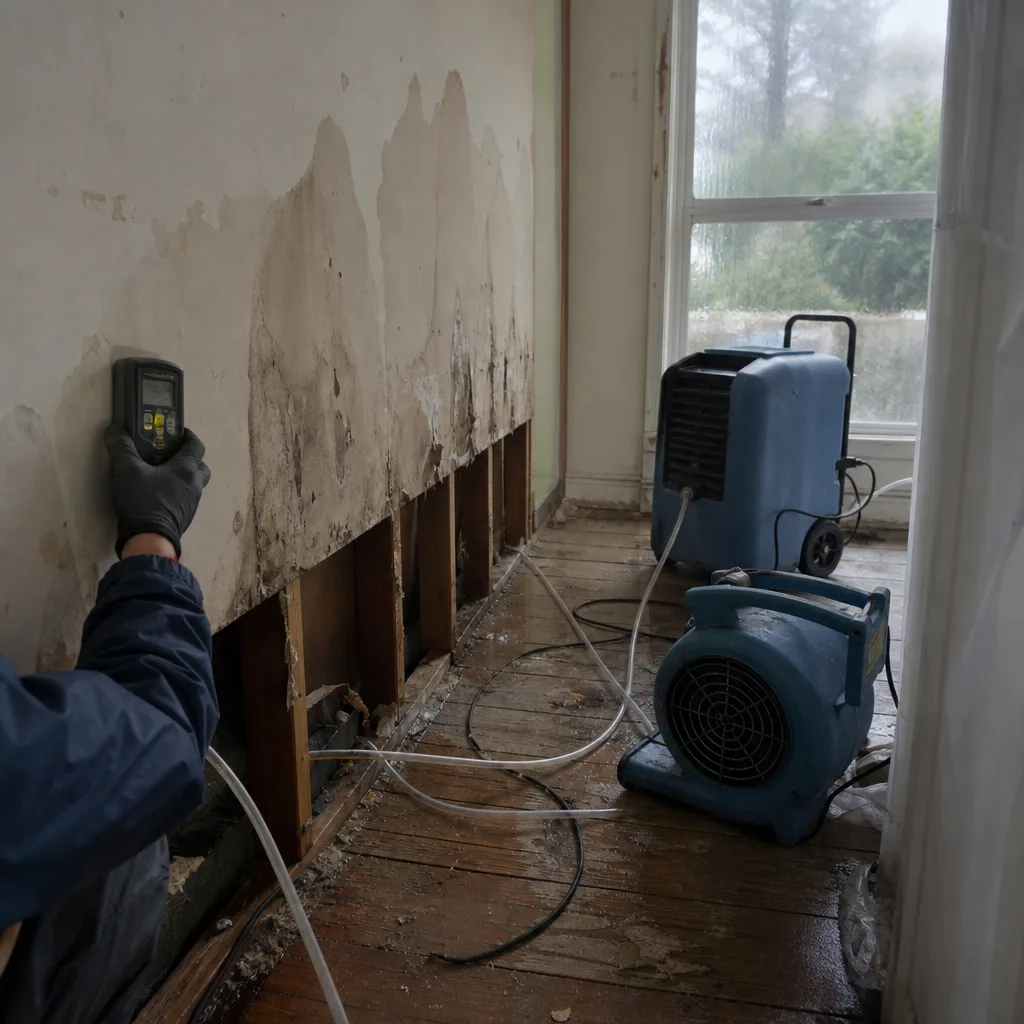 Before
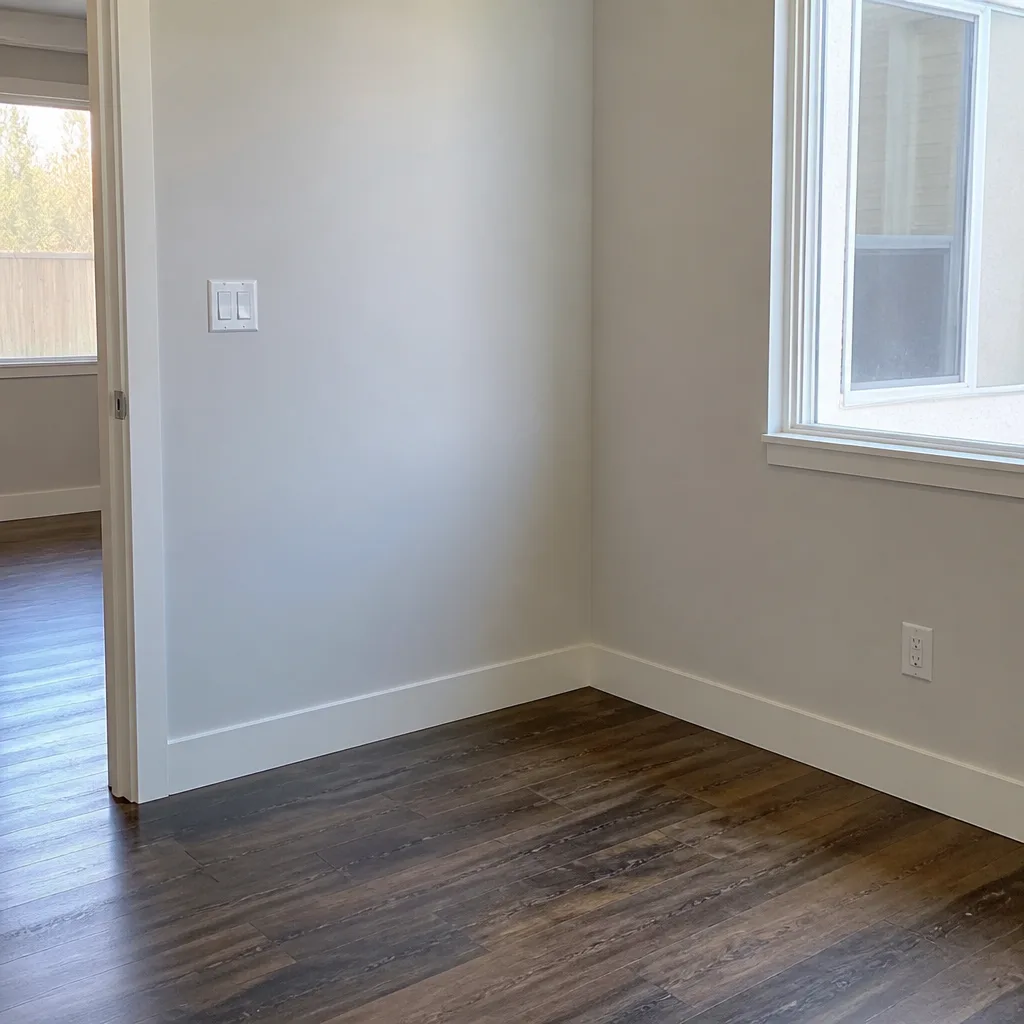 After
After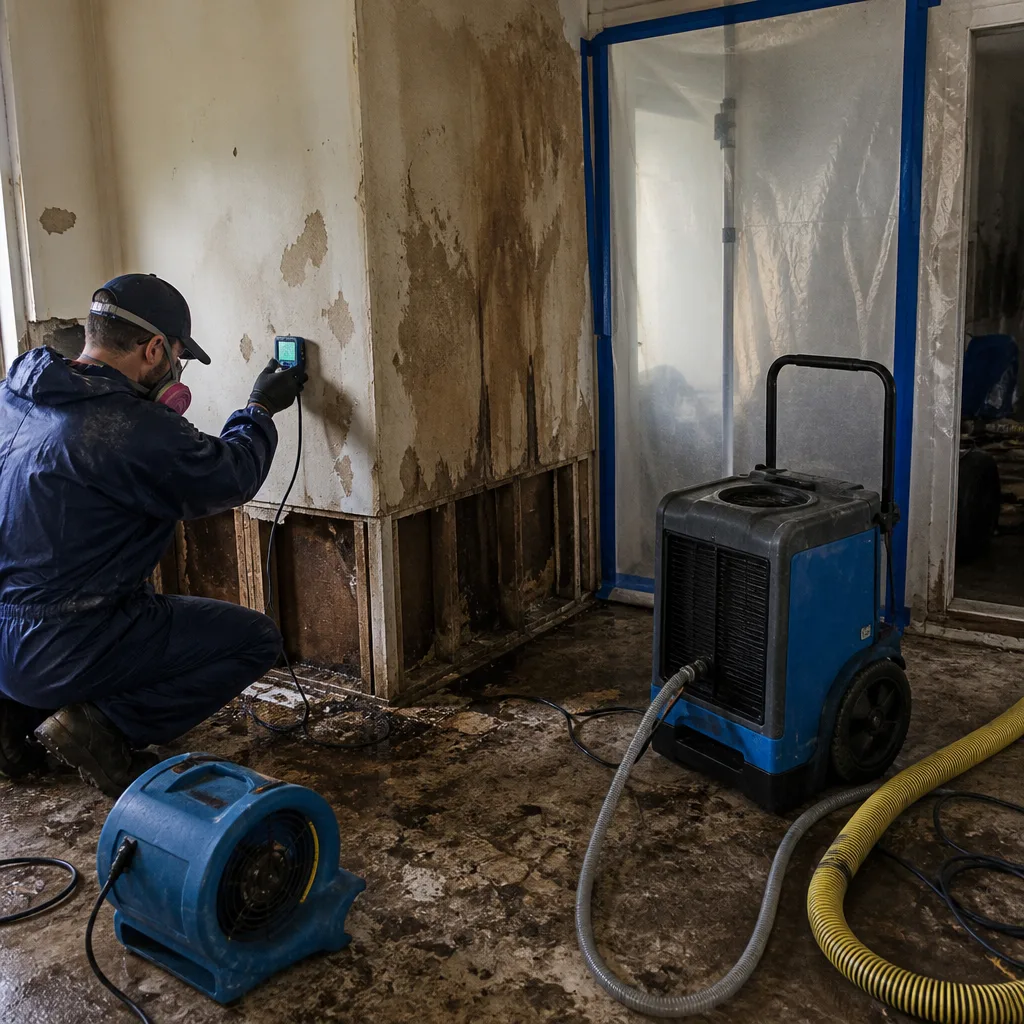 Before
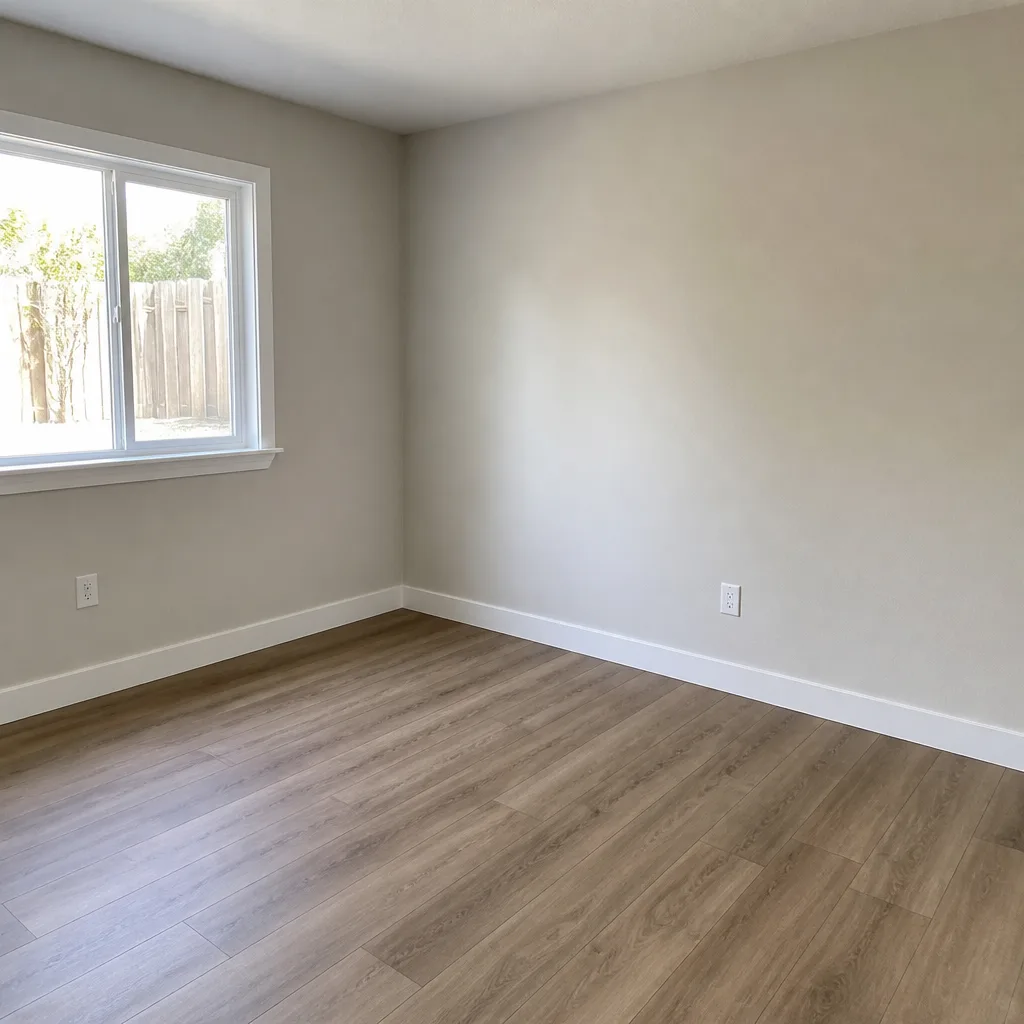 After
AfterFast, Reliable Water Damage Restoration Across Fallbrook
Water damage restoration in Fallbrook typically runs $2,800-$6,500 for a standard residential drying job, with emergency water extraction starting at $1,200 and full structural drying with dehumidification adding $1,600-$4,200 depending on square footage and material classification. Our crews dispatch to Fallbrook from our San Diego office, and a live person answers every call 24 hours a day, 7 days a week - no voicemail trees while water is still moving through your floor assembly.
We know Fallbrook’s properties. The 1950s-1980s ranch homes along Mission Road and the custom hillside builds off De Luz Road have vented crawl spaces, wood siding, and older composition roofing that trap moisture differently than the slab-on-grade stucco boxes closer to the coast. Our Water Damage Restoration team documents every moisture reading, every photo, every drying log to IICRC standards - because a restoration invoice without evidence is a claim an insurer can deny. Call (858) 434-8474; estimates are free, and the written price comes before any work starts, every time, under Haven Standard, Clause 1.
Why DryMark Restoration San Marcos Is Fallbrook’s Preferred Water Damage Restoration Company
We’ve restored more than 12,000 homes since 2011, every one with a written price before work started and a documented record when the crew left. That documentation-first approach matters especially in Fallbrook, where rural lot sizes, multi-structure properties, and the post-fire debris-flow cycle create restoration scopes that suburban contractors often underestimate.
Fallbrook homeowners research before they call. They read the three-star reviews. They want to see pricing, licensing, and proof that a crew understands their specific property type - not generic reassurance. We answer with measurable evidence: moisture readings taken with calibrated thermo-hygrometers, room-by-room drying logs, photo documentation on every visit, and a 365-Day Done Right Promise backed by The Haven Standard, not a marketing line.
Response time to Fallbrook runs 60-90 minutes from dispatch during daylight hours, with overnight emergency crews available through our 24/7 live dispatch. Our technicians are background-checked, uniformed, and licensed - their license numbers are available on request - and they arrive with professional-grade drying systems from Dri-Eaz, Phoenix, and XPOWER already loaded.
We also know the local pattern other contractors miss. After the December 2017 Lilac Fire stripped vegetation from hillsides along the De Luz Road corridor, burned slopes keep feeding ashy debris slurry into low structures for an entire rainy season. A smoke-damage job that looked complete in October can reveal standing water in a crawl space by January. Our crews flag this two-phase restoration cycle in every scope we write for Fallbrook hillside properties.
Our Water Damage Restoration Services in Fallbrook
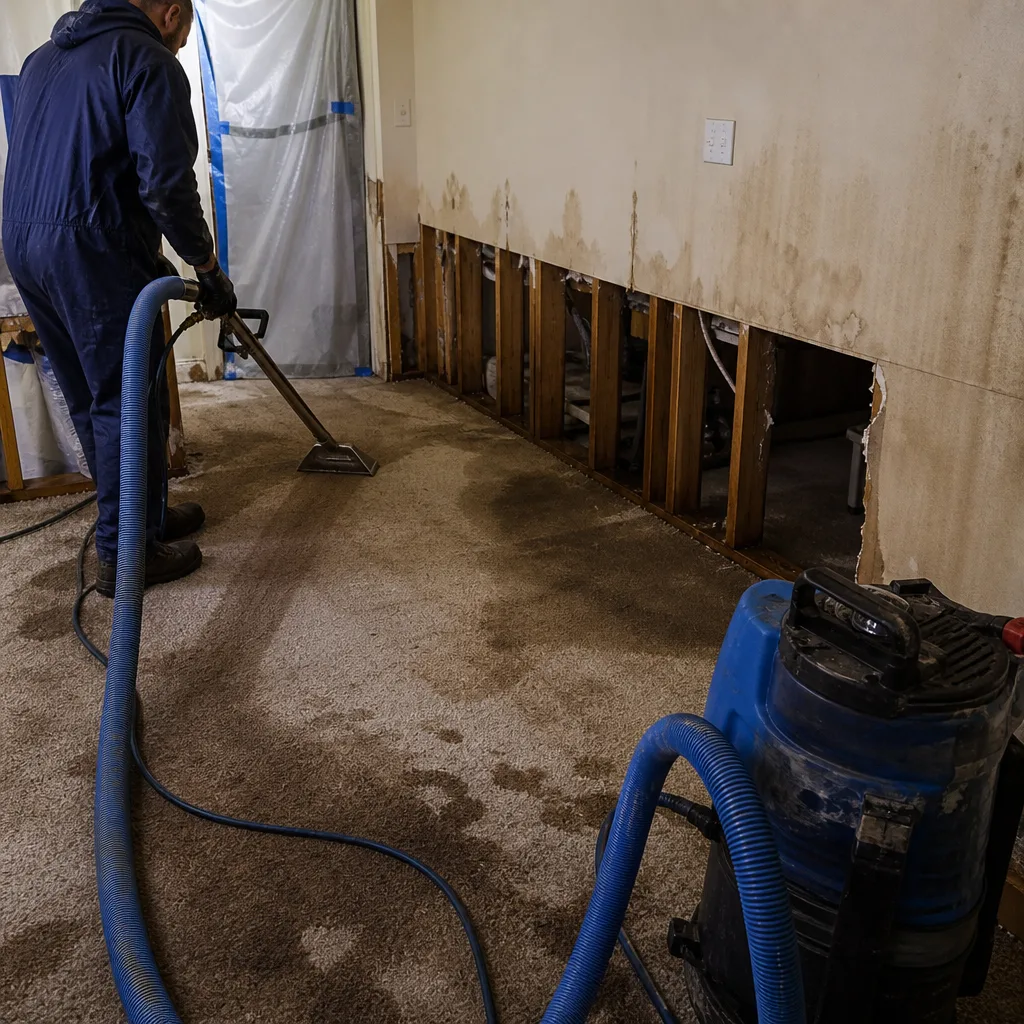
Emergency Water Extraction
Standing water moves fast through Fallbrook’s older ranch homes, especially where original oak or pine subfloors sit directly over unsealed crawl spaces. We deploy truck-mount extraction systems rated to 2,000+ gallons per hour, then document pre-loss condition with dated photos before a single air mover starts. For the detached equipment sheds and agricultural outbuildings common on Fallbrook’s larger rural lots, we use portable XPOWER extractors that reach structures where truck-mount hose runs won’t.
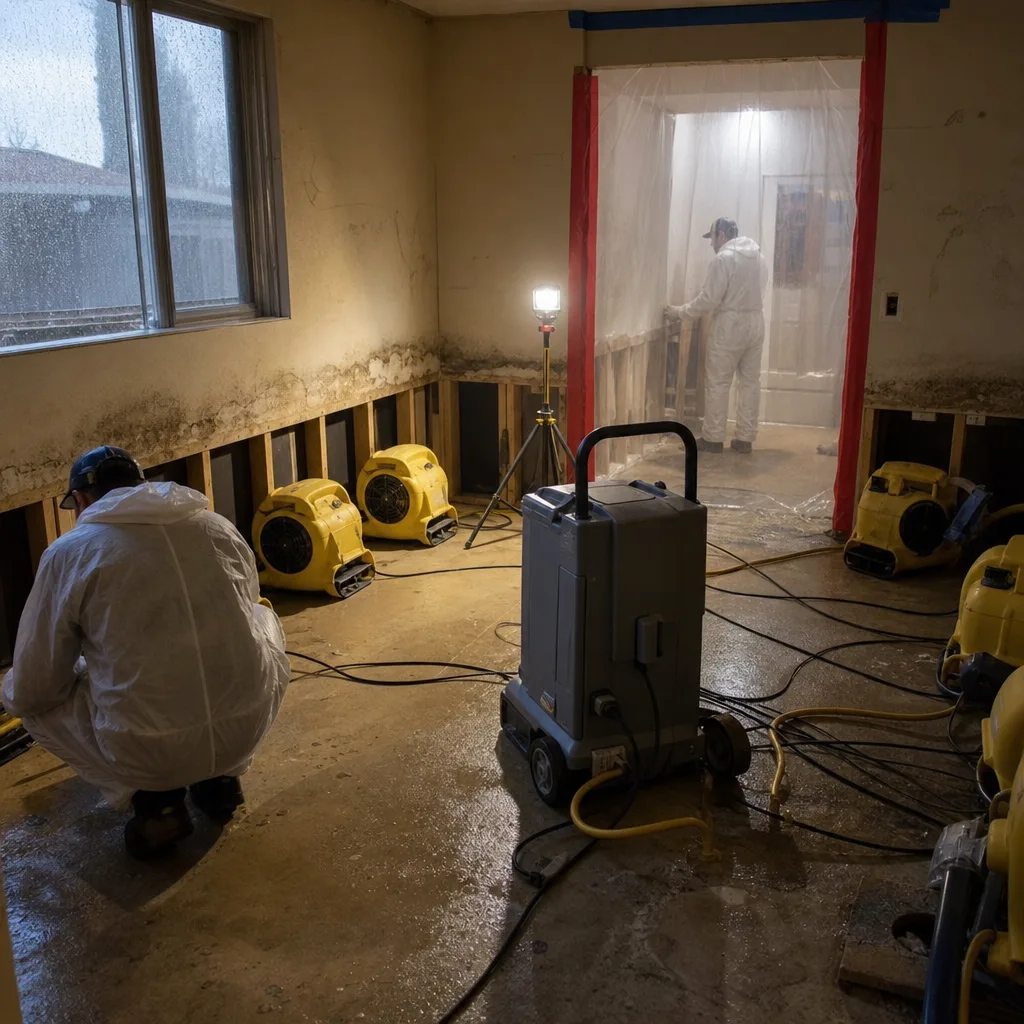
Structural Drying & Dehumidification
Psychrometric data - temperature, relative humidity, and vapor pressure differential - drives our drying plans, not guesswork. In Fallbrook’s vented crawl spaces, we calculate the specific humidity load from both the soil vapor barrier condition and any post-fire debris flow saturation, then size dehumidifier capacity to the actual cubic feet of affected space. Tertiary drying, the final phase where hidden moisture equalizes across materials, typically runs 3-5 days longer in Fallbrook’s hillside properties because of the thermal mass of burned, heat-compacted soil against foundation walls. We log every reading daily, in writing, for your adjuster.
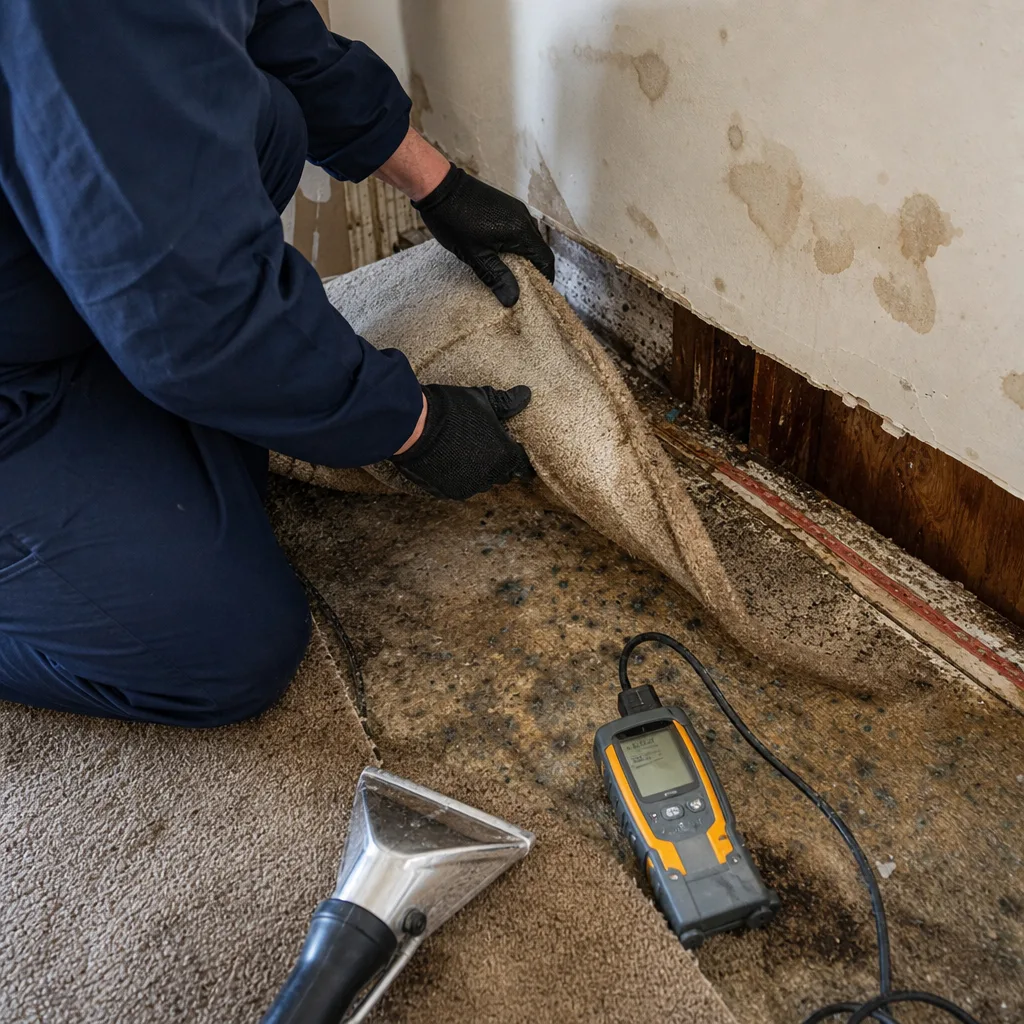
Flood Cleanup
Fallbrook’s flood risk isn’t just coastal storm surge - it’s the winter debris flow that follows fire season. Hillsides stripped of chaparral by the Lilac Fire or smaller corridor burns shed ashy mud into low-lying structures with the first hard rain. This water carries Category 2 or Category 3 classification depending on what it picked up crossing burned agricultural land: chemical residues, ash particulate, and soil contaminants. We test and classify before we treat, then document the contamination level in writing for your insurance scope of work.
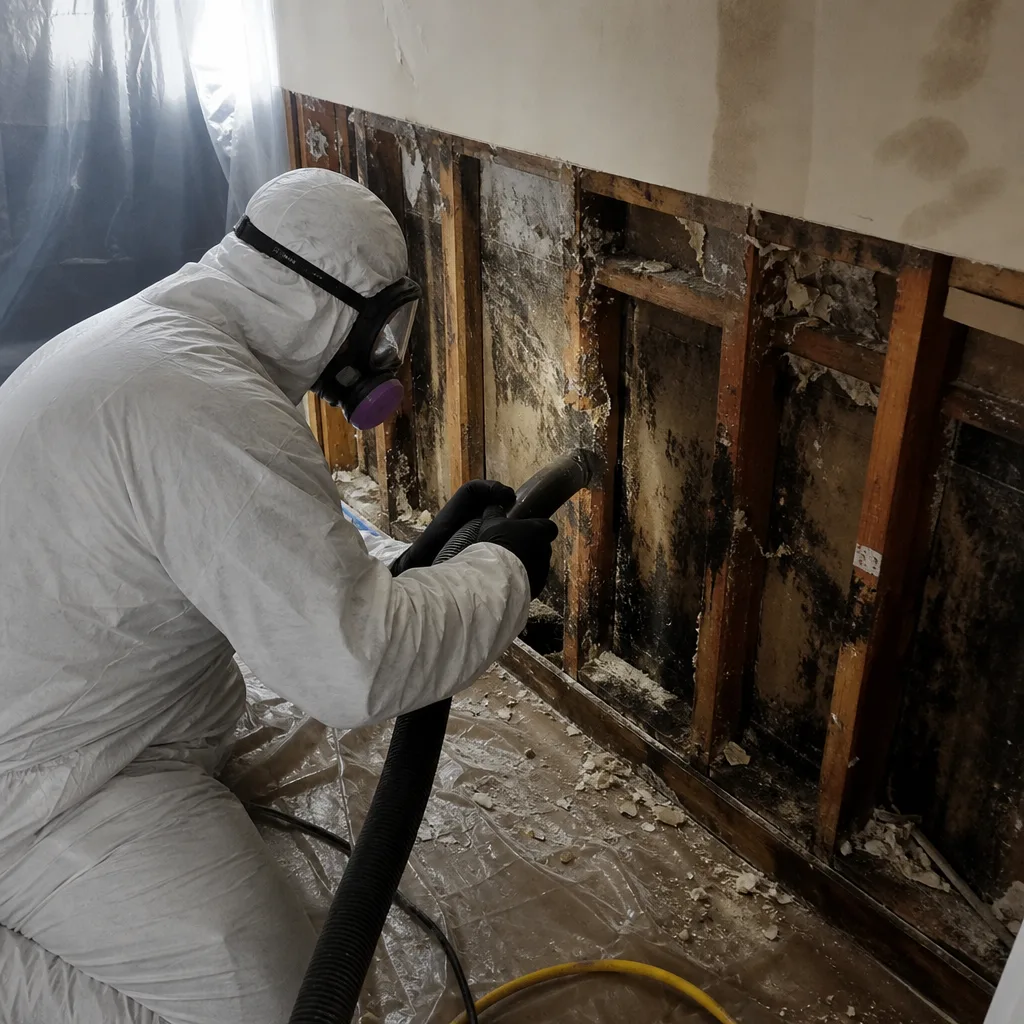
Burst Pipe Restoration
Fallbrook’s rural water systems include both municipal supply and private well connections, with pressure irregularities and older galvanized distribution lines in the 1950s-1970s ranch stock. A burst pipe in a Fallbrook hillside home often runs unnoticed for hours because the water follows gravity into the crawl space or down exterior grade. We use thermal imaging to trace the full migration path, then scope repairs to include not just the visible damage but the secondary saturation at rim joists and sill plates that infrared reveals.
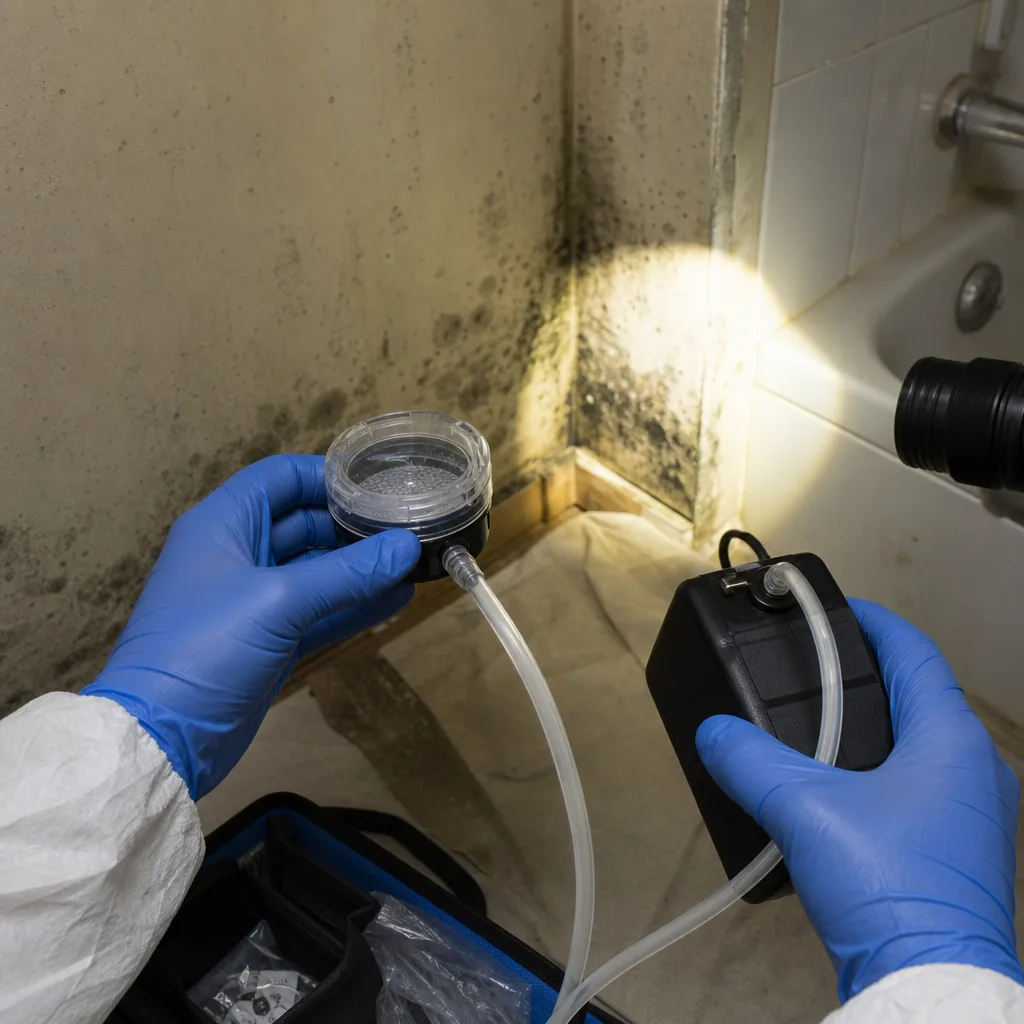
Basement Water Removal
True basements are uncommon in Fallbrook, but daylight basements and walk-out lower levels on hillside properties function the same way - and flood the same way when winter debris flow overwhelms perimeter drainage. We treat these as below-grade water intrusion, with sub-slab vapor pressure testing and, when needed, Injectidry panel drying systems that force dry air through wall cavities without destructive demolition.
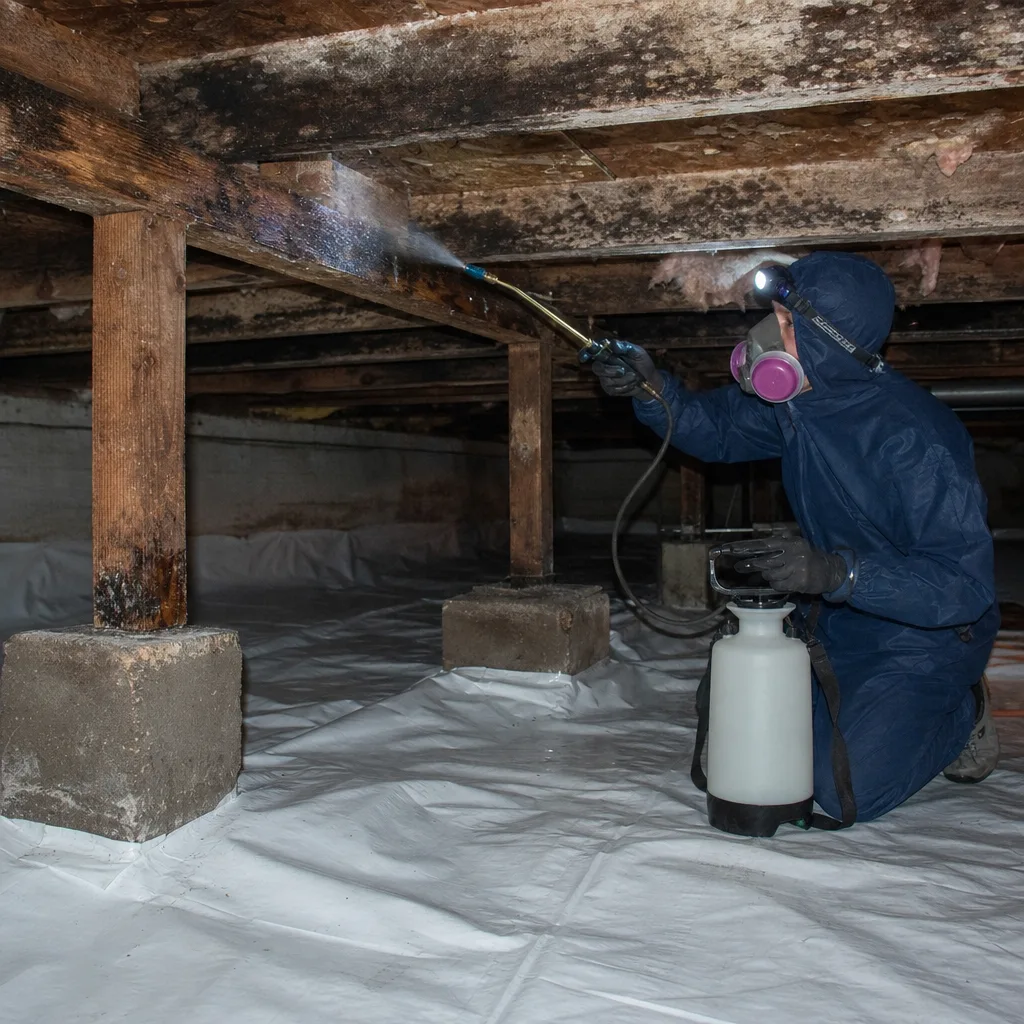
Ceiling & Roof Leak Water Damage
Older composition roofing on Fallbrook’s ranch homes fails at valley flashings and pipe penetrations first. Water tracks along ceiling joists, often appearing as a stain 10-15 feet from the actual breach. We trace the source, document the path with photos, and dry the assembly with directed airflow rather than tearing out intact drywall - unless the moisture mapping shows delamination or mold growth that makes removal necessary. The decision, and the reason for it, goes in writing before work proceeds.
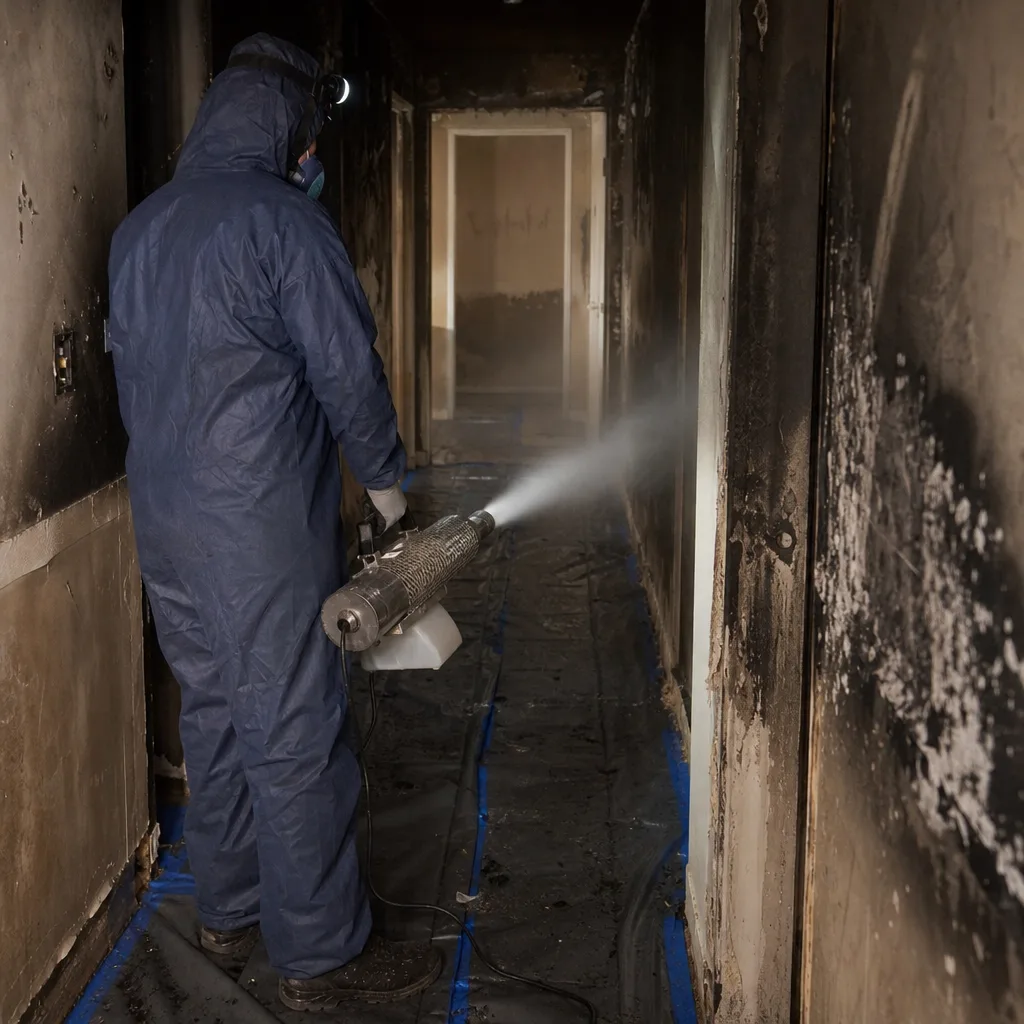
What happens when you call
- 1
A real person answersNo phone trees - you reach a local pro.
- 2
You get an upfront price rangeHonest numbers before anyone is dispatched.
- 3
A background-checked tech heads outLicensed & insured, dispatched right away.
- 4
You approve before work beginsNothing starts until you say go.
BeforeAfterTrusted Equipment & Standards We Deploy in Fallbrook
Our drying systems come from Dri-Eaz, Phoenix, XPOWER, B-Air, and Injectidry - brands that produce the airflow volume, dehumidification capacity, and precision drying control that IICRC, RIA, and IFA standards require. We don’t rent equipment by the job; we own it, maintain it, and log its calibration. For Fallbrook’s post-fire debris flow jobs, that means HEPA-filtered air scrubbers run concurrent with drying equipment, because ash particulate suspended by air mover turbulence is a respiratory hazard we document and control. Every piece on your property is listed in the written scope, with serial numbers available if your adjuster asks.
Common Water Damage Restoration Problems We See in Fallbrook Homes
- Crawl spaces “dried” at the slab while the vented cavity below stays saturated. This is the most common incomplete job we correct in Fallbrook. A contractor reads dry concrete and calls it done, missing 2-4 inches of standing water under the vapor barrier or trapped against foundation vents. We moisture-map the full cavity, not just the accessible surface.
- Wall cavities read as dry while exterior wood siding wicks moisture inward. Fallbrook’s 1950s-1980s ranch homes with original wood siding or T1-11 paneling hold water at the bottom course, especially where grade slopes toward the foundation. Our thermo-hygrometers probe the siding backside, not just the interior drywall.
- Smoke-damage restoration completed without anticipating the winter “ghost flood.” After fire season, homeowners and adjusters close the claim when the smoke smell is gone. Then January rain sends ashy debris flow into the same crawl space. We write two-phase scopes for Fallbrook hillside properties as standard practice, not an upsell.
- Detached agricultural outbuildings and equipment sheds excluded from the restoration scope. Fallbrook’s avocado and citrus operations often include structures that aren’t “the house” but contain equipment worth insuring. Water damage to these buildings follows the same Category classification and requires the same documentation. We scope what you actually own, not just what a suburban contractor assumes.
Pricing for Water Damage Restoration in Fallbrook, CA
These ranges reflect Fallbrook’s market as of 2025, based on typical residential square footage and the material classifications we encounter in local housing stock:
| Service | Typical Range in Fallbrook |
|---|---|
| Emergency Water Extraction | $1,200 - $2,800 |
| Structural Drying & Dehumidification | $1,600 - $4,200 |
| Crawl Space Drying (post-debris flow) | $2,400 - $5,500 |
| Category 3 Flood Cleanup (ash/contaminated) | $3,500 - $7,800 |
| Basement / Daylight Lower Level Drying | $2,200 - $5,000 |
| Full Water Damage Restoration (typical 1,800-2,400 sq ft home) | $2,800 - $6,500 |
What moves a job toward the higher end: Category 2 or 3 water classification requiring antimicrobial treatment, fire-debris contamination, multi-structure properties with detached outbuildings, and the extended tertiary drying phase common in Fallbrook’s hillside crawl spaces. What we don’t do: add scope-creep charges once the crew is inside. Haven Standard, Clause 1 means the written price is the price. Bring a competitor’s written estimate and we’ll review it free - our Free Second Opinion applies to any quote, no obligation.
We Also Serve Cities Near Fallbrook
Our crews work the full corridor from Fallbrook through Vista, Oceanside, Valley Center, and Carlsbad - all dispatched from our San Diego office with the same documentation standards, the same equipment, and the same written-price guarantee. Rural properties in Valley Center share Fallbrook’s post-fire debris flow risk; coastal homes in Oceanside and Carlsbad face different intrusion patterns but the same requirement for photo-documented, IICRC-standard drying logs that turn restoration invoices into payable claims.
Serving Fallbrook, CA - Our Local Coverage Area
We’re based in the Fallbrook area and know this community well. Use the map below to see our service coverage - if you’re nearby, we can almost certainly help.
FAQs - Water Damage Restoration in Fallbrook
Because burned hillsides above your property shed ashy debris slurry during the first hard winter rain, and that slurry follows gravity into vented crawl spaces and garage slabs through foundation vents, grade-level gaps, and compromised drainage. The Lilac Fire in December 2017 demonstrated this pattern across the De Luz Road corridor, and it repeats after every significant hillside burn. We write two-phase restoration scopes for Fallbrook hillside properties that anticipate this “ghost flood” and document pre-loss condition before the first rain hits, so your adjuster has a complete claim file. Call (858) 434-8474 for a scope review - estimates are free.
Within 24 hours, and preferably the same day. Mold colonization begins in 24-48 hours on organic materials at 60% relative humidity or above, and Fallbrook’s post-debris-flow crawl spaces often read 80-90% RH at first entry. Speed matters for mitigation, which is why our 24/7 live dispatch exists. But speed doesn’t mean skipping documentation - we photo the pre-loss condition, classify the water, and write the scope before the first air mover starts. Call (858) 434-8474; a crew can be on-site in Fallbrook within 60-90 minutes during daylight hours.
Yes. Supply-line leaks carry Category 1 water - clean, potable, no immediate health risk. Mudflow from a burned hillside carries Category 2 or Category 3 classification depending on what it contacted: ash, agricultural chemicals, soil contaminants, and fire-suppression residues all elevate the category. Higher classification means different antimicrobial treatment, different disposal requirements for removed materials, and different documentation for your insurer. We test and classify on-site, record the result in writing, and build the scope accordingly. The category determination affects both the restoration protocol and the claim valuation - call (858) 434-8474 to discuss a specific property.
Yes. Fallbrook’s rural residential properties often include structures beyond the main dwelling - equipment sheds, packing houses, guest quarters, and barns tied to avocado or citrus operations. Water damage to these buildings requires the same IICRC-standard drying and documentation as the main house, and we scope them as part of the complete property inventory. Your insurance coverage for outbuildings may differ from the primary dwelling, so we photo-document each structure separately and note the pre-loss condition by building. Call (858) 434-8474 to schedule a full-property assessment.
Usually, yes - but coverage depends on how the loss is documented and whether the adjuster can connect the debris flow to a covered peril. The key is establishing that the water intrusion resulted from a specific, documented event (the winter rain on a known burn scar) and not from long-term maintenance neglect. Our photo records, moisture logs, and written scopes provide that documentation in the format adjusters need. We also coordinate directly with adjusters when requested, and our daily drying logs are structured to support the claim narrative. For a Free Second Opinion on how your carrier is handling a debris-flow claim, call (858) 434-8474.
After a January storm dumped two inches on the burn scar above a De Luz Road avocado property, we pulled standing ashy water from the crawl space with truck-mount water extraction, mapped moisture at the rim joists, set Dri-Eaz and Phoenix air movers and dehumidifiers under containment, and applied antimicrobial treatment to the sills - then filed drying logs documenting pre-loss condition for the insurance scope of work. Two weeks later the client’s detached equipment shed showed the same pattern, which is normal here: a burn scar keeps feeding water into low structures for an entire rainy season.
Ready for a written price before any work starts? Call (858) 434-8474 now. A live person answers 24 hours a day, 7 days a week. We’ll schedule a free estimate, deliver a documented scope with line-item pricing, and stand behind the result with our 365-Day Done Right Promise under The Haven Standard.
Written by Alicia Brennan, Owner at Back to Dry Restoration, serving Fallbrook since 2011.