
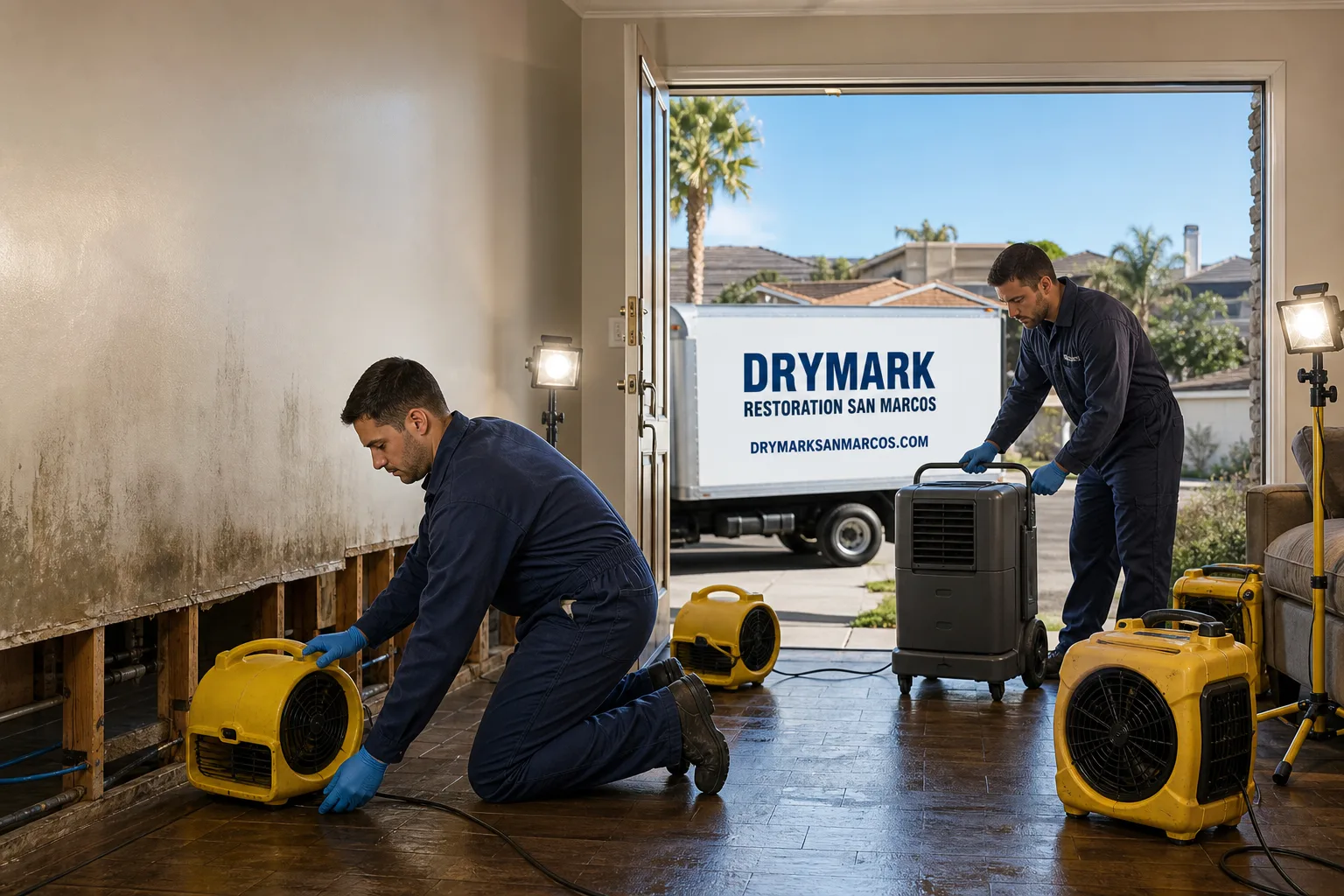
Free visual inspection and a written scope of work before any mitigation begins - photos, moisture readings, and drying logs go in your claim file
The scope we write is the scope we bill. Anything new gets shown to you, in writing, before we touch it.
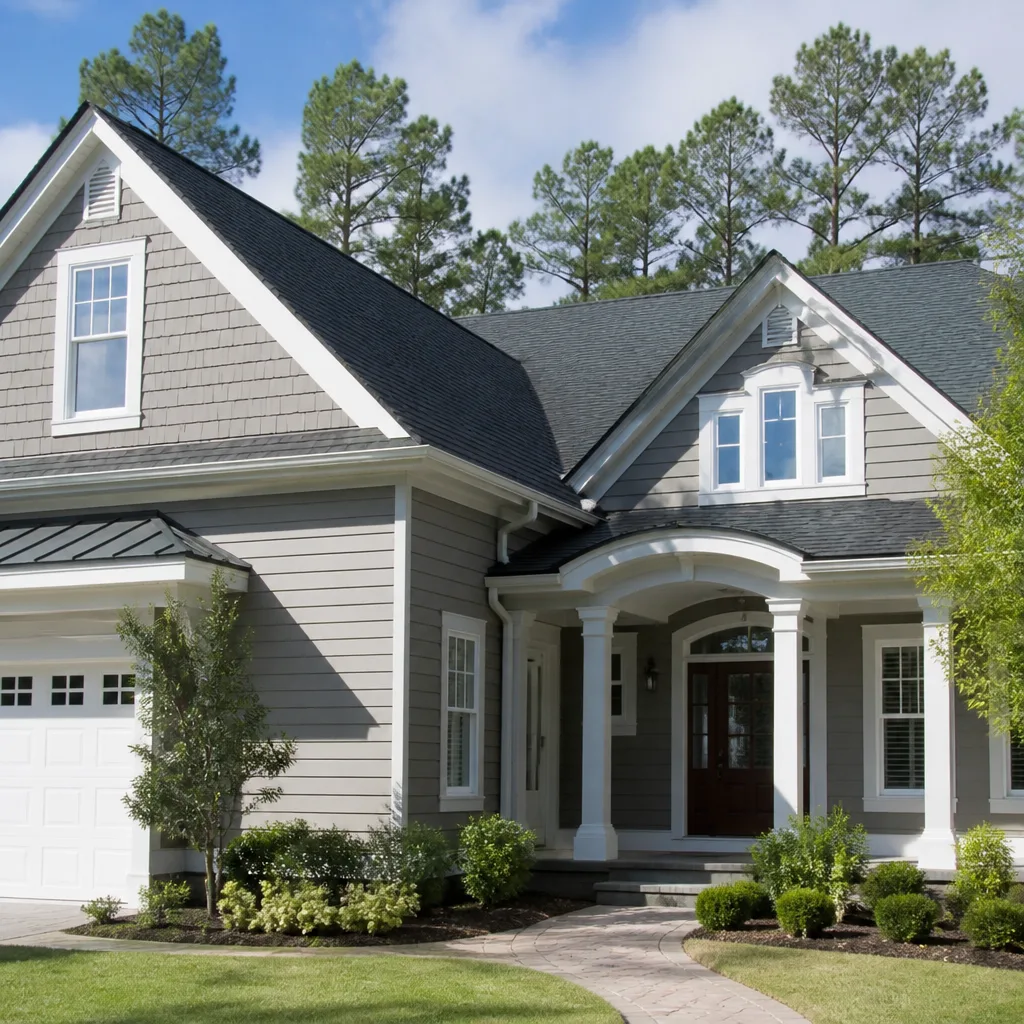
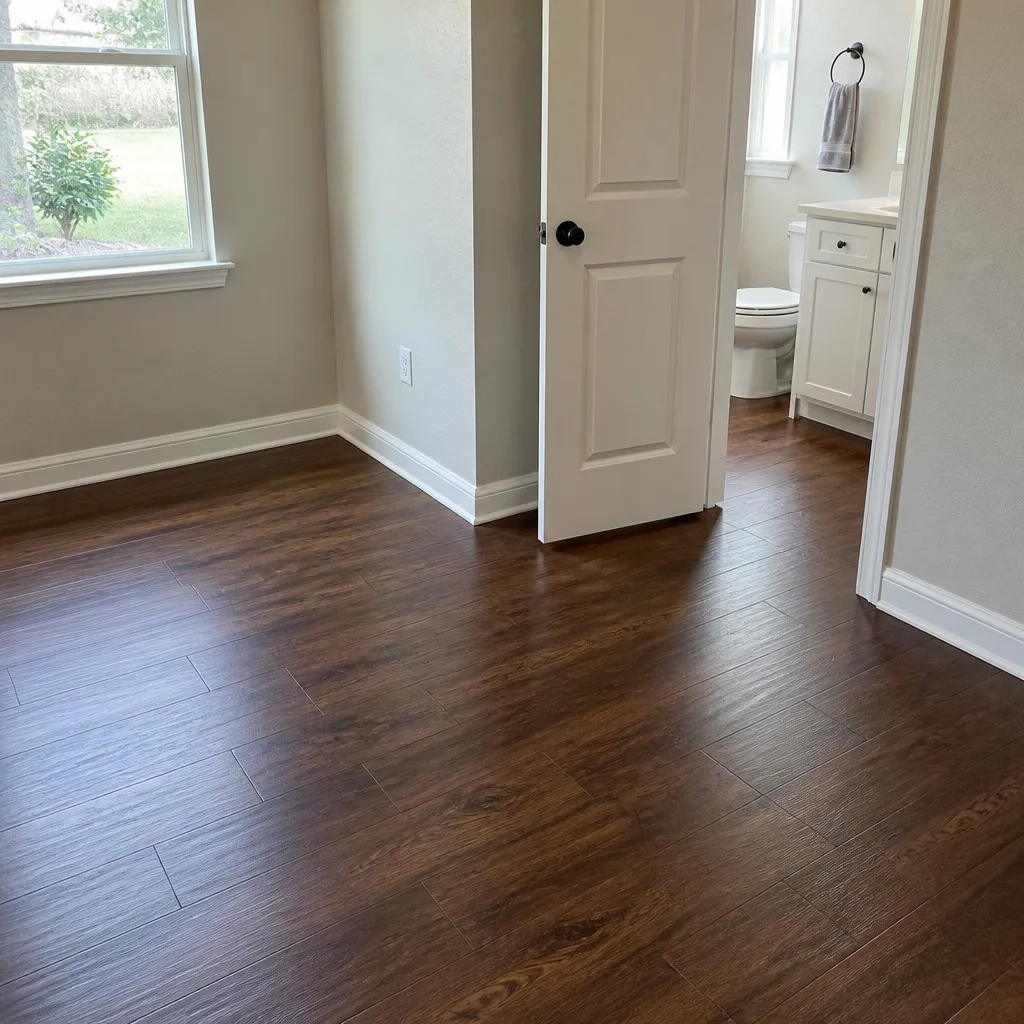
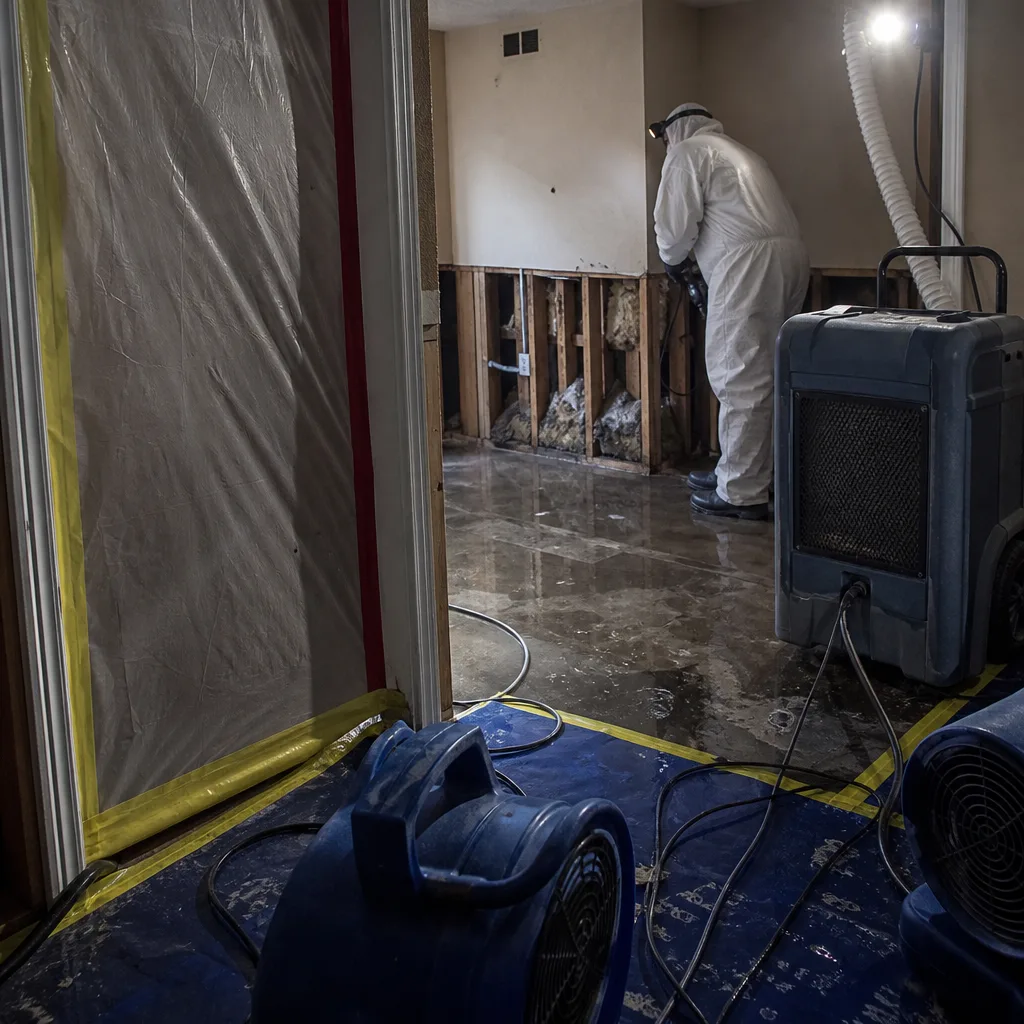 Before
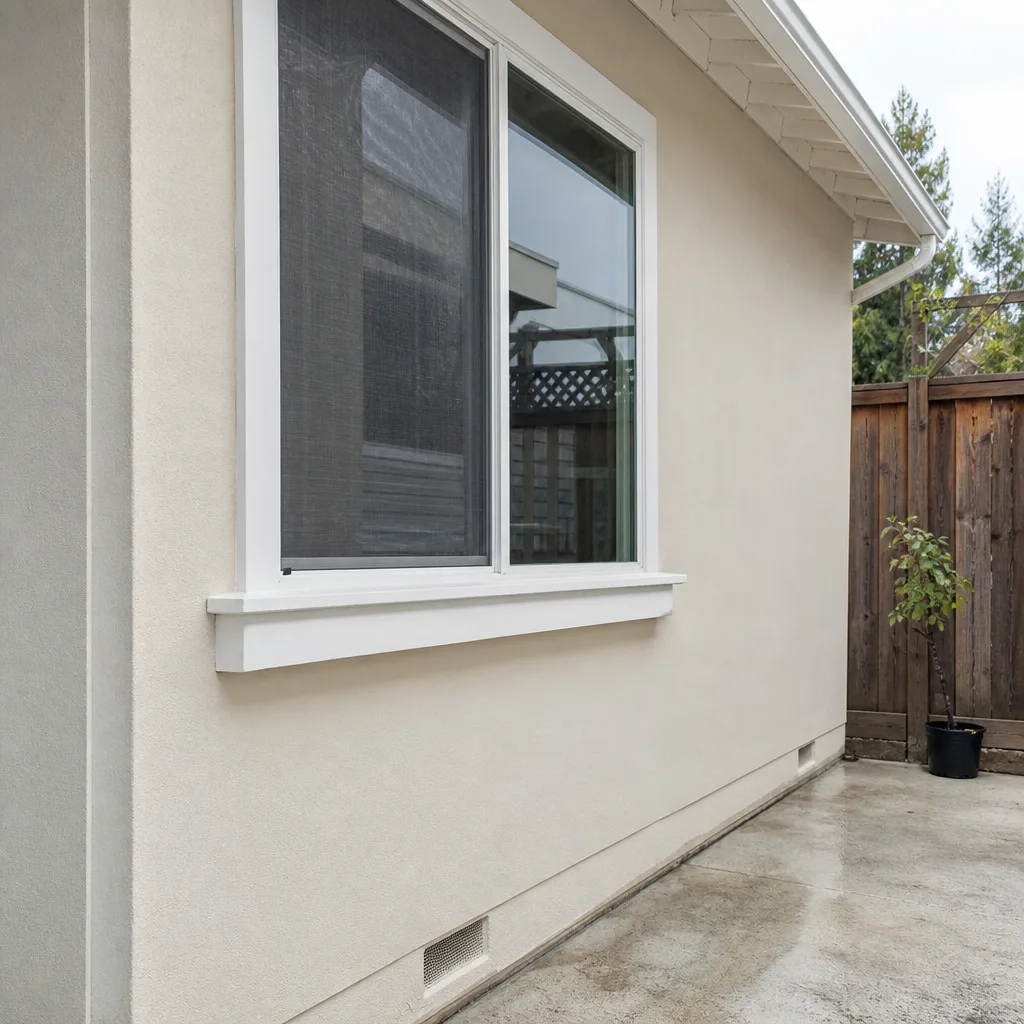 After
After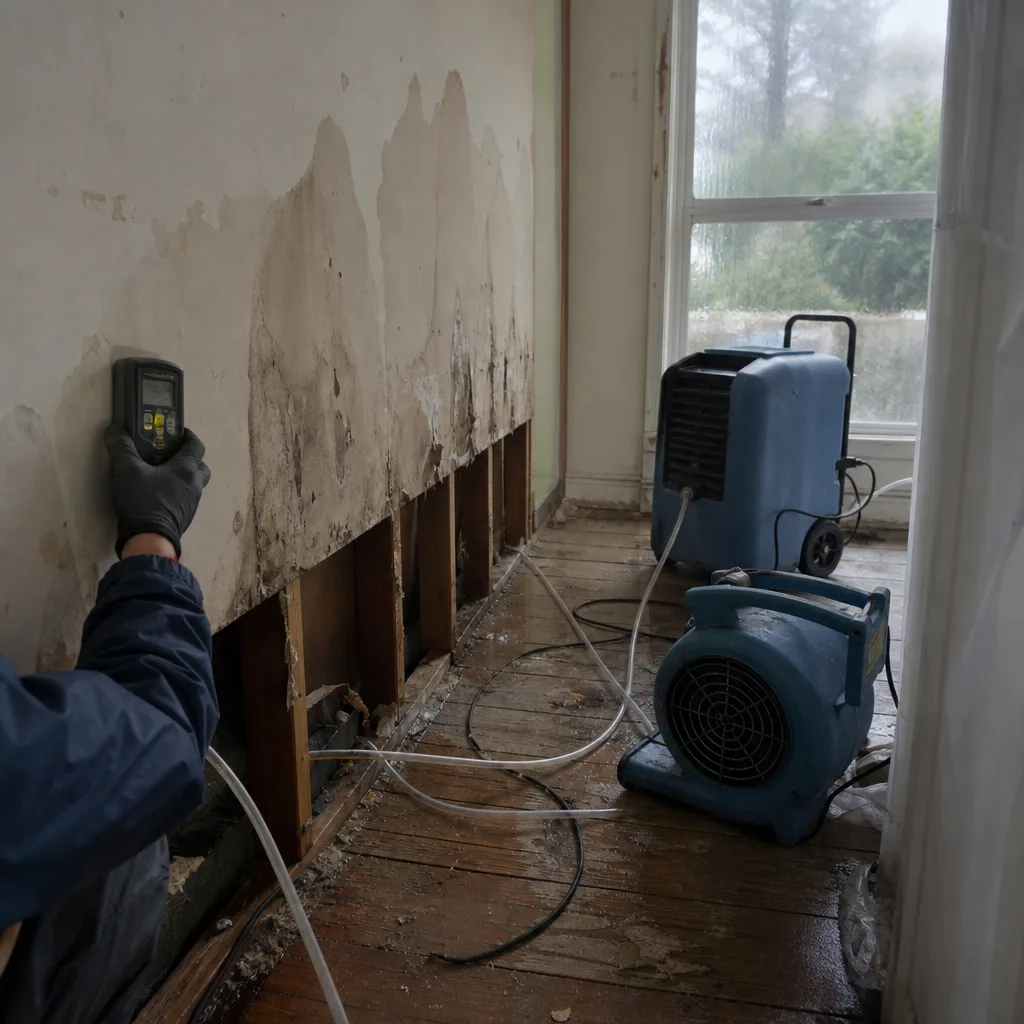 Before
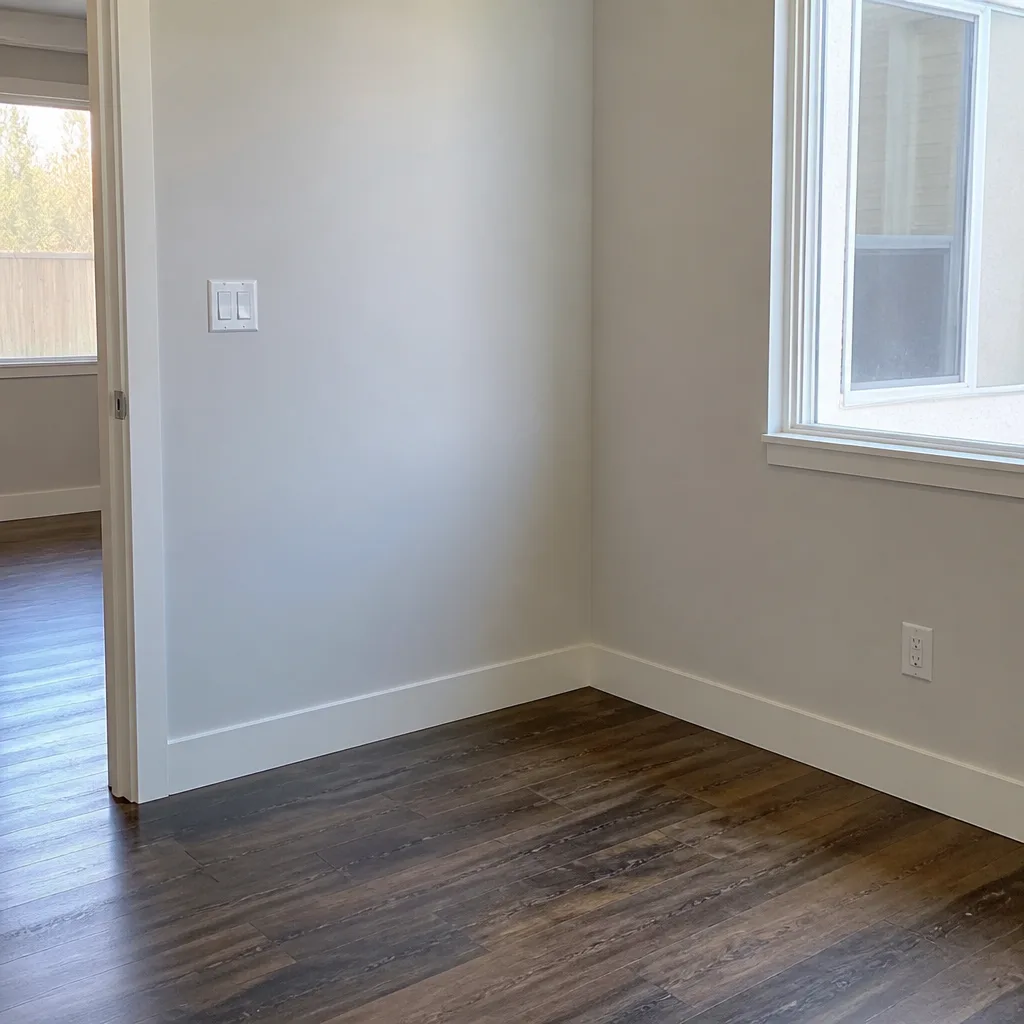 After
After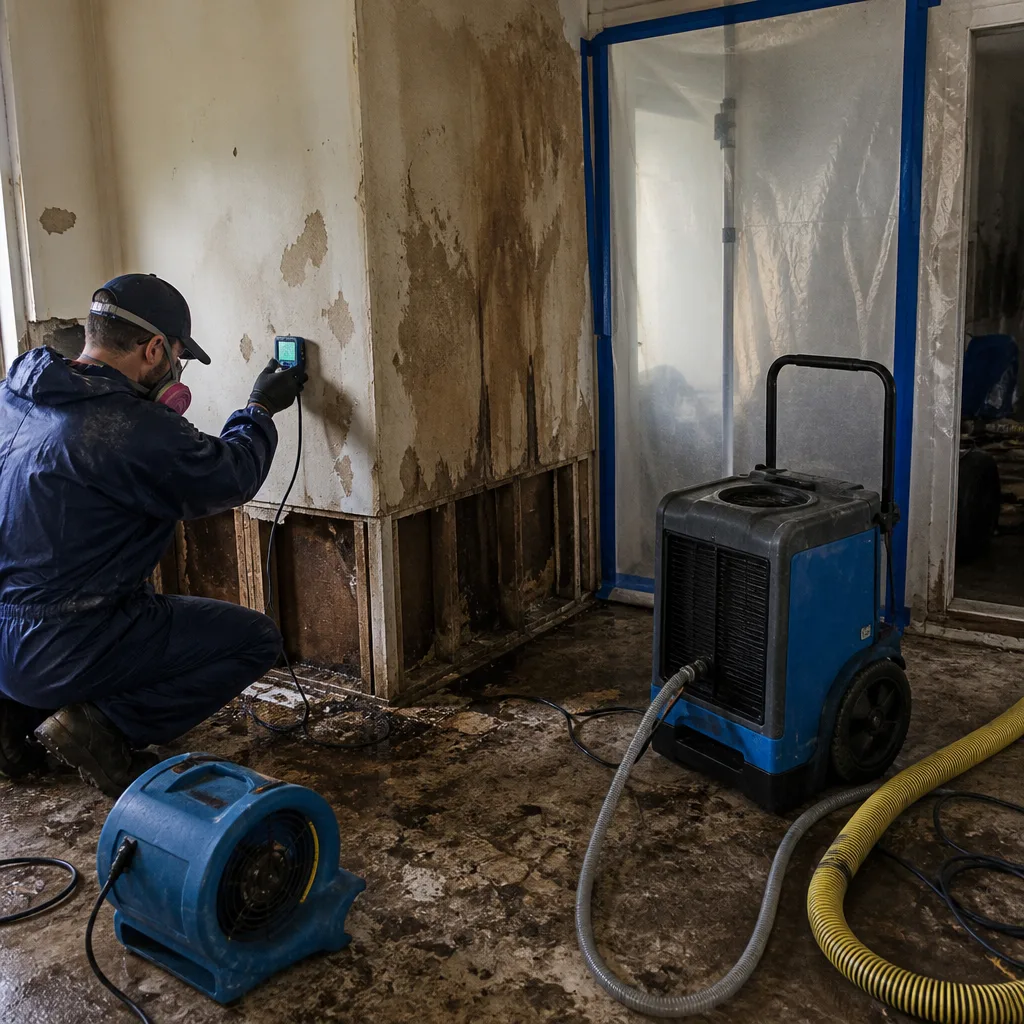 Before
 After
AfterFast, Reliable Water Damage Restoration Across Ramona
Water damage restoration in Ramona, CA typically costs between $2,800 and $7,500 for residential mitigation, with emergency extraction starting around $1,200 and full structural drying running $3,200-$6,800 depending on square footage and water category. Most Ramona homeowners see our crews on-site within 45-90 minutes of calling (858) 434-8474. We dispatch from our San Diego office and coordinate crews who know Ramona’s rural road network, from Main Street out to Highland Valley Road and the properties along Bandy Canyon Road.
Ramona isn’t a standard suburban water damage job. The inland valley heat, Santa Ana wind events through surrounding mountain passes, and the layered legacy of wildfire damage from the 2003 Cedar Fire and 2007 Witch Creek Fire create failure patterns that coastal restoration contractors rarely encounter. We’re the Water Damage Restoration team that documents those differences in every written scope.
Why DryMark Restoration San Marcos Is Ramona’s Preferred Water Damage Restoration Company
We’ve restored water damage in Ramona ranch homes, horse properties, and agricultural outbuildings since 2011. Alicia Brennan built this company after working as a claims adjuster and watching homeowners lose legitimate coverage because their restoration contractor’s documentation wouldn’t hold up under review. That gap is why every Ramona job starts with a written price before work begins, includes a photo record on every visit, and ends with a 365-Day Done Right Promise under The Haven Standard.
Our crews know the local housing stock: single-story ranch-style homes on large rural lots, many built from the 1960s through the early 2000s with wood-frame construction and aging rooflines that are highly vulnerable to ember intrusion during fire events. We know that horse properties, detached agricultural outbuildings, and barns are extremely common here and regularly require restoration scoping beyond standard residential work. When we write a scope for a Ramona property, we account for structures that other contractors don’t know to ask about.
Live phone coverage is available 24 hours a day, 7 days a week with no voicemail on emergency lines. A real person answers every call. We don’t believe in next-business-day callbacks while water is still moving through your subfloor.
Our Water Damage Restoration Services in Ramona
Emergency Water Extraction
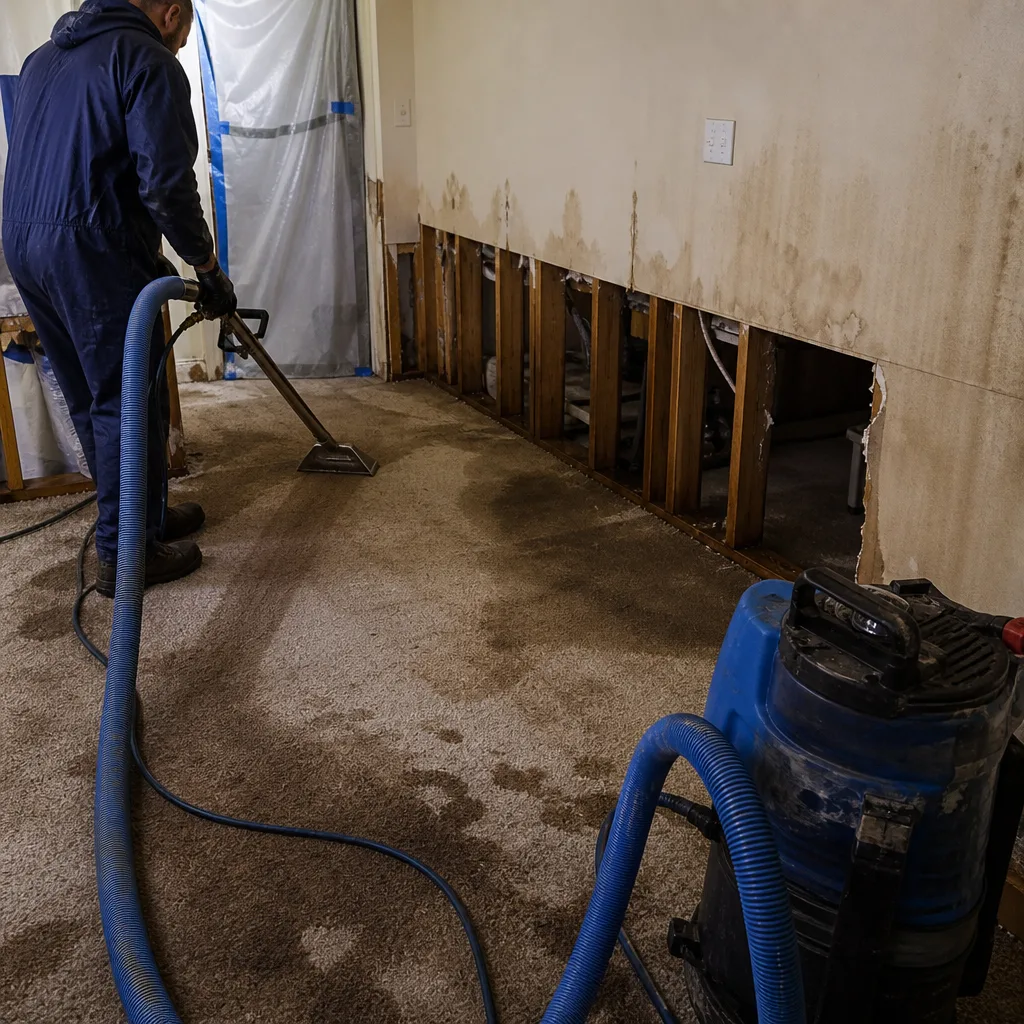
Ramona’s Santa Ana wind events and atmospheric river rainstorms create sudden, high-volume water intrusion, especially in homes with partially fire-damaged rooflines that look intact from the street. Our emergency extraction crews deploy truck-mounted systems and portable units for rural properties with limited access. We extract standing water, document the starting moisture readings, and establish containment before any secondary damage spreads. Every extraction job gets a written price before the first hose runs, per Haven Standard, Clause 1.
Structural Drying & Dehumidification
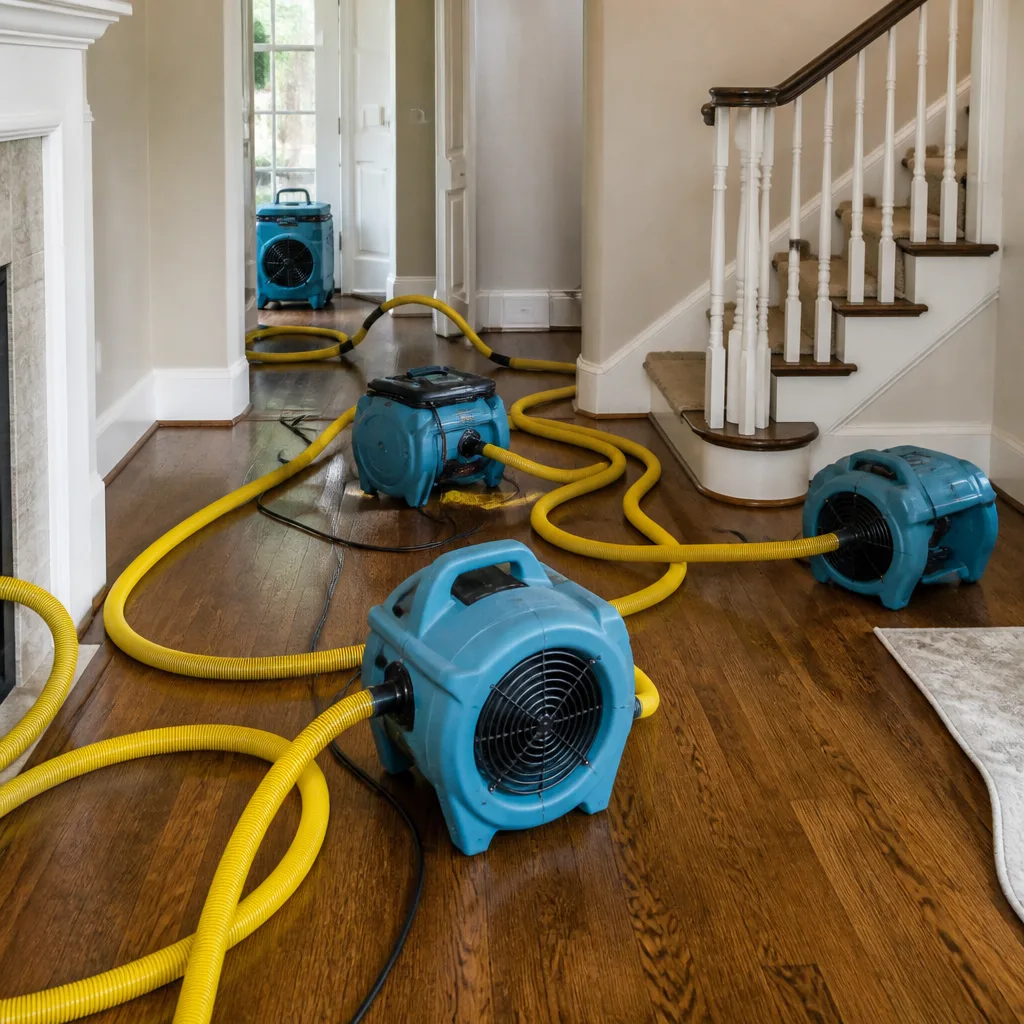
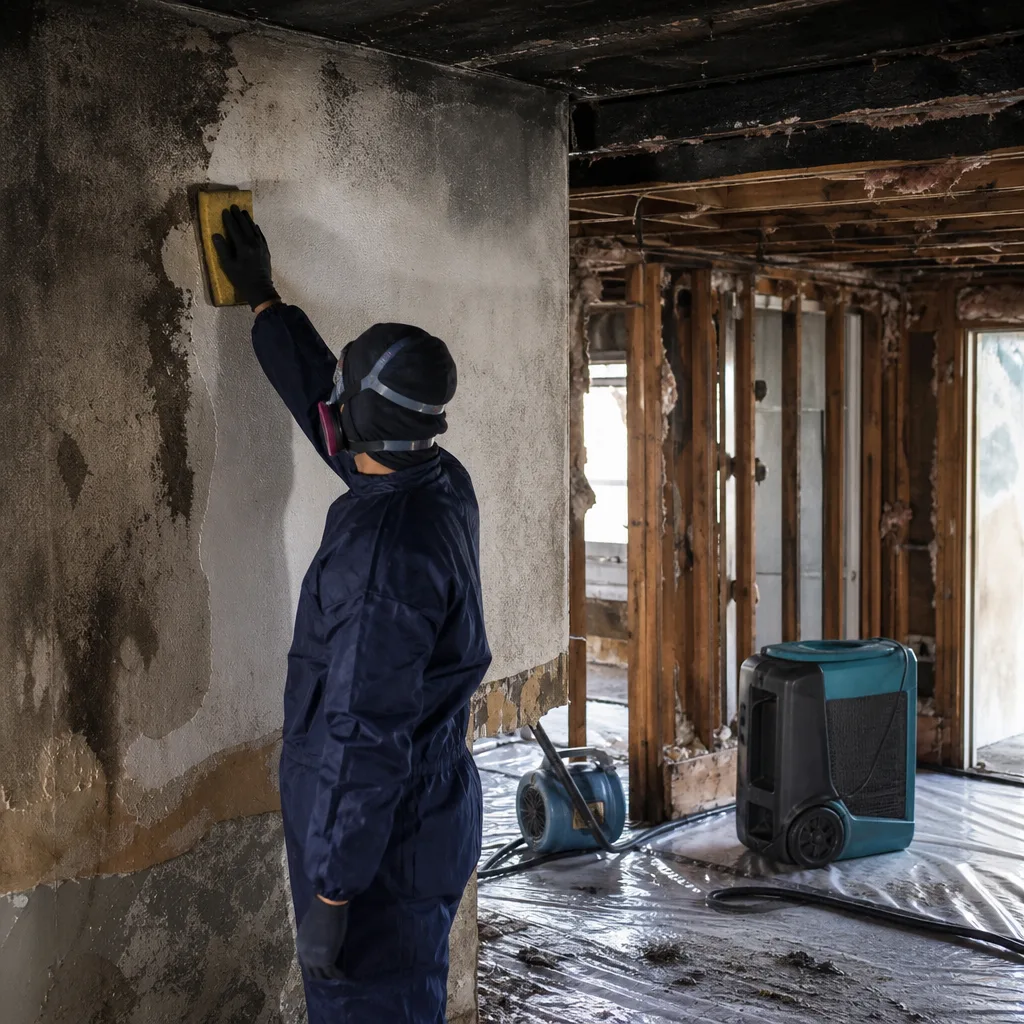
This is where Ramona’s inland valley conditions demand specialized attention. Homeowners here often assume the dry heat above 90°F will naturally dry wet structures. It doesn’t. The dryness above masks category 2 or 3 water trapped below in wall cavities and subfloors. We establish psychrometric targets - temperature, relative humidity, and vapor pressure differential - then hit them with Phoenix and Dri-Eaz dehumidifiers, XPOWER air movers, and Injectidry cavity drying systems when needed. Daily moisture logs document every reading, producing the paper trail that turns restoration invoices into payable insurance claims. Tertiary drying, the final phase where we drop humidity to prevent long-term material degradation, gets the same documentation as day one.
Flood Cleanup
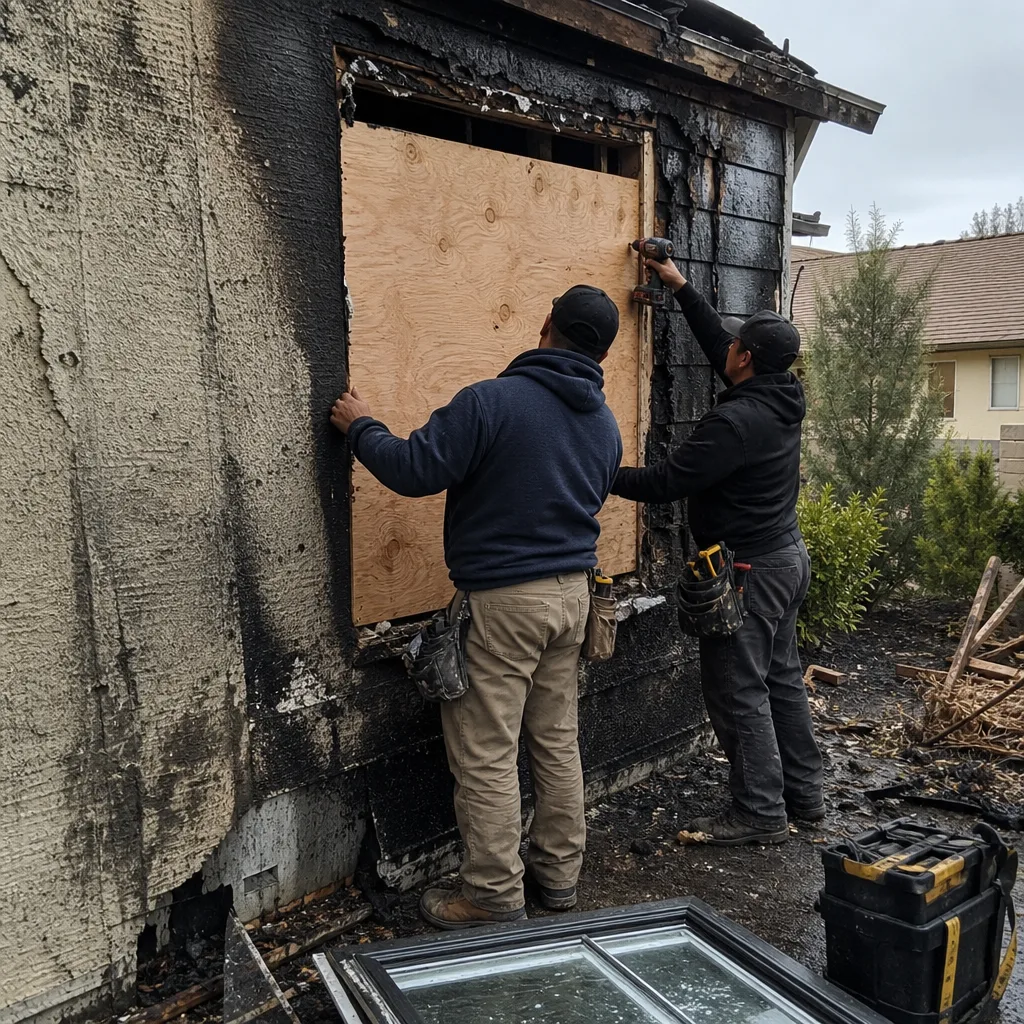
Ramona’s flash flood risk spikes when atmospheric river storms hit dry, fire-scarred terrain with reduced vegetation. Floodwater here often carries ash, sediment, and fire-retardant chemical residue from upstream burn areas. We categorize every flood before drying begins: category 1 (clean water), category 2 (gray water with potential contamination), or category 3 (black water with hazardous contamination). That classification determines antimicrobial treatment, material removal thresholds, and drying protocol. Skipping this step to speed up the job is how mold colonies establish in 24-48 hours and how claims get denied for inadequate documentation.
Burst Pipe Restoration
Ramona’s rural properties with private wells face unique pipe stress: pressure fluctuations from well pump cycling, aging galvanized lines in pre-1990s ranches, and freeze-thaw exposure in unconditioned outbuildings. We locate the burst, document the water category based on pipe type and contamination source, extract, dry, and provide the written scope for plumber handoff. Because many Ramona properties have extensive pipe runs between well house and main dwelling, our moisture mapping covers the full path, not just the obvious damage.
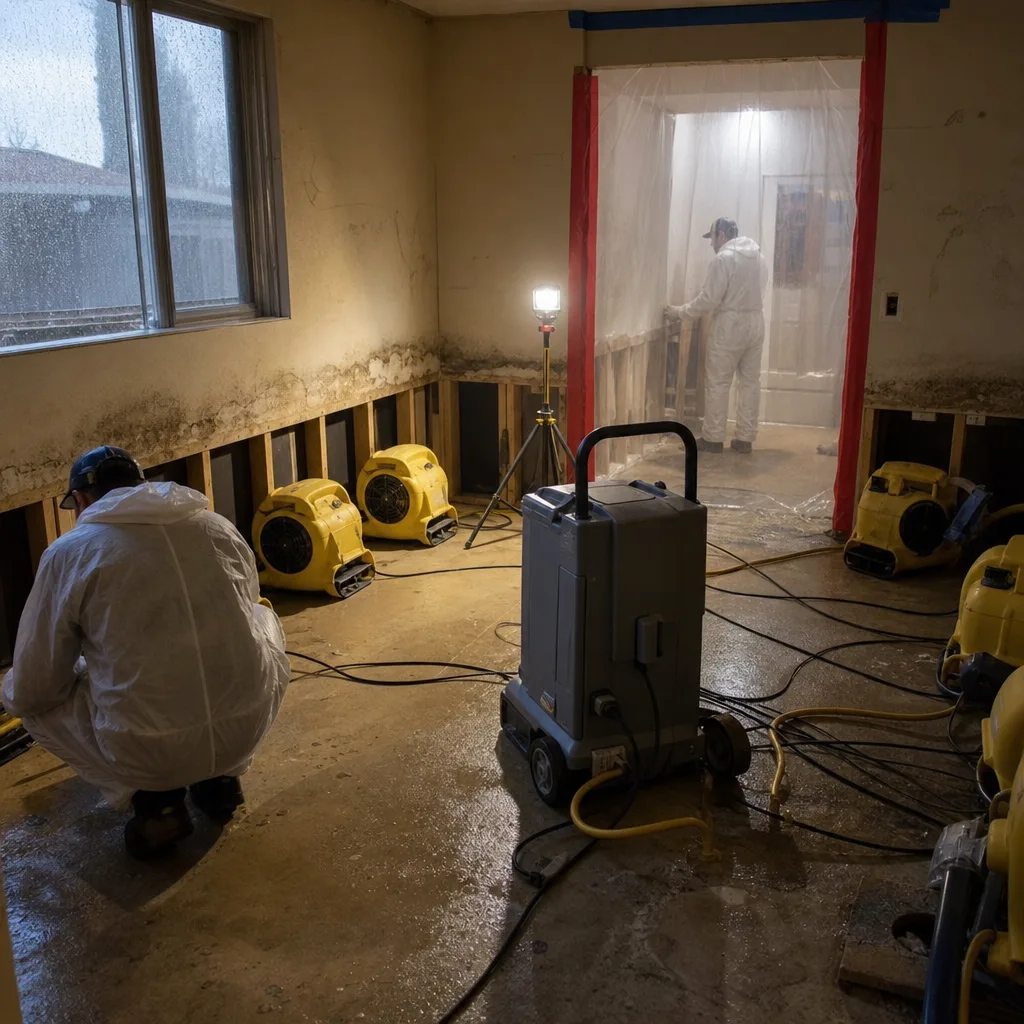
Ceiling & Roof Leak Water Damage
This is the most common call we get in Ramona after storm season. Ember-scarred or partially fire-damaged roof decking and siding let water wick deep after dry fire seasons. The roof looks fine from the driveway. Inside, water has saturated insulation, compromised the vapor barrier, and started mold growth in the ceiling cavity. We run moisture mapping across the full vaulted ceiling and attic, set up Injectidry panel drying in the cavity when access allows, and document every reading. If smoke taint from prior fire exposure is present, we establish containment for pack-out and contents cleaning before drying begins.
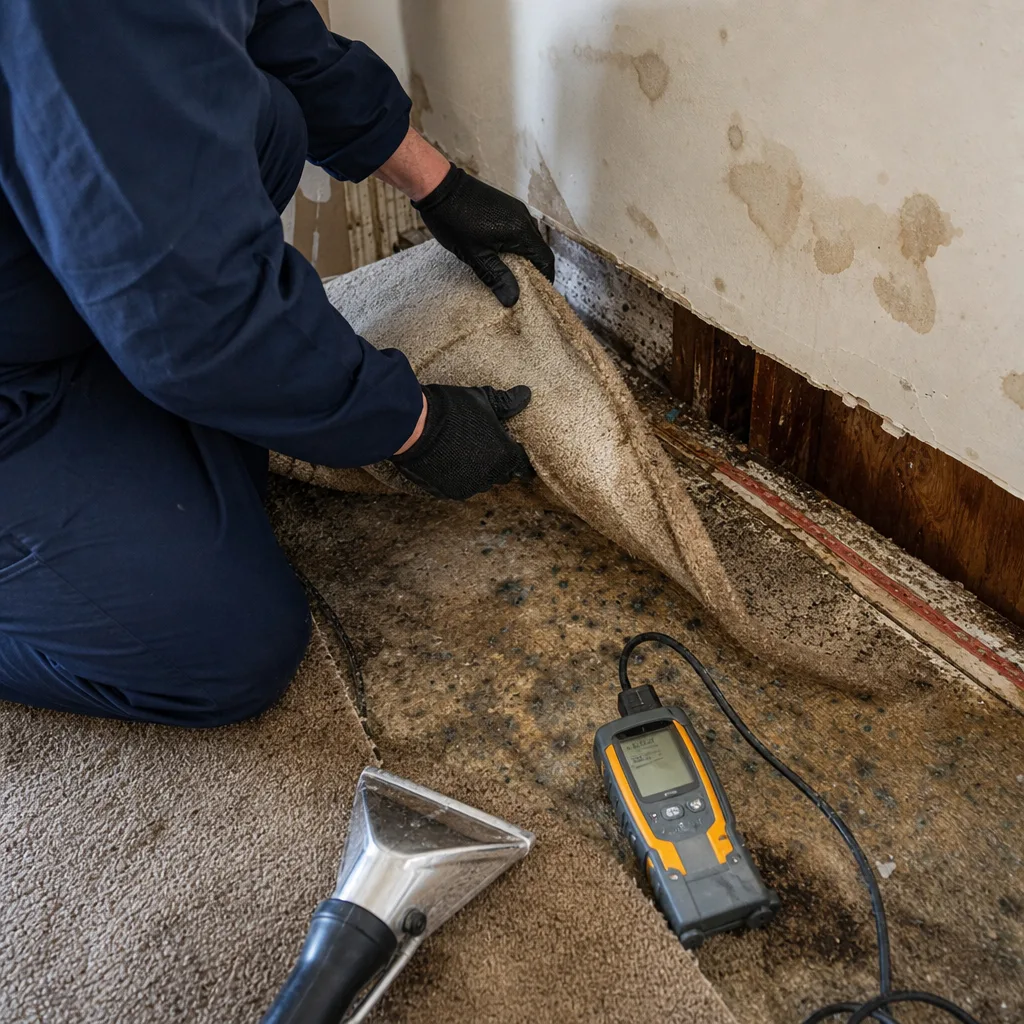
Basement Water Removal
True basements are rare in Ramona’s ranch-style housing stock, but partial daylight basements and under-house crawl spaces are common, especially in hillside builds off Highland Valley Road and Bandy Canyon Road. These spaces trap moisture with poor ventilation and become mold incubators. We extract standing water, deploy low-grain refrigerant dehumidifiers sized to the cubic volume, and document subfloor moisture content until readings return to dry standard.
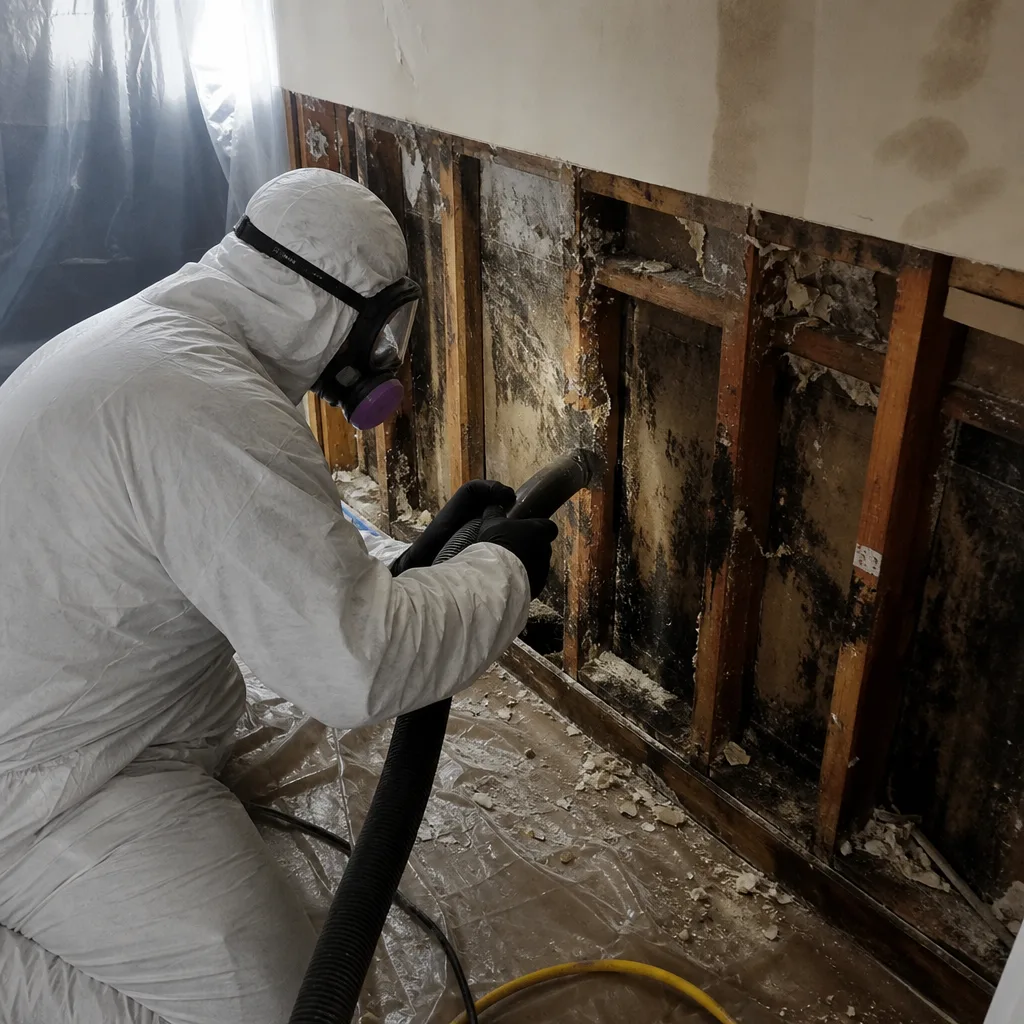
What happens when you call
- 1
A real person answersNo phone trees - you reach a local pro.
- 2
You get an upfront price rangeHonest numbers before anyone is dispatched.
- 3
A background-checked tech heads outLicensed & insured, dispatched right away.
- 4
You approve before work beginsNothing starts until you say go.
BeforeAfterTrusted Brands We Service in Ramona
Our equipment fleet includes professional-grade drying systems from Dri-Eaz, Phoenix, and Injectidry - brands that produce the documented airflow and dehumidification capacity required for IICRC, RIA, and IFA standards. We don’t rent equipment by the job. We own it, maintain it, and log its performance on every Ramona drying chart. For cavity drying in Ramona’s common vaulted ceilings and fire-damaged roof assemblies, Injectidry’s panel systems allow targeted drying without demolition. That matters when you’re trying to preserve original construction in a 1970s ranch and document the effort for an insurance adjuster.
Common Water Damage Restoration Problems We See in Ramona Homes
- Ember-scarred roofs that “look fine” hiding saturated decking. After dry fire seasons, partially fire-damaged roof membranes and siding around Ramona let atmospheric river storm water wick in deep. Homeowners see no exterior damage. Inside, insulation is soaked and mold is establishing within 24-48 hours. We find this with thermal imaging and moisture probes, not visual inspection.
- Inland valley heat masking trapped moisture. Ramona homeowners feel the dry 90°F+ air and assume their wet drywall and wood framing are drying out. They’re not. The surface dries. The cavity stays wet. Category 2 water becomes category 3. We catch this with daily moisture readings at depth, not surface touch-tests.
- Scopes that miss barns, outbuildings, and well/septic systems. Standard residential mitigation looks at the house. Ramona’s horse properties have detached structures with the same roof damage, plus well heads vulnerable to fire-retardant runoff and septic fields saturated by floodwater. Our scopes include them. Most don’t.
- Post-fire chemical contamination in floodwater. Burned chaparral and applied fire retardants upstream from Ramona properties create floodwater with chemical loads that standard category 2 classification misses. We test and document, then adjust antimicrobial protocol accordingly.
Pricing for Water Damage Restoration in Ramona, CA
Emergency water extraction in Ramona typically runs $1,200-$2,400 for residential properties up to 2,500 square feet. Structural drying and dehumidification ranges from $3,200-$6,800 depending on affected square footage, number of air movers and dehumidifiers required, and days to dry standard. Flood cleanup with category 2 or 3 contamination adds $800-$1,800 for antimicrobial treatment and protective containment. Ceiling and roof leak damage with cavity drying runs $2,800-$5,500. Burst pipe restoration with full moisture mapping and documentation starts around $2,400.
Every Ramona job gets a written price before work begins, per Haven Standard, Clause 1. No exceptions. No scope-creep additions once the crew is inside. We also offer a Free Second Opinion on any competitor’s written estimate. Bring their scope and we’ll review it at no charge.
Call (858) 434-8474 for a written estimate. Estimates are free.
We Also Serve Cities Near Ramona
Our crews respond throughout inland North County and eastern San Diego County, including Water Damage Restoration in Ramona and surrounding communities: Poway, Escondido, Santee, and Valley Center. Dispatch and scheduling are coordinated from our San Diego office; crews serve Ramona locally with the same documentation standards and equipment fleet.
Serving Ramona, CA - Our Local Coverage Area
We’re based in the Ramona area and know this community well. Use the map below to see our service coverage - if you’re nearby, we can almost certainly help.
FAQs - Water Damage Restoration in Ramona
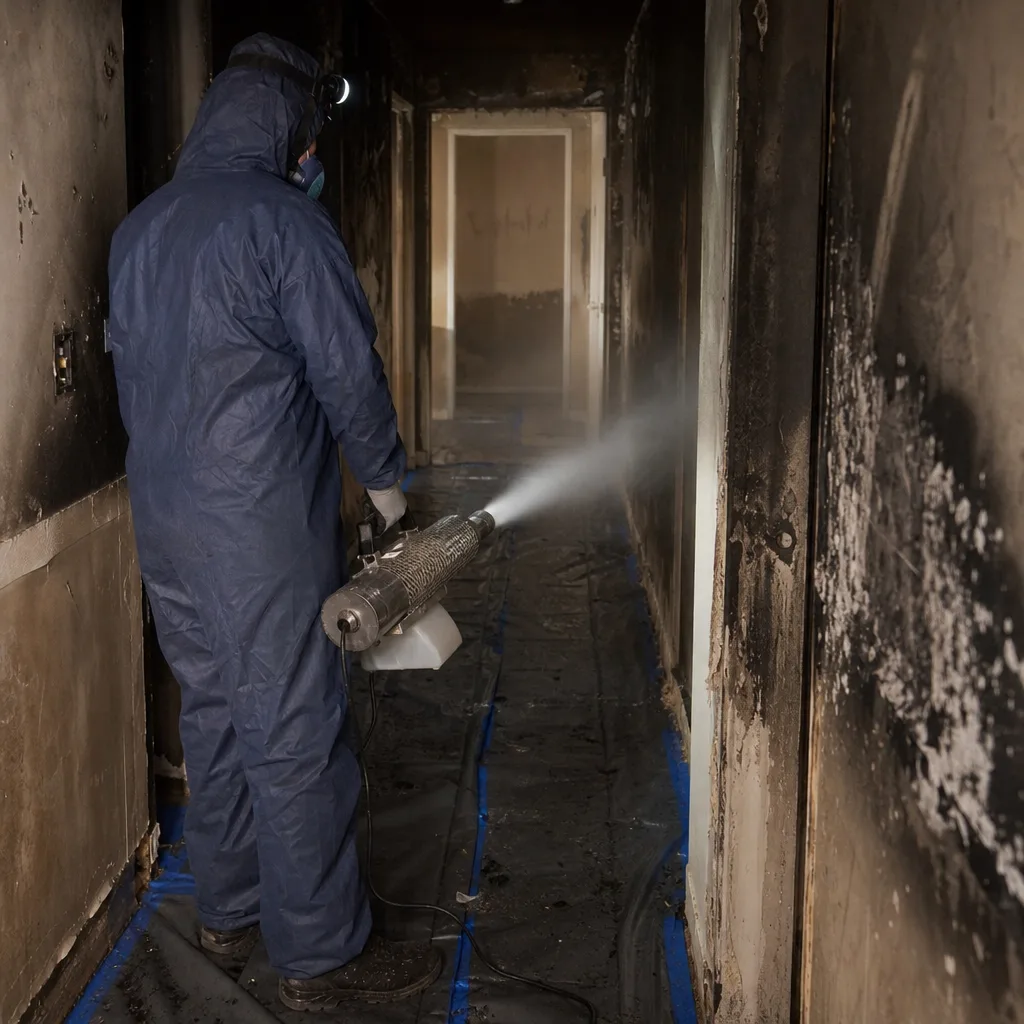
Ember intrusion and partial fire damage compromise roof decking, underlayment, and siding membranes without visible exterior failure. The next atmospheric river pushes water through those micro-breaches into insulation and ceiling cavities. We find this with thermal imaging and moisture probes at the rafter lines, not from the ground. Call (858) 434-8474 for moisture mapping if your Ramona property has any fire history and you’ve seen staining or mustiness after rain.
Yes. Because most Ramona properties draw from private wells and septic systems rather than municipal utilities, every post-fire water damage scope here adds well testing for fire-retardant and ash runoff plus a septic field integrity check - a step that virtually never applies to a coastal San Diego suburb on city water. Floodwater can saturate drainfields, compromising function and creating contamination risk. We flag both in our written scope and coordinate with licensed testers. This is standard on our Ramona jobs. Most restoration contractors don’t know to ask.
Within 24 hours for category 1 water, immediately for category 2 or 3. Ramona’s inland heat accelerates mold germination in wall cavities once spores have moisture and organic material. The dry air outside the wall means nothing inside it. We establish drying protocol same-day and document starting moisture content. Delay past 48 hours typically requires material removal, not drying. Call (858) 434-8474 for emergency response.
Water category determines antimicrobial treatment, material removal thresholds, personal protective equipment, and documentation requirements for insurance. Ramona’s post-wildfire floods often carry elevated contamination from ash, sediment, and fire-retardant residue that standard category 1 assumptions miss. We test and classify before drying begins. Skipping this step risks mold establishment, health hazards, and claim denial for inadequate protocol. Haven Standard documentation requires the classification in every drying log.
We scope them. Ramona’s agricultural outbuildings share rooflines, exposure, and often water sources with the main dwelling. Standard residential mitigation that ignores them misses structural saturation and contamination that affects property value and insurance coverage. Our written scopes include detached structures when they’re part of the loss. Bring us any competitor’s estimate that omitted your barn or well house and we’ll review it free under our Second Opinion program.
After an atmospheric river storm pushed through the Santa Ana wind-scoured hills off Highland Valley Road, our crew pulled up to a single-story ranch on large acreage where a partially ember-scarred roof deck had let water pour into the hallway ceiling. We ran moisture mapping across the whole vaulted ceiling and attic, set up Dri-Eaz and Phoenix air movers plus Injectidry panel drying in the ceiling cavity, laid containment around a smoke-tainted bedroom for a pack-out, and applied antimicrobial treatment to the wet drywall before any of it went from category 1 toward category 3. Because the home was on a private well and septic field, we flagged the well head for fire-retardant runoff sampling and walked the drainfield for saturation before we signed off the drying logs.
Ready for a written price before work begins? Call DryMark Restoration San Marcos at (858) 434-8474. We answer live, 24 hours a day, 7 days a week. Every Ramona job gets documented photo records, daily moisture logs, and the 365-Day Done Right Promise under The Haven Standard. Estimates are free. Second opinions on competitor quotes are free. The documentation that protects your claim is standard.
Written by Alicia Brennan, Owner at DryMark Restoration San Marcos, serving Ramona since 2011.